REVIEW · ISTANBUL
Tour to Byzantium
Book on GetYourGuide →Operated by Gray Line Turkey · Bookable on GetYourGuide
Istanbul gets a second life here. This Tour to Byzantium strings together sea power, religious sites, and imperial defenses in a tight 4-hour loop, starting at the Golden Horn and ending with the remains of the 5th-century city walls. I love how the route turns abstract “Byzantine Empire” facts into real places you can stand in front of. I also love the way the guide threads the 4th to 15th centuries into a simple story you’ll actually remember.
One caution: the stop at St. Savior in Chora (now the Kariye Museum) is visit-from-outside only. You’ll get context for the famous mosaics and frescoes, but you won’t be doing the full interior viewing on this tour.
In This Review
- Quick hits
- Where the Byzantine Story Starts: The Golden Horn
- Patriarchate at Fener: Orthodox Christianity’s Big Pivot
- Panagia of Blachernae: Hagiasma Holy Water and Hagion Lousma
- St. Savior in Chora (Kariye Museum): The Outside View That Still Matters
- Anemas Dungeons: Prison Logic Under the Palace Complex
- Tekfur Palace: The 12th-Century Pavilion By the Walls
- Walking the Byzantine City Walls: Scale You Can Feel
- Value for $85: What You’re Really Buying
- Guide Quality and the Off-the-Beaten-Path Feeling
- Practical Tips Before You Go
- Should You Book the Tour to Byzantium?
- FAQ
- How long is the Tour to Byzantium?
- What are the main stops on the tour?
- Is the Kariye Museum (St. Savior in Chora) visit inside or outside?
- Is hotel pickup included?
- Are entrance fees included?
- What identification do I need to bring?
Quick hits
- Golden Horn views first: Start at the Byzantines’ natural naval harbor and look across the Bosphorus area.
- Fener’s Orthodox roots: The Patriarchate at Fener helps you understand the church’s post-Constantine role.
- Blachernae’s holy-water story: Panagia of Blachernae is tied to Hagiasma holy water and Hagion Lousma sacred baths.
- Exterior context at Chora: Kariye Museum is explained with an outside visit, not an interior walkthrough.
- Prison engineering and palace elegance: Anemas Dungeons and the 12th-century Tekfur Palace sit right by the walls.
- Short and focused: The tour is built around a sequence of major Byzantine landmarks, not a long day of random stops.
Where the Byzantine Story Starts: The Golden Horn
The whole experience makes more sense once you see the Golden Horn in person. This is the natural naval harbor that the Byzantines used, named for its hornlike shape and its golden reflection when sunlight hits it from the hilltops. That detail matters. Istanbul’s Byzantine power wasn’t just temples and emperors—it was ships, trade, and control of water routes.
You’ll also get the “Across the Bosphorous” feel from this side of the city. Even without museum walls, the setting helps you picture why Constantinople could hold importance for so long. A lot of Istanbul history feels like it’s frozen behind glass. Here, you get a bit more motion: sea view, then faith, then defense.
You can also read our reviews of more tours and experiences in Istanbul.


Patriarchate at Fener: Orthodox Christianity’s Big Pivot
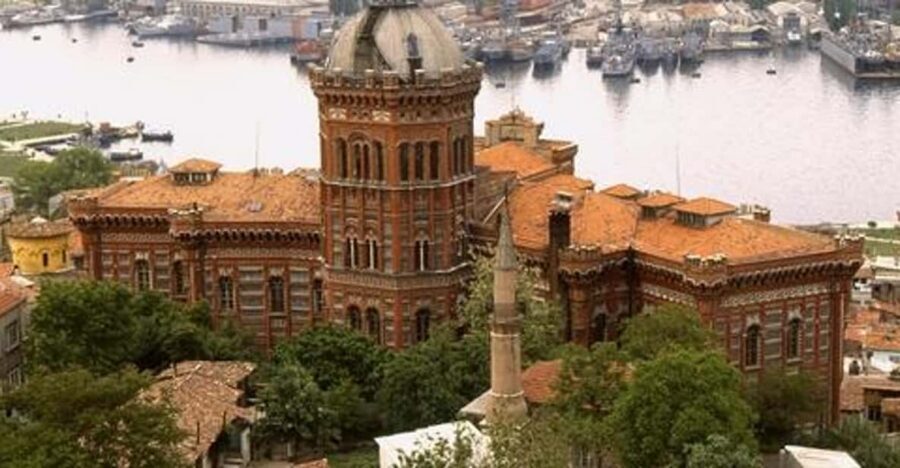
Next comes the Patriarchate at Fener, described as the seat of Orthodox Christianity after Constantine the Great declared Christianity the official religion of the Roman Empire. That shift is a key reason the Byzantine world looks the way it does. Once Christianity gained official status, the church didn’t sit on the sidelines—it gained influence, buildings, and political weight.
This stop works best when you listen for the “why,” not just the “what.” The goal isn’t to memorize dates. It’s to understand how religious authority and imperial authority started blending over centuries, until you’re walking through a city where the church is part of the power map.
Panagia of Blachernae: Hagiasma Holy Water and Hagion Lousma
The Church of Panagia of Blachernae is one of those places where the religious details are specific enough to stick in your brain. It’s known as the best known and most celebrated shrine of the Holy Virgin. And it comes with two famous practices tied to the site: the Hagiasma (holy water) and the Hagion Lousma (sacred bath).
Even if you’re not a pilgrim, this kind of detail makes your visit more grounded. You’re not just looking at a church. You’re seeing how people once approached healing, devotion, and spiritual hope through physical rituals connected to a particular location. That’s very “Byzantine”: faith expressed through place, ceremony, and tradition.
St. Savior in Chora (Kariye Museum): The Outside View That Still Matters
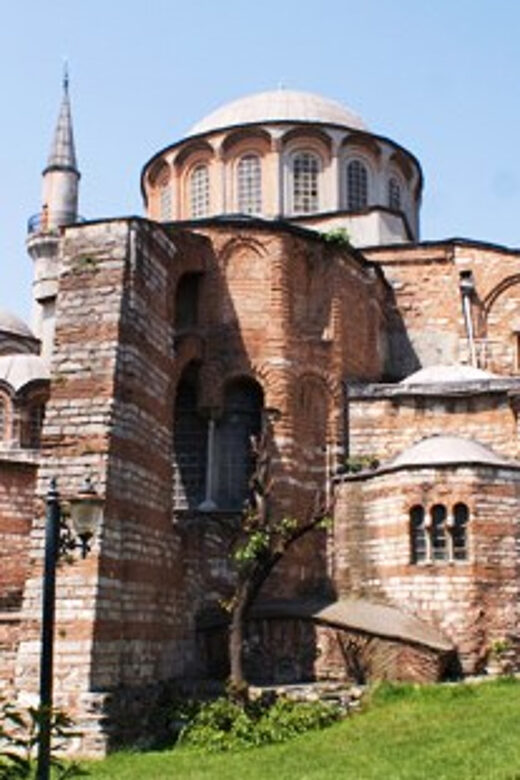
Then you stop at St. Savior in Chora, now the Kariye Museum. Important note: this is a visit from the outside only, with no interior viewing. The payoff is that the guide gives you the right frame for what makes the building famous—fantastic mosaics and frescoes portraying scenes from the bible.
So yes, you won’t be sitting inside with the big reveal of the artwork. But an outside stop can still be useful, especially if you want to avoid turning your day into one long “line + room + rules” routine. From outside, you get location and context, and you can later decide whether you want a separate, dedicated interior visit.
If you’re the type who loves museum interiors above street-level history, just know this might feel a bit “teaser.” It’s still a strong stop for learning how the Byzantine religious world was arranged across neighborhoods.
Anemas Dungeons: Prison Logic Under the Palace Complex
Now things get dramatic in a way that feels very practical. The Anemas Dungeons are part of the Blachernae Palace area and are described as unique in the world due to their architectural structure. They were used as a prison for high-ranking statesmen, and the setup is specific: 14 separate dungeons, each with two basements below sea level.
That’s the kind of detail that turns a dungeon stop from “dark hole, next!” into “how did they think this through?” You’re looking at a design that handles separation, control, and location. Below sea-level basements also suggest a careful approach to containment rather than improvisation.
If you like history that connects engineering to politics, you’ll appreciate this stop. It’s not a vague story. It’s a concrete system.



Tekfur Palace: The 12th-Century Pavilion By the Walls
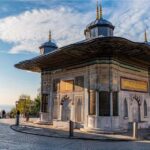
After the dungeons, you’ll move to Tekfur Palace, built in the 12th century and adjacent to the city walls. It’s described as the only surviving pavilion of the Blachernae Palace. That “only surviving” part matters because it changes the feel of the stop. You’re not looking at something restored to look like everything else. You’re looking at what remains after a long decline and reshaping of the city.
Tekfur Palace sits right in the zone where power lived close to defense. The adjacency to the walls isn’t a coincidence—it’s a reminder that Byzantine rulers weren’t separated from security planning. Their homes and institutions were built with the reality of siege, conflict, and survival nearby.
You’ll likely get more out of this stop if you keep one question in mind: how do you live where you might need to defend yourself? Tekfur Palace helps you answer it.
Walking the Byzantine City Walls: Scale You Can Feel
The final big visual anchor is the remains of the Byzantine city walls. These surrounded the acropolis of Byzantium and stretch about 13 miles (22 kilometers), with 96 towers and 9 main gates. Even in ruins, that scale is hard to ignore.
This is where the tour becomes more than “points of interest.” You start reading the city as a system: sea access on one side, churches and palace complexes in the middle, and long defensive lines that define the whole urban layout.
One of the best values of this tour is that it doesn’t just show you one wall segment and call it a day. The guide frames the walls as a defining structure of the empire that controlled the city for over 1,000 years. You’ll come away with a clearer mental map: where power was protected, where people could be controlled, and how big the project was to maintain that protection.
Value for $85: What You’re Really Buying
At $85 per person, the pricing feels fair when you look at what’s included. You get air-conditioned transportation, museum entrance fees, and skip-the-ticket-line assistance. You also get hotel pickup from centrally located Istanbul hotels, plus a live guide in English or Spanish.
That combo matters. Istanbul history can turn expensive fast when you piece together transport, tickets, and guides individually. Here, you’re paying for structure: a guide-led flow between sites, plus the parts you’d otherwise waste time organizing.
Two small “value reality checks”:
- The Chora stop is outside only, so don’t expect this to replace a full Kariye Museum interior visit.
- You might be in transit more than you think, since pick-up and shuttle timing can vary by hotel location.
Still, if you want a guided, historically connected route through major Byzantine landmarks in a half-day timeframe, this is a practical way to spend your time.
Guide Quality and the Off-the-Beaten-Path Feeling
A big reason this tour earns strong scores is the guide experience. One example from the info you’re given: Umut has been highlighted as an excellent guide and a true historian, with strong storytelling about the Constantinople and Byzantine Empire context. That kind of guiding changes the entire day. It turns random ruins and church names into a timeline you can follow without hunting for answers on your phone.
Another theme is that the route can feel less crowded than some top-tier “must-see” stops. That doesn’t mean it’s empty. It means you’ll likely get more room to think, take photos, and actually hear what you paid to learn.
Also, there’s mention that a guide may add one additional site. That’s not guaranteed in a way you should bet your day on, but it signals that the guides pay attention to pacing and what’s possible in the moment.
Practical Tips Before You Go
This tour asks you to bring a passport or ID card. That’s not a “nice to have”—it’s part of the entry and verification flow. Also, no pets and no smoking are enforced, as expected.
For a smoother day, plan for real walking between old stone sites. Even when you’re not going inside museums, you’ll still be moving and looking up a lot. Comfortable shoes will save you from turning history into soreness.
If you like language support, the tour guide is available in English and Spanish. That’s useful for understanding details like Hagiasma and Hagion Lousma, or the unusual specifics of the Anemas Dungeons setup.
Should You Book the Tour to Byzantium?
Book it if you want a guided, historically connected Byzantine route that goes beyond the usual photo stops. This is especially good for first-timers who want to understand why Constantinople mattered for so many centuries—and for people who like church history, imperial power, and defensive architecture in the same afternoon.
Skip it or rethink it if your priority is seeing the interior mosaics and frescoes at Kariye Museum. Because St. Savior in Chora is outside-only on this tour, you’d need a separate interior visit to fully satisfy that museum craving.
If you’re flexible and you like structure (guide + transport + entrance fees handled), $85 can feel like a smart trade for time saved and context gained.
FAQ
How long is the Tour to Byzantium?
The duration is listed as 4 hours. The sightseeing portion is described as a 3-hours tour, so expect extra time for the overall flow and hotel pickup/shuttle.
What are the main stops on the tour?
You’ll visit the Golden Horn area, the Patriarchate at Fener, the Church of Panagia of Blachernae, St. Savior in Chora (outside only), Anemas Dungeons, Tekfur Palace, and the remains of the Byzantine city walls.
Is the Kariye Museum (St. Savior in Chora) visit inside or outside?
It’s an outside visit only. The mosaics and frescoes are part of what the tour explains, but you won’t go inside during this stop.
Is hotel pickup included?
Yes. Pick-up is offered from centrally located Istanbul hotels. A free shuttle is offered between 13:00 and 14:00 depending on your hotel, and the shuttle takes 45 to 60 minutes.
Are entrance fees included?
Yes. Museum entrance fees are included in the tour price.
What identification do I need to bring?
Bring a passport or an ID card.