REVIEW · ISTANBUL
Western Turkey Explorer – 5 Days
Book on Viator →Operated by Tour Altinkum Travel · Bookable on Viator
Five days, lots of Turkey, zero stress. This is the kind of trip where logistics don’t eat your time: you get airport handoff, central hotel stops, air-conditioned land travel, and a steady rhythm between major sights. I especially liked the small-group pace (max 12) and the included breakfasts and lunches, which makes the schedule feel doable even when days are long.
One thing to plan for: entry tickets to most major sites are not included. You’ll still get guided help and skip-the-line support, but you should budget extra cash for entrances at places like Hagia Sophia, Topkapi Palace, Troy, and Ephesus.
In This Review
- Key highlights worth marking on your map
- Why 5 days of Western Turkey feels workable
- What you’re paying for: the value behind $750
- Istanbul first: getting the big icons done without a scramble
- Hagia Sophia Grand Mosque
- Blue Mosque and the Hippodrome remains
- Topkapi Palace
- Grand Bazaar jewel stop
- Gallipoli and Troy: history with a guided path, not a free-for-all
- Gallipoli National Park stops that match the land
- Troy (Truva)
- Pergamum and Asklepion: a day built for the slow thinker
- Pergamon Ancient City
- Temple of Artemis (the seven-wonders framing)
- Asclepion (the health-and-medicine story)
- Ephesus day from Kusadasi: the monuments plus the meaning
- Virgin Mary’s House
- Ancient City of Ephesus
- Temple of Artemis / Artemision remains
- Comfort and logistics: the stuff that actually saves your vacation
- Airport transfers and end-to-end flow
- Skip-the-line support, but plan for entry fees
- Guide quality shows up in the reviews
- Who should book this Western Turkey Explorer tour
- Should you book this tour?
- FAQ
- What’s included in the price?
- Are entry tickets to historical sites included?
- What meals are covered?
- How large is the group?
- What time does the tour start?
- Where do you start and end?
- Is free entry available for children?
Key highlights worth marking on your map
- Small-group size (max 12) keeps walking days less chaotic and questions easier to answer.
- Skip-the-line support is handled by your guide for historical sites, even though ticket fees are still separate.
- An organized Gallipoli day covers ANZAC Battlefields with stops tied to the landscape.
- Pergamum + the Asclepion gives you more than ruins, including the area’s health-and-medicine story.
- Ephesus with real context pairs iconic monuments with the story behind them, not just a photo list.
Why 5 days of Western Turkey feels workable
Western Turkey is big on “wow,” but it’s also geographically spread out. The real value of this tour is that it turns a complicated route into a set plan you can follow without constantly re-checking bus times, ferries, or check-in procedures.
You’re not just bouncing between Instagram stops. You get guided explanations as you move, plus planned meals and overnight bases that prevent the constant “where do we sleep tonight?” scramble.
You can also read our reviews of more tours and experiences in Istanbul

What you’re paying for: the value behind $750
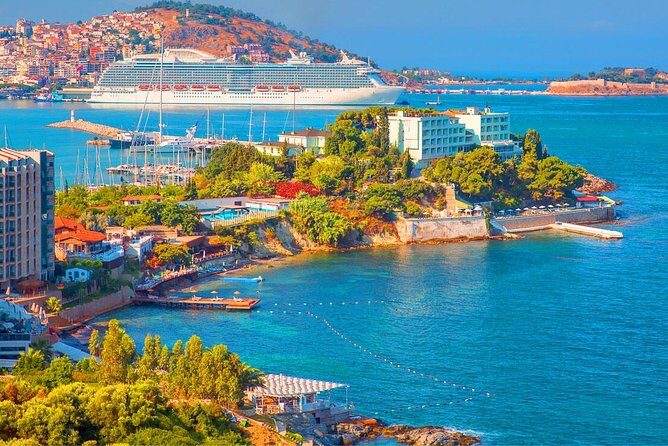
At $750 per person, this tour looks like more than a sightseeing ticket. You’re paying for 2 nights in Istanbul, plus 1 night each in Kusadasi and Canakkale, with breakfast and lunch built in across the trip.
That matters because food and lodging quickly become the hidden cost of DIY travel. When meals are included, you can arrive at key monuments less stressed and spend more of your energy looking, not calculating.
Also, the operator emphasizes small groups, centrally located “special class” hotels, and family-owned local restaurants. Those details matter because they usually mean fewer transfers to random hotel strips and a better chance to eat food that tastes like the region you’re in.
Istanbul first: getting the big icons done without a scramble
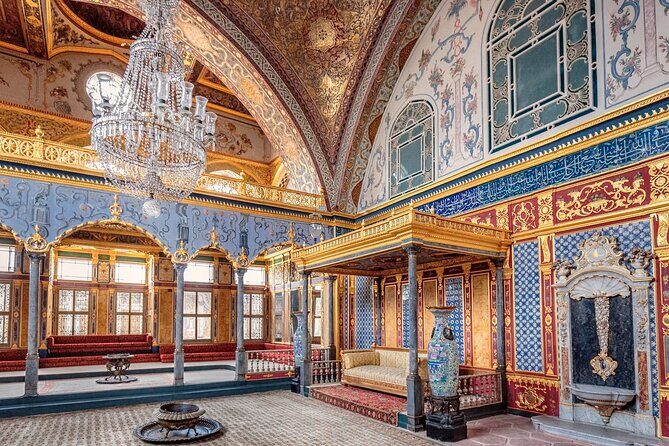
Day 1 is simple in the best way: after landing at Istanbul Airport, you’re greeted by a driver and transferred to your hotel for check-in. That kind of start helps a lot if your flight lands later than expected, or if you just don’t want to deal with Istanbul transit on day one.
On Day 2, you hit the classic Istanbul combo, in a smart order that minimizes backtracking.
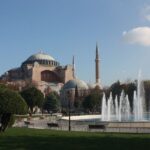
Hagia Sophia Grand Mosque
You’ll visit Hagia Sophia, known for its Byzantine-era origins and later Ottoman transformation. It’s one of those places where the building’s scale does the talking, and your guide’s background helps you notice what you’re seeing rather than just staring at a dome.
Admission isn’t included here, so you’ll want cash or card ready for ticket time.
Blue Mosque and the Hippodrome remains
From Hagia Sophia, you move to the Blue Mosque, famous for its interior design and six minarets. Afterward, you’ll see the only remains of the Hippodrome of Constantinople—three monumental columns and a fountain—where chariot races once played out.
This pairing is great because it gives you both the religious center and the civic entertainment space of old Istanbul in the same day.




Topkapi Palace
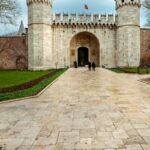
Topkapi Palace is next, the Ottoman imperial residence and government hub for centuries. It’s now a museum palace, and you’ll see a dense collection of items like porcelain, antiques, and religious relics (as described on the tour).
Topkapi’s admission is not included, so think of this as a “ticket budgeting day” in Istanbul.
Grand Bazaar jewel stop
The day ends with a visit to the Grand Bazaar Jewelers. You’ll be in one of the largest covered markets around, with lanes, entrances, and thousands of shops.
It’s not just shopping time, either. This is a useful stop if you want to understand the feel of traditional markets and pick up small gifts without turning your day into a hunt for locations.
Gallipoli and Troy: history with a guided path, not a free-for-all
Day 3 starts with an early pick-up and a drive to Canakkale. The trip includes a stop at the Gallipoli National Park area, where you get a guided tour focused on ANZAC Battlefields.
Gallipoli National Park stops that match the land
The tour flow includes Brighton Beach, ANZAC Cove, Beach Cemetery, Lone Pine Australian Memorial, Turkish and allied tunnels and trenches, Johnston’s Jolly, and memorials like 57th Regiment Turkish Memorial and Chunuk Bair New Zealand Memorial.
This is the kind of day where you get more from the guide than from the map. Standing in specific locations tied to the fighting helps you understand why the terrain mattered.
Troy (Truva)
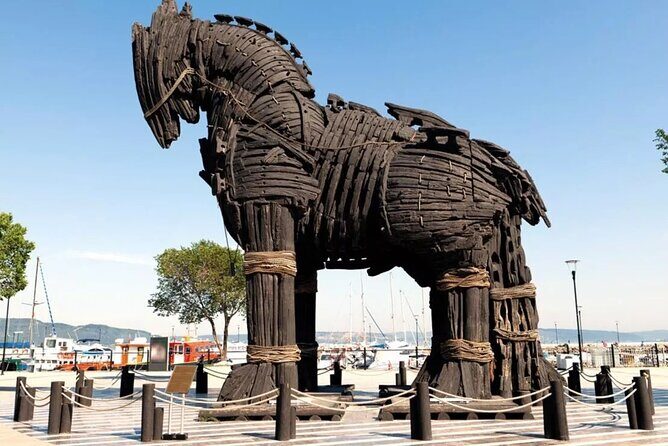
After Gallipoli, you move to the archaeological site of Troy. You’ll walk through UNESCO-recognized ruins tied to the stories most people already know—Trojan War, Trojan Horse, Helen of Troy, Achilles and Hector—and also the actual layout elements like the Roman bath, Odeon, and Temple of Athena areas.
Troy’s admission isn’t included, so you’ll want to be ready to pay the entry fee on arrival. The upside is that the site is built for walking, so your guide’s context can make the ruins feel less “random stones.”
Overnight in Canakkale keeps this part of the trip from feeling rushed, and it sets you up for the next day’s ancient-city sweep.
Pergamum and Asklepion: a day built for the slow thinker
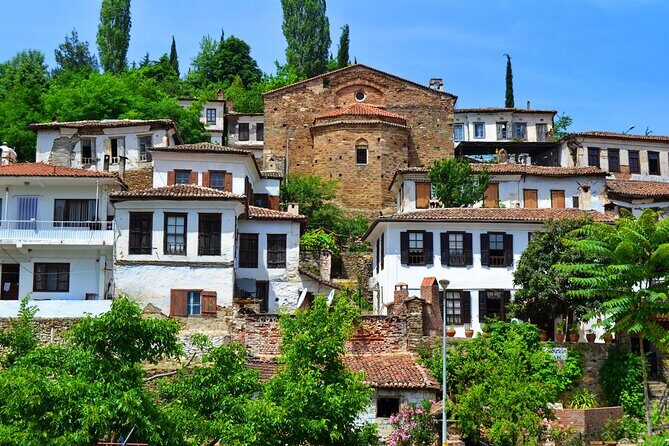
Day 4 begins with breakfast and check-out, then a drive to Pergamum. From here, the focus is ancient cities that weren’t just temples and theaters.
Pergamon Ancient City
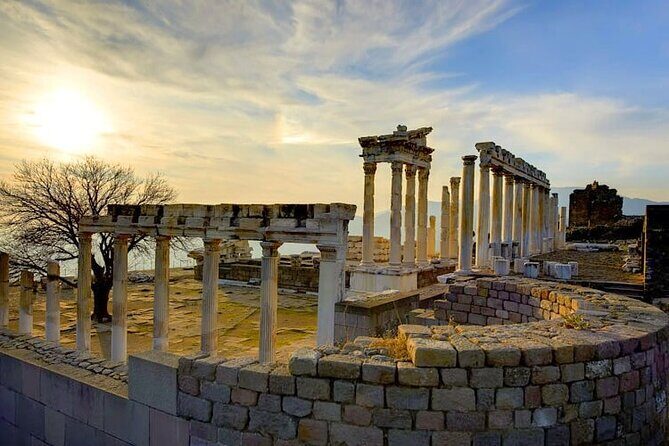
Pergamon is introduced as a capital for nearly four hundred years, with layers from stone and bronze ages through later periods. You’ll learn about a mix of cultures and see key named sites such as the Asclepion area, the Zeus Altar, and the Parchment Library.
Admission isn’t included, so this is another ticket day. I like pairing this with what you saw at Troy and Gallipoli, because you begin to notice how different ancient sites served very different needs—myth, power, worship, and learning.
Temple of Artemis (the seven-wonders framing)
You’ll also visit the Temple of Artemis area, described as one of the Seven Wonders of the ancient world. The tour notes that only a foundation and one column remain, and gives the scale of what once stood there.
Even with limited visible structure, the scale description is useful. It helps you judge what you’re seeing instead of assuming the ruins are “all there is.”
Asclepion (the health-and-medicine story)
The Asklepion stop is one of the most interesting because it’s about health and medicine, not only politics or mythology. The tour calls it the Pergamum God of Health area and connects it to figures like Hippocrates and Galenus.
You also get a break from “museum mode” with scenic notes along the route: Aegean sea views and lush olive trees, with mention of nearby Greek and Turkish islands.
Admission for Asklepion is not included, so again, budget for entry fees. The payoff is that your brain gets a different kind of ancient story—how people treated illness and how knowledge traveled.
Then it’s onward to Kusadasi for your overnight stay.
Ephesus day from Kusadasi: the monuments plus the meaning
Day 5 is where the tour leans into one of Turkey’s most famous ancient cities. You leave Kusadasi in the morning with your guide for a full-day schedule and a drop-off at Izmir Airport at the end.
Virgin Mary’s House
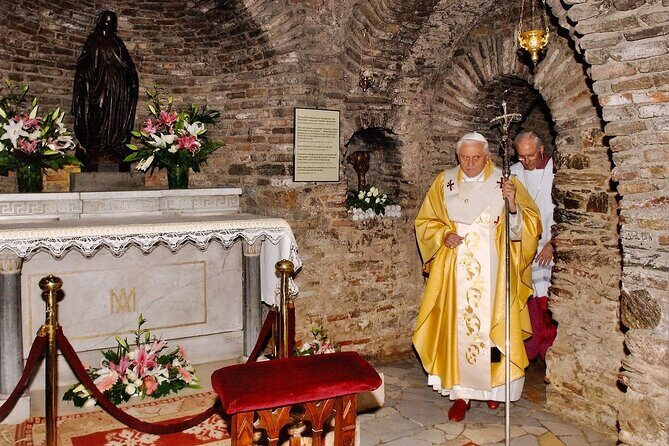
The day begins at Meryemana, the Virgin Mary’s House. The tour describes it as a site built from the 6th century, connected to earlier house foundations from the 1st century, and stated as Mary’s final house by the church.
Admission isn’t included. This stop can feel different from the classical ruins around it, and I like that variety because it keeps the day from being one long demolition-walk.
Ancient City of Ephesus
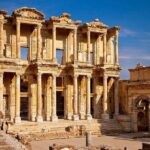
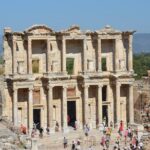
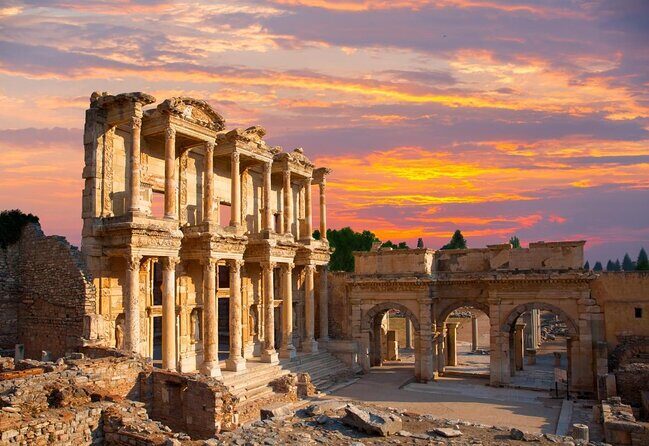
Next is Ancient Ephesus, described as the best-preserved classical city in the Eastern Mediterranean. You’ll learn it was the second-largest city after Rome, with more than 250,000 citizens, and you’ll walk among monuments like the library area and the large Roman theater.
Admission isn’t included for Ephesus itself, so treat it like a main ticket expense day.
The way this works for you: Ephesus can feel overwhelming if you go without context. With guided background, you tend to notice details—street layouts, how large buildings were positioned, and what kinds of public life were happening.
Temple of Artemis / Artemision remains
The tour includes the Temple of Artemis again, with a focus on the Artemision and its role as a famous pilgrimage place. Here too, admission is listed as free for this particular stop.
One practical note: because Ephesus ruins and the Temple of Artemis connection are closely tied, you may feel like you’re repeating a theme. That’s not always bad. It can help your brain “lock in” the big idea: this place was a religious magnet for centuries.
Finally, you get driven to Izmir Adnan Menderes Airport to end the service.
Comfort and logistics: the stuff that actually saves your vacation
This tour is designed to reduce friction. You’re in an air-conditioned, non-smoking vehicle for land travel, and the group size stays capped at 12.
That matters on days that start early or run long, because comfort and timing influence whether you enjoy the site or just power through it.
Airport transfers and end-to-end flow
You get transfer services both at the start (Istanbul Airport) and at the end (Izmir Airport). For most people, that’s the difference between feeling calm and feeling stressed during travel days.
Skip-the-line support, but plan for entry fees
The tour info says your guide has skip-the-line tickets for historical sites, helping you avoid long lines. Still, entrance fees are not included, so you’ll pay for many of the big sights.
To handle this smoothly, keep a budget for admissions and don’t assume everything is covered just because lines might be shorter.
Guide quality shows up in the reviews
The most praised element in the feedback is the human side: guides and drivers who are friendly, professional, and informed. Names that show up include guides like Gokan and Shukran, with drivers Hakan and Riza also singled out for professionalism and safe driving.
Even if your exact guide isn’t the same person mentioned, it’s a good sign when multiple reviewers highlight communication and expertise.
Who should book this Western Turkey Explorer tour
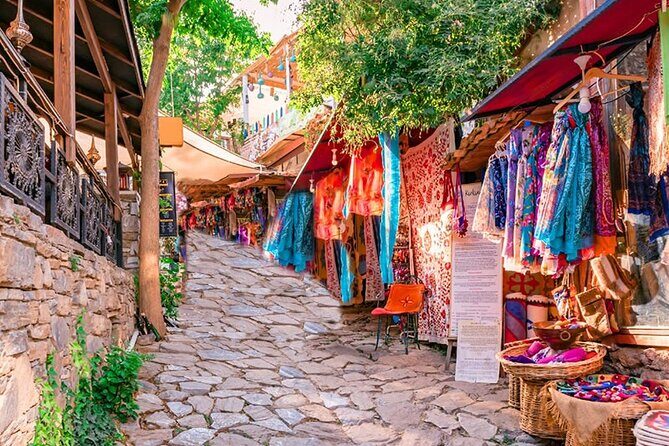
This works best for you if you want:
- Major sights in a logical route, with overnight stops that aren’t too frequent
- Guided explanations at each stop so the monuments feel connected
- A small-group feel where you can ask questions and move as a unit
It may not be ideal if you prefer full independence, last-minute detours, or if you hate paying separate admission fees day after day. Also, if you’re the type who wants maximum time inside museums (not just key highlights), you’ll want to know this is a “see a lot” format.
Should you book this tour?
I’d book it if you want Western Turkey’s headline sites—especially Istanbul plus Ephesus—and you’d rather spend your energy on the sights than on transit math. The combination of central hotels, included breakfasts and lunches, and the small-group cap makes the trip feel efficient in a good way.
I’d think twice if entry fees would stretch your budget. Because admissions are excluded for many sites, your final spending will be higher than the headline price.
If you do book, plan your day for walking shoes, keep some money set aside for ticket lines, and treat the guided context as part of the experience. When you do, this style of route turns “Turkey’s famous places” into a story you can follow, not a checklist you rush through.
FAQ
What’s included in the price?
The tour includes 2 nights accommodation in Istanbul, 1 night in Kusadasi, and 1 night in Canakkale, plus breakfast (4) and lunch (4). You also get transfer services from/to airports and land transportation in an air-conditioned, non-smoking vehicle.
Are entry tickets to historical sites included?
No. Entrance fees are excluded. The tour notes that your guide will have skip-the-line tickets to help you avoid long lines, but you’ll still pay the admission cost for sites where tickets are not included.
What meals are covered?
Breakfast is included for 4 days, and lunch is included for 4 days. Beverage with meals is not included.
How large is the group?
This tour has a maximum of 12 travelers.
What time does the tour start?
The meeting/start time is 8:30 am.
Where do you start and end?
It starts with pickup after arrival at Istanbul Airport (with a driver transfer to your hotel on Day 1). It ends with transfer to Izmir Airport at the end of Day 5.
Is free entry available for children?
Yes. There is free entry to historical sites for children 8 years old and below.