REVIEW · ISTANBUL
7 Day Istanbul-Cappadocia-Ephesus-Pamukkale Tour (Balloon Ride)
Book on Viator →Operated by Turkey Private Tours · Bookable on Viator
Turkey in one tight loop takes planning.
This tour is interesting because it strings together four of Turkey’s biggest “wow” regions with mostly pre-arranged transfers and timed sightseeing, so you spend less time figuring things out. I especially like the mix of Istanbul’s historic monuments and Cappadocia’s rock-carved world, plus the comfort of consistent day-to-day logistics. One consideration: the itinerary is packed, and the balloon ride is optional (weather can also affect timing).
What makes it feel low-stress is the way it’s organized around your movement—airport pickups, domestic flights between regions, and guides who handle the story. In the feedback I saw, people praised an assistant named Ibrahim for keeping things on track, including following through during the trip. Still, you should plan your energy for lots of walking in major sites and accept that some parts depend on schedules and daylight.
Key things to know up front: this is built for value (flights, meals, and many entrances are included), and it runs either as a small group (max 15) or as a private group. If you’re hoping for a slow, freeform trip, this schedule may feel like you’re always moving to the next stop.
In This Review
- Key highlights you’ll actually feel on the trip
- Why this Turkey loop works: Istanbul, Cappadocia, Ephesus, and Pamukkale in 7 days
- Istanbul arrival day (Day 1): get settled without hunting for transportation
- Sultanahmet day (Day 2): a focused walking route through the old core
- Cappadocia on Day 3: early fly-in and that cave-hotel feeling
- South Cappadocia essentials: Kaymaklı, Üçhisar, Love Valley, Red Valley, and Çavuşin
- Day 4: Göreme Open-Air Museum and Pasabag’s fairy chimneys
- How the route handles Izmir and your next transfer
- Ephesus day (Day 5): Celcius Library, theater views, and the Virgin Mary’s House
- Pamukkale and Hierapolis (Day 6): thermal terraces and the museum context
- Back to Istanbul on Day 6 and a flexible Day 7
- Price and value: what you get in the $1,750 package
- Balloon ride option: spectacular, but plan like a realist
- Who this tour is best for
- Should you book this 7-day Istanbul–Cappadocia–Ephesus–Pamukkale tour?
- FAQ
- Is the hot air balloon ride included in the price?
- Which meals are included during the tour?
- Are domestic flights included?
- Is there pickup in Istanbul?
- Is the Istanbul sightseeing walking tour private?
- Can I choose a small group or a private tour?
Key highlights you’ll actually feel on the trip
- Hassle-light transfers that connect Istanbul, Cappadocia, Ephesus, and Pamukkale with domestic flights
- Private guide experience for the walking day in Istanbul (walking tour, private guide)
- Cave hotel stay in Cappadocia after an early flight day
- Ephesus with the Celcius Library and Grand Theater circuit in one go
- Pamukkale thermal terraces plus Hierapolis museum on the same day
- Balloon ride planned as an optional add-on, with weather-driven rerouting possibilities
Why this Turkey loop works: Istanbul, Cappadocia, Ephesus, and Pamukkale in 7 days
This route is popular for a reason: each region is different enough that the contrast keeps the trip from feeling repetitive. Istanbul gives you layered empire history in compact areas. Cappadocia then flips the mood with rock-carved towns, valleys, and (if you add it) hot air balloons. Ephesus and Pamukkale bring you back to the ancient world in a more grounded way—ruins one day, thermal terraces the next.
The practical win is how the plan is stitched together. Domestic flights reduce long road days, and the schedule keeps you from losing whole mornings to logistics. If you like your travel with structure but still want time to wander on your own pace at certain stops, this format tends to fit.
Price is also part of the appeal: at $1,750 per person, you’re not only paying for guides. You’re also paying for domestic flights between regions, multiple meals, and several entrance fees included in the program.
You can also read our reviews of more tours and experiences in Istanbul
Istanbul arrival day (Day 1): get settled without hunting for transportation
Day 1 is straightforward. You land, get welcomed, and transfer to your hotel, with free time to handle jet lag, food, and a first look at your surroundings. The overnight in Istanbul matters because it helps you start the sightseeing days with less pressure.
If this is your first time in Istanbul, that free time is useful. You can do a casual evening walk, orient yourself near your hotel, and figure out how you want to manage crowds the next day.
Sultanahmet day (Day 2): a focused walking route through the old core
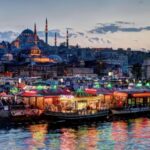
Day 2 is built like a greatest-hits walking day in Sultanahmet: Byzantine and Ottoman landmarks in one packed stretch. Expect a lot of iconic sights close enough to make sense on foot, with a private guide leading the route.
You’ll hit:
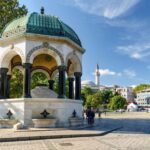
- Sultanahmet Square, including the Mysterious Serpentine Column, the Egyptian Obelisk, and the German Fountain. This is one of those places where history feels physical because it connects Roman-era and Byzantine-era public life.
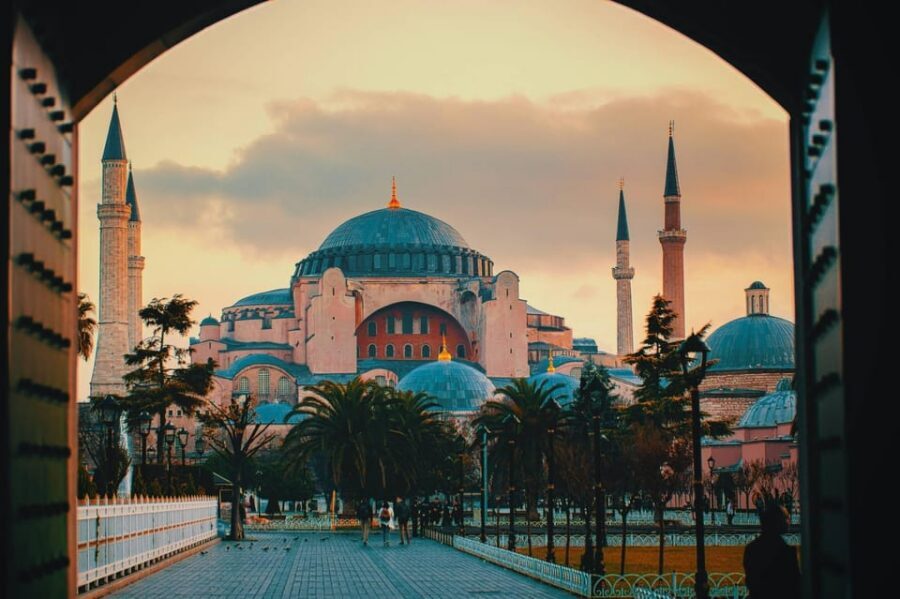
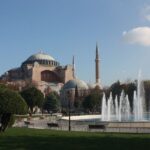
- Hagia Sophia Grand Mosque. The description here highlights the building’s evolution: built by Justinian, converted to a mosque under the Ottomans, used as a museum for about 75 years, and now used as a mosque. This is a strong stop for anyone who likes architecture with political turns baked in.
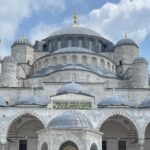
- Blue Mosque (Sultan Ahmed Mosque). The signature detail is the six minaretes and the use of Iznik tiles—those blue-and-tile visuals are a big reason people remember this one.
- Topkapı Palace (entry not included). Even if you don’t go deep into every room, it’s still worth knowing that the palace served as the administrative center and home of Ottoman sultans for centuries.
Then the quieter, atmospheric moments:
- Basilica Cistern, underground and cooler, tied to the city’s water needs in the Byzantine period. It’s also used for events and as a museum today, which helps explain why it still feels “alive,” not just abandoned.
- Grand Bazaar, a sprawling covered market where you can browse Turkish crafts, carpets, jewelry, antiques, silk products, and spices. It’s not just shopping—it’s a chance to see how Istanbul commerce works when it’s centuries old.
- Bosphorus Strait overview from the route. This is more about getting oriented than doing a full cruise, but the description is useful: the Bosphorus divides Europe and Asia and connects the Black Sea with the Sea of Marmara.
A small drawback to keep in mind: it’s a lot of stops in one day, so pace yourself. The walking tour note also says only a private guide is included; lunch, entry fees not listed as included, and any needed transportation are paid at your own pace.
Cappadocia on Day 3: early fly-in and that cave-hotel feeling
Cappadocia starts with motion. You’re picked up from your hotel early, transferred to the airport (SAW/IST), fly to Cappadocia, and then go straight into the South Cappadocia tour, ending with an overnight in a cave hotel.
I like this approach because it reduces the awkward “we arrive but don’t really start” day. You’re already in the right landscape and moving toward the main sights. Also, sleeping in a cave hotel is one of those experience markers that makes Cappadocia feel different from a normal city trip.
South Cappadocia essentials: Kaymaklı, Üçhisar, Love Valley, Red Valley, and Çavuşin
This day’s stops are arranged to give you variety in geology and human use of that geology—underground living, fortress use, and valley erosion features.
Kaymaklı Underground City (included)
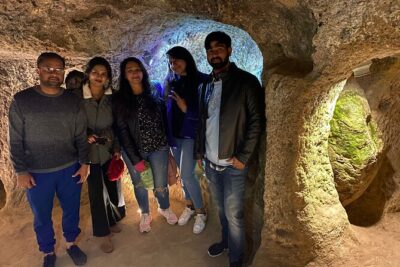
This is carved into soft volcanic rock and spread across multiple levels, with tunnels and rooms that were used as refuge by early Christians. The tour highlights how it could shelter large numbers of people and includes ventilation shafts, storage areas, and living spaces. It’s the kind of stop that changes how you picture the region—Cappadocia isn’t just scenery; it’s a place where people built systems underground.
Üçhisar Castle (included entry not stated, but stop is listed as free)
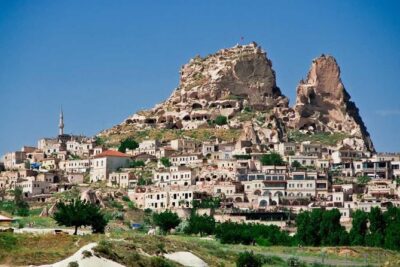
You’ll get panoramic views from the highest point in Cappadocia. Historically it was used as a fortress, and the description emphasizes the carved labyrinth of rooms and defensive layout. Even if you don’t spend ages exploring inside, the viewpoint alone helps you “read” the terrain.
Love Valley and Red Valley (both listed as free entry stops)
Love Valley is known for distinctive rock formations and is popular for hiking and photography, especially around sunrise/sunset. Red Valley is famous for its red and pink tones and also features rock-cut churches and cave dwellings. If you’re trying to photograph or just wander, these valleys give you time to slow down.
Çavuşin Village (free stop)
Çavuşin adds the village side of Cappadocia: rock-cut dwellings and churches, including a reference to the Church of St. John the Baptist. You also get panoramic views over surrounding valleys and fairy chimneys.
Net effect: by the end of Day 3, you’ll understand Cappadocia through multiple lenses—survival, defense, and everyday life—using the same volcanic “stage.”



Day 4: Göreme Open-Air Museum and Pasabag’s fairy chimneys
Day 4 is more about heritage and iconic shapes in the rocks.
Göreme Open-Air Museum (included)
This is a UNESCO World Heritage Site with rock-cut churches and monasteries from the Byzantine period. The key detail is the preserved frescoes and the way the churches are carved into the fairy chimney formations. It’s one of the most direct ways to connect the landscape to religious art.
Pasabag (Monks Valley) (included)
Pasabag is famous for fairy chimneys—rock pillars with multiple caps in some areas. The description also notes nearby ancient dwellings and churches carved into the rock, plus vineyards and views. This stop is ideal if you want dramatic “wow shape” geology with a sense of how people lived nearby.
Göreme Panorama and Devrent Valley (free stops)
Göreme Panorama gives sweeping views around Göreme, including the Open-Air Museum area. Devrent Valley—also called Imagination Valley—leans into rock formations that resemble animals and other shapes. It’s less about history and more about letting your eyes play.
Ürgüp and Avanos: the quieter culture stops
Ürgüp is known for cave hotels and a winemaking tradition, while Avanos focuses on pottery. The Avanos stop specifically mentions you’ll have a chance for a pottery demonstration, Turkish carpet weaving, and even handmade onyx making. Even if you don’t buy anything, watching how these crafts get made adds a real cultural layer beyond sightseeing.
How the route handles Izmir and your next transfer
At the end of the Cappadocia portion, the itinerary notes you’ll fly to Izmir (direct or indirect based on schedules). Depending on flight timing, you might stay in Cappadocia or Ephesus for the night before continuing.
That flexibility is helpful in real travel life. It reduces the odds you’ll be forced into exhausting late-night drives. Just keep in mind that your exact overnight location could shift based on flight schedules.
Ephesus day (Day 5): Celcius Library, theater views, and the Virgin Mary’s House
Ephesus is the main historical anchor of the trip. You’ll spend time in the ancient city circuit with the included highlights clearly mapped in the description.
Ancient City of Ephesus (included)
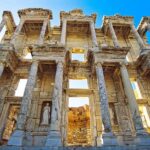
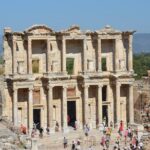
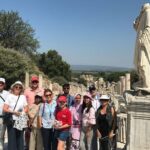
This is introduced as a port city with major Christian significance, including its mention as one of the Seven Churches in the Book of Revelation. You’ll see Library of Celsus, Temple of Hadrian, Grand/Great (Ancient) Theater, and more.
The included time blocks matter here. Ephesus is large, and having it handled as a guided visit helps you avoid the trap of wandering without context.
Meryemana (The Virgin Mary’s House) (not included admission)
This stop is on Bulbul Mountain, about 9 km from Selçuk town. The description says Saint John brought Mary there six years after Jesus’ death and that she spent her last days in the house. It’s a different tone from the ruins—quiet, devotional, and scenic by necessity.
Temple of Artemis (free stop)
The description references it as one of the Seven Wonders and points to Lydia King Croesus as founder. Even if you only get limited time, it’s a strong “scale check” stop that reminds you how huge these ancient places once were.
Harbour Gymnasium / Hamam (free stop)
This one is interesting because it’s presented as a harbor and bath area near Meryemana, and it notes that the hamam is now like a small lake with government plans to make it functional again. Stops like this are why guided routes are useful: they give you an explanation for what you’re seeing, even when the site isn’t fully restored.
Pamukkale and Hierapolis (Day 6): thermal terraces and the museum context
Day 6 combines the two big Pamukkale experiences: the thermal pools and the surrounding ancient setting at Hierapolis.
Hierapolis Arkeoloji Müzesi (included)
The museum link is smart. The description points out that Hierapolis has been associated with thermal springs since ancient Greeks, and it notes UNESCO heritage status since 1988. Seeing the museum framing first (or alongside) helps you understand that Pamukkale isn’t just a photo stop—it’s part of a long-used settlement pattern.
Pamukkale Thermal Pools / Travertines (included)
Here the emphasis is on the carbonate mineral deposits left by thermal spring water, and the meaning of Pamukkale as Cotton Castle because of the look. The tour framing also ties it to healing skin diseases, which at least gives you context for why people have long been drawn to this site.
Cleopatra Pools (not included admission)
These pools are described as above the Pamukkale travertines and fed by the same hot springs water, with the note that it was built as a pool for Cleopatra. Practically, this is the stop that lets you consider swimming/bathing—but since admission is not included, you should be ready to pay separately if you want the pool experience.
One consideration: Pamukkale is a “time-based” stop. Your best window can depend on how crowded it is and how your schedule lines up. Still, the included combination with Hierapolis keeps you from burning the whole day only on one area.
Back to Istanbul on Day 6 and a flexible Day 7
After Pamukkale, you fly from Denizli Airport to Istanbul, then transfer to your hotel. Day 7 finishes with an airport transfer timed to your international flight schedule.
This structure is practical because it protects your final day. Instead of worrying about last-minute transport, you’re timed out around your departure. Also, the itinerary says you can extend your Istanbul stay if you want, based on your schedule.
Price and value: what you get in the $1,750 package
Let’s talk value, not just cost. At $1,750 per person, the package is built around reducing the biggest budget drains in multi-region travel: flights, guides, and key entrances.
What’s included (as listed):
- Domestic fly tickets between cities
- Entrance fees for the activities mentioned in the program
- Breakfasts (5)
- Lunches (4)
What’s not included:
- Beverages during lunch
- Balloon flight tickets as an optional add-on
Then there are extras that quietly add value:
- Pickup service in Istanbul from various hotels
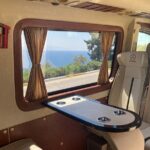
- Comfortable transfers in minivans/minibuses
- Options for small group max 15 or private tour exclusive to your group
- Mobile ticket
My practical take: if you were to book flights, a multi-day guide plan, and many entrances separately, the package can make sense. Where you’ll feel the difference most is in the reduced decision fatigue—someone handles the sequencing so you don’t spend your vacation comparing schedules.
Balloon ride option: spectacular, but plan like a realist
The hot air balloon ride is treated as optional and not included in the base price. Balloon ticket prices vary by season and demand, and the note says you should ask for it in special requests during booking.
The good news: safety is emphasized, and the rules for cancellations are weather-driven by the Civil Aviation Authority. If your balloon reservation is canceled due to weather conditions, you’re told you’ll receive a full refund.
The practical advice: don’t treat the balloon as your only reason for visiting Cappadocia. The itinerary itself includes a lot of strong historical and natural experiences, so even if the balloon doesn’t happen, the days still have meaning.
Who this tour is best for
This is a strong fit if:
- You’re short on time but want big-ticket regions without bouncing around on your own.
- You prefer clear structure and transfers over building your own route.
- You like guided context at major sites like Ephesus and Sultanahmet.
- You’re traveling with family or a group that values smooth logistics.
It may be less ideal if:
- You want a slow pace with long free afternoons every day.
- You’re sensitive to walking and want lighter days throughout.
Should you book this 7-day Istanbul–Cappadocia–Ephesus–Pamukkale tour?
I’d book it if you want a smart, time-efficient way to hit the highlights across Turkey and you don’t want to micromanage transport and admissions. The package structure—domestic flights, meals, and a guided core—creates the kind of “worry-free” trip people remember.
Skip or revise it if you’re balloon-dependent, dislike fast schedules, or want a more independent itinerary with lots of unplanned time. If you do book, add the balloon only after you understand that it’s weather-based, and keep your energy for the big walking days.
If you want, tell me your travel month and whether you want balloon included. I can suggest how to plan your days around daylight and realistic timing.
FAQ
Is the hot air balloon ride included in the price?
No. The balloon ride is listed as an optional activity, not included in the price for all options. Balloon ticket pricing varies by season and demand, and you’re expected to secure the ticket with a special request during booking.
Which meals are included during the tour?
The package includes breakfast (5) and lunch (4). Beverages during lunch are not included.
Are domestic flights included?
Yes. Domestic fly tickets between the cities are included, and the program indicates you receive economy-class tickets with 15 kg check-in luggage and 8 kg hand baggage for each domestic flight.
Is there pickup in Istanbul?
Yes. Pickup service is available from various hotels in Istanbul, and you’re transferred from the airport to your hotel on arrival.
Is the Istanbul sightseeing walking tour private?
Yes. The note states this is a walking tour, and only a private guide is included. Lunch, entry fees, and any necessary transportation are paid at your own pace.
Can I choose a small group or a private tour?
Yes. The tour offers a small group option with a maximum of 15 people and a private tour exclusive to your group.