REVIEW · ISTANBUL
8 Days MINI Group Tour Istanbul, Ephesus, Pamukkale, Konya, Cappadocia
Book on Viator →Operated by Small Group (Max. 10 Pax) & Private Tours in Turkey · Bookable on Viator
A tight Turkey route, with breathing room. This 8-day small-group trip threads together Istanbul, Cappadocia, Pamukkale, and Ephesus/Kuşadası with domestic flights built in, so you spend less time figuring out connections and more time seeing the big moments. You also get a real mix of stays, from boutique city hotels to cave and thermal properties.
I especially like two things: cave and thermal hotels that make the overnight parts feel like an attraction, not just downtime. And I like that entrances and guided time are handled with pre-paid tickets and a licensed guide, which cuts friction in the most crowded spots.
One thing to consider: this is a fast-moving plan with long travel days and plenty of walking in historic areas. If you hate early starts, or you’re not a confident walker, you’ll feel the pace; Hagia Sophia also has an interior-visit setup where you’ll need a smartphone and headphones.
In This Review
- Key highlights at a glance
- Why this route works: Istanbul to Cappadocia to Ephesus, without the headache
- What the $1,579 price buys you (and where it can save your time)
- Istanbul in one focused day: Blue Mosque, Topkapi, Hagia Sophia, Bazaar
- Cappadocia with real variety: Fairy Chimneys, tunnels, pottery, and fresco churches
- Konya en route to Pamukkale: caravanserai stops and Mevlana’s mausoleum
- Pamukkale’s travertines and Hierapolis: white terraces plus Roman-era scale
- Ephesus day: Virgin Mary’s House, marble streets, and the Artemis Temple finale
- Comfort and logistics that keep the trip enjoyable
- The one downside to plan around: pace and site rules
- Who should book this tour, and who should think twice
- Should you book this 8-day mini group tour?
- FAQ
- How many people are in the group?
- Are flights included?
- What hotel types are included?
- Are entrance fees included?
- What’s the luggage allowance for the included flights?
- Is Hagia Sophia included, and are there special rules?
Key highlights at a glance
- Max-10 group size keeps days from feeling chaotic
- Domestic flights included reduce backtracking and improve pacing
- Cave and thermal hotel nights turn sleep into part of the experience
- Hagia Sophia interior visit rules mean bring/arrange headphones
- Pre-paid entry with licensed guiding helps you move faster at major sites
- Major sights in one loop from Topkapi to Ephesus to Pamukkale terraces
Why this route works: Istanbul to Cappadocia to Ephesus, without the headache
The smartest part of this trip is how it strings regions together in an efficient loop. You’re not doing one city per day and then staring at travel days like they’re the main event. Instead, the structure is built around clustering the “must-see” areas: Ottoman-era Istanbul, Central Anatolia’s rock formations, Pamukkale’s white terraces, and the marble streets of Ephesus.
And because the group cap is 10 people, you usually get the rhythm of a guided small tour rather than a busload experience. That matters at places like the Grand Bazaar and Ephesus, where the crowds can turn your visit into a survival game if you’re not shepherded.
If you want Turkey in a week-plus, with planning handled for you, this is a practical way to do it.
You can also read our reviews of more tours and experiences in Istanbul.

What the $1,579 price buys you (and where it can save your time)
At $1,579 per person, the real question is: what’s included that would cost you more if you booked it all separately? Here, you get:
- 7 nights accommodation in categorized 4-star/5-star hotels, including a cave hotel in Cappadocia and a thermal hotel in Pamukkale
- Domestic flights: Istanbul to Cappadocia and Izmir back to Istanbul
- Licensed guiding across the key sites
- Entrance fees handled by your guide with pre-paid tickets to help you skip the line
- Airport transfers by private vehicle
- 7 breakfasts and 2 dinners (so you don’t start every day hunting for food)
That bundle is the value play. Hotels in cave/thermal styles tend to cost more than standard rooms, and domestic flights are rarely cheap when you add them on yourself. Even if you don’t love every single stop, you’re paying for a carefully packaged “logistics layer” that prevents the usual time loss.
The only cost you should expect is personal spending and drinks, plus anything not listed in the meals.
Istanbul in one focused day: Blue Mosque, Topkapi, Hagia Sophia, Bazaar
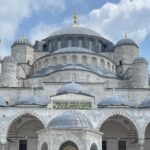
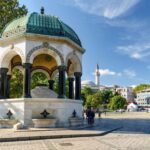
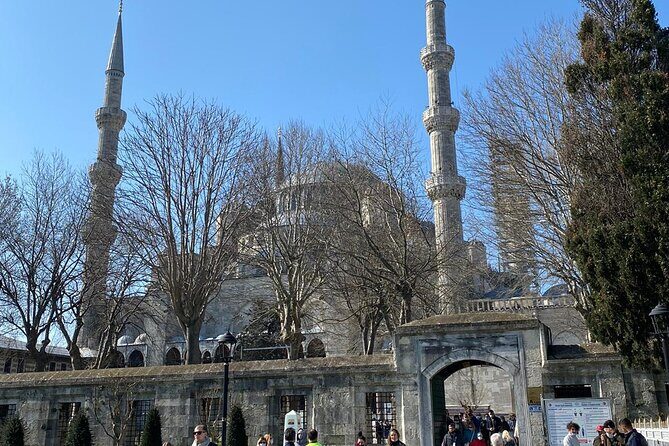
Your full Istanbul day is heavy in the best way. It starts with the Blue Mosque, known for its Iznik tiles. This is one of those places where the beauty hits immediately, but the bigger value is the context your guide adds: how Ottoman design language shows up in ceramics, light, and layout.
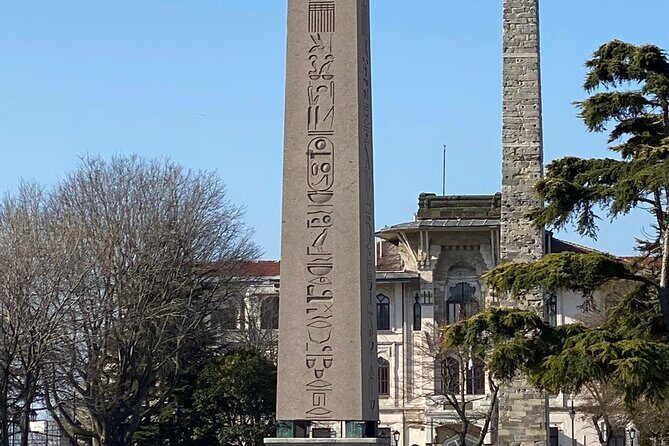
Next comes the Hippodrome Square, a stop that’s short but useful. You’re looking at a site tied to chariot races and also Byzantine-era unrest. Think of it as the “stage” where power and public spectacle met.
Then you head to Topkapi Palace, built as the Ottoman sultans’ residence and also the administrative and educational center of the state. The highlight here is that you visit Topkapi’s weapons section, which gives you a different angle than people expect. Instead of only art and architecture, you also see how rulers equipped and protected an empire.
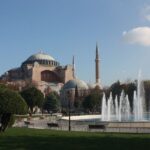
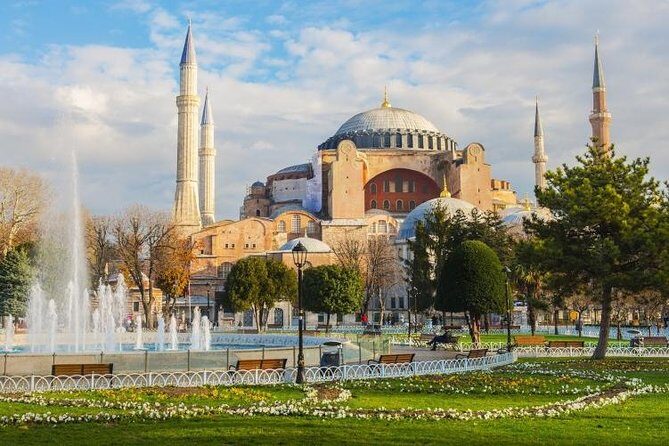
After that is Hagia Sophia (St. Sophia). The big practical update is the interior guiding policy: live guiding isn’t allowed after the mid-January 2024 rule. You’ll follow an audio-style system using your smartphone and headphones. If you don’t have headphones, you can buy them at the entrance for $3.5 USD. I’d treat this as a checklist item: pack a small pair of earbuds so you’re not scrambling at the door.
Finally, you end at the Grand Bazaar, one of the world’s oldest covered markets. It’s huge, with 58 covered streets and 1,200+ shops, but the point of the stop isn’t shopping pressure. It’s walking through a living maze of trades: jewelry, pottery, spices, and carpets. If you’re curious, it’s fun. If you’re not, you can still enjoy the architecture and atmosphere without buying anything.
Cappadocia with real variety: Fairy Chimneys, tunnels, pottery, and fresco churches
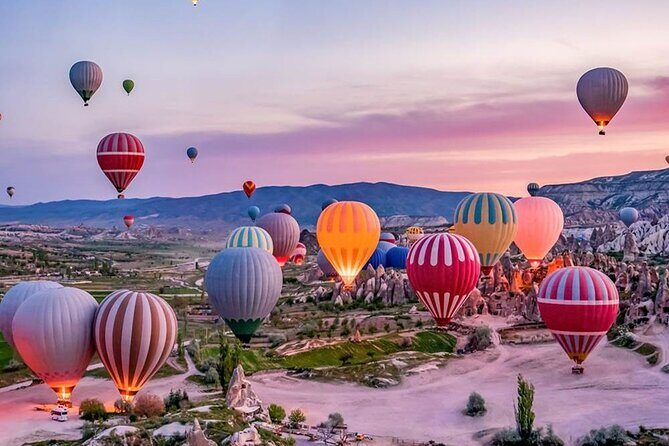
Cappadocia is where this trip stops feeling like a checklist and starts feeling like a place. You land in the region and meet your guide, then start with the landscape around Ürgüp.
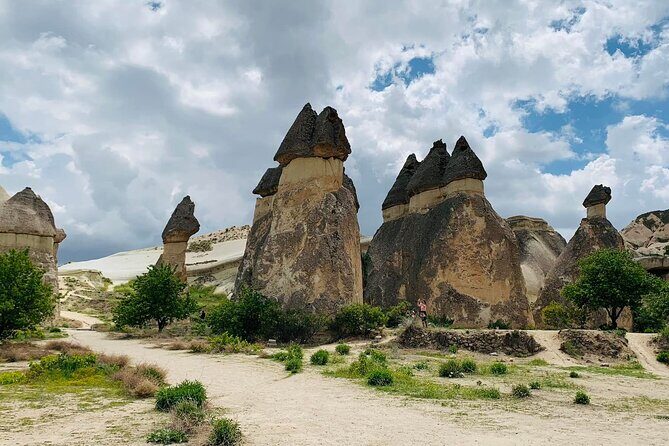
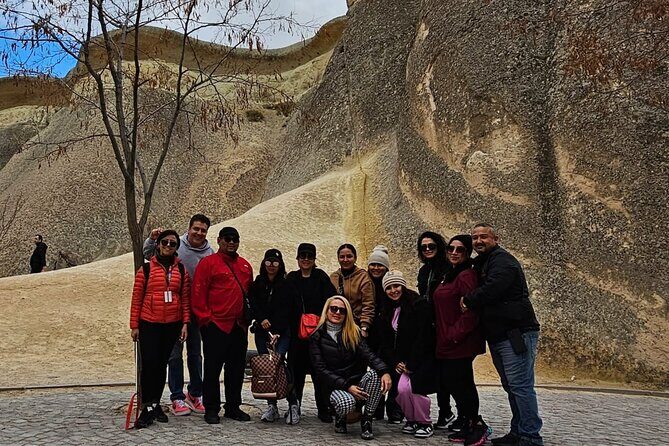
You’ll see the Fairy Chimneys, including the Three Sisters formations, and your guide explains why you see so many pigeon houses carved into the rock. That detail matters because it connects the scenery to how people actually used the land. It’s not only photo backdrops; it’s also built habitat logic.
Next comes the surprise stop: Ozkönak Underground City. Underground cities can feel similar on paper, but here the tour includes what makes this one distinct: its strata of volcanic granite, connected tunnels across levels, and a pipe communication system used for ventilation when the city was sealed. It’s the kind of engineering detail you remember later when you’re reading about the broader region.
The following day expands the variety. You start with the lunar-style rock formations (including the Devrent Valley viewpoint) and then move to Pasabag, famous for its fairy chimneys. Your route also references the area around Zelve and the troglodyte-style setting, giving you a sense of how people carved daily life into the geology.
Then you go to Avanos for a traditional pottery workshop at Oren Yeri. Avanos is known for terra cotta work for thousands of years, and you get to see how this craft links to the region’s clay and history.
After lunch-style timing, you visit the Göreme Open-Air Museum, where the focus is Byzantine rock-cut churches and frescoes from roughly the 10th to 13th centuries. This is one of those stops where your guide’s pacing helps; otherwise it’s easy to feel like you’re staring at walls without understanding what you’re looking at.
You wrap with Uchisar Castle for panoramic views over the valleys. Even if you’ve seen Cappadocia photos before, the viewpoint is worth it because it makes the “shape” of the region click.
Konya en route to Pamukkale: caravanserai stops and Mevlana’s mausoleum

On the way from Cappadocia down to Pamukkale, you get two cultural stops that prevent the day from being only transit.
First is Sultanhan Caravanserai, a 13th-century Seljuk masterpiece you’ll visit on the road. Caravanserais are practical architecture, built for travelers, animals, and safety. It’s a useful contrast to the rock-carved world of Cappadocia.
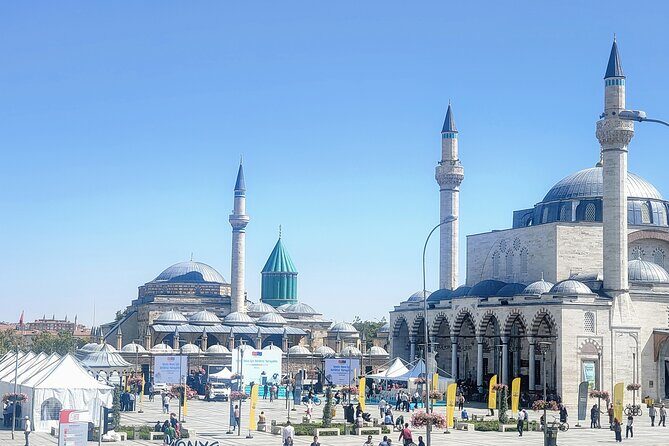
Then you head to Konya for the Mevlana Museum (Mausoleum of Mevlana), dedicated to the mystic. This stop is shorter than a full museum day, but it gives you a feel for how different Turkey’s spiritual and artistic traditions can be from what you saw in Istanbul.
From Konya, you continue to Pamukkale and check into your thermal hotel. The highlight here is not just being near the terraces; it’s the chance to use the thermal pools. You’re given time to swim until 22:30, which is perfect when your legs are tired from walking all day. It’s also a calmer time to be in that setting, compared to midday crowds.

Pamukkale’s travertines and Hierapolis: white terraces plus Roman-era scale
The next day is built around two experiences back-to-back: ancient Hierapolis and the natural wonder of Pamukkale terraces.
In Hierapolis, you’ll see key Roman-era structures such as the Theatre, Apollo Temple, and the Necropolis. The necropolis stop is especially powerful because the scale of the city’s burial landscape makes the ancient population feel real.
Then you shift to the terraces. The travertines look like snow or cotton when you’re watching the mineral flow shape the white formations. The Turkish name Pamukkale literally points to that cotton-castle image, and it’s easy to understand why people compare it to foam, snow, or chalk cliffs.
After the terrace visit, you drive to Kuşadası and overnight there. This base makes your upcoming Ephesus day more manageable, since you’re not commuting from farther inland.
Ephesus day: Virgin Mary’s House, marble streets, and the Artemis Temple finale
This is your big “Roman meets early Christianity” day. You start at the House of the Virgin Mary (Meryemana) on the Aladag Mountains, about five miles from Ephesus. The stop is significant because it ties the site to the tradition that Mary lived in Ephesus after early Christian accounts. Your guide also shares that the house was declared a pilgrimage site in 1892, and that Pope Paul VI visited on July 26, 1967.
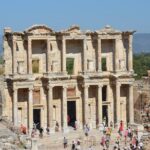
Then you go to Ancient City of Ephesus for a long walk. The route is packed with headline structures: the Celsus Library, Commercial Agora, Grand Theater, plus major streets and fountains. The theater detail matters: it was built around the 3rd century B.C. and expanded under the Romans to about 24,000 spectators. That’s the kind of scale that makes a guided explanation feel necessary.
Your tour also includes iconic stops along Curetes Street, the State Agora, and the gate areas tied to Mihridates and Mazes. If you like seeing how cities were organized—public life, religion, commerce—Ephesus is one of Turkey’s best places to understand city planning in stone.
You finish with the Temple of Artemis, one of the Seven Wonders of the ancient world. Even though what you see today can feel more fragmentary than in a museum model, your guide’s context helps you imagine what the original scale likely looked like.
Later, you drive to Izmir airport, catch your flight back to Istanbul, and then overnight in Istanbul.
Comfort and logistics that keep the trip enjoyable
This tour is set up with practical comfort in mind:
- Air-conditioned, non-smoking vehicle throughout the ground transfers
- Private airport transfers for you and your group
- Mobile ticket included (less paper chaos)
- One main group experience with a maximum of 10 travelers
The baggage limits are worth noting: 15 kilos checked and 8 kilos in cabin for the domestic flights. If you’re the type who travels with a heavy camera bag or a lot of souvenirs-in-the-making, you’ll want to pack with those numbers in mind before you reach the airport.
One more practical point: there are occasional scheduling swaps when flights or public holidays require it. The tour operator can change whether you fly via Cappadocia airport on Day 3 versus Izmir airport on Day 6 (and do the reverse) without changing the core hotel and site standards. That flexibility can be a hidden benefit because it avoids the itinerary rigidity that sometimes causes delays.
The one downside to plan around: pace and site rules
The trip asks you to handle a lot in a short span. You’ll be moving through multiple countries-of-history sites in a few days, and that takes stamina. The good news is the group size and guided routing reduce the stress. The honest part is that the physical demand is real, especially if you’re not used to uneven ground, stairs, or long museum walking.
Also, don’t ignore the Hagia Sophia rule on interior guiding. If you arrive without headphones or without the ability to use your phone, you’ll need to buy them at the entrance for $3.5 USD. That’s not a deal-breaker, but it’s a avoidable annoyance if you plan better at home.
Who should book this tour, and who should think twice
This one is a strong fit if:
- you want major Turkey highlights in one structured trip
- you like the idea of staying somewhere unusual (cave and thermal hotels)
- you prefer a small group with a licensed guide instead of self-guiding the whole route
You might think twice if:
- you want a slow travel pace with long free time in each city
- you hate early departures and airport days
- you want total control over what you see and when
A small note based on the trip’s reputation: people often praise the smoothness of transfers and the clarity of communication before arrival. You’ll see names like Orkan and Murat credited for guiding and driving, and Leyla and Sinan for strong guiding in Istanbul and during the Ephesus stretch. That lines up with what you’ll feel day to day: the “people part” matters on a tour like this.
Should you book this 8-day mini group tour?
Yes, if you want an efficient, guided loop that hits Istanbul, Cappadocia, Pamukkale, and Ephesus without spending your trip days stuck on logistics. The value comes from the package structure: domestic flights, pre-paid admissions, good hotel types, and meals that prevent decision fatigue.
Before you book, check two things: your tolerance for walking and your readiness for the Hagia Sophia interior audio-phone setup. If those are fine, this is an easy “let someone else plan it” choice that still keeps the trip personal thanks to the max-10 group limit.
FAQ
How many people are in the group?
The tour is capped at a maximum of 10 travelers, which keeps it small-group rather than bus style.
Are flights included?
Yes. Domestic flights are included for Istanbul to Cappadocia and Izmir to Istanbul.
What hotel types are included?
Accommodation is included for 7 nights in 4-star and 5-star options, including a cave hotel in Cappadocia, a thermal hotel in Pamukkale, and hotels in Kuşadası.
Are entrance fees included?
Yes. Entrance fees are included, and your licensed guide has pre-paid tickets to help you skip the line.
What’s the luggage allowance for the included flights?
The included domestic flights allow 15 kilos checked and 8 kilos cabin.
Is Hagia Sophia included, and are there special rules?
Hagia Sophia is included. For the interior visit, live guiding isn’t allowed under the current rule, so you’ll follow an audio-style system using a smartphone and headphones; headphones can be bought at the entrance for $3.5 USD if needed.