REVIEW · ISTANBUL
Bosphorus Boat Tour 3 Hour with Asian Side Stop in Istanbul
Book on Viator →Operated by IMCA TOURISM · Bookable on Viator
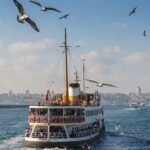
Two continents, one calm boat. This 2–4 hour Bosphorus cruise is a smart way to see Istanbul from the water, lining up major landmarks like Galata, Dolmabahçe, and the Ottoman forts with bridge-crossing views that feel almost too good to be true. I especially like how the route keeps you facing the right direction for skyline photos, with the Bosphorus strait acting like a moving viewpoint.
I also like the on-board comfort for the price: Wi‑Fi on board, an in-person guide speaking English, and a relaxed pace that doesn’t feel like you’re sprinting between monuments. If you get a guide with clear explanations (one guide named Olga is specifically praised for helpful English), you’ll get more out of every stop than just names and photos.
One thing to consider: the experience can feel weather- and timing-dependent. If it’s cold, the lower level may be drafty, and if the boat audio isn’t loud enough where you sit, narration can get hard to catch; plus, the Asian-side walk time sometimes feels shorter than the plan.
In This Review
- Key Highlights at a Glance
- Why a 3-Hour Bosphorus Cruise Beats a Marathon Day
- Getting Oriented: Sarıdemir Dock to Galata Bridge Views
- Galata Tower, an Art Museum Pass, and the Dolmabahçe Double-Feature
- Ortaköy’s Waterfront Life and the Photo Rush Under Bosphorus Bridge
- Bebek to Hidiv Kasrı: A Breather of Green and Elegance
- Ottoman Fortresses in Motion: Rumeli Hisarı and Anadolu Hisarı
- Küçüksu Pavilion and Kuleli Military High School: Smaller Landmarks, Clear Views
- Beylerbeyi: The Asian-Side Stop That Can Add Context Fast
- Maiden’s Tower to Süleymaniye: Big Peninsula Icons from the Water
- Seats, Sound, and Weather: How to Make This Trip Feel Easy
- Price and Value: What $12.09 Buys You in Real Terms
- Should You Book This Bosphorus Boat Tour?
- FAQ
- How long is the Bosphorus boat tour?
- Is the tour in English?
- What is included in the ticket price?
- What is not included?
- Where does the tour start and end?
- Does the tour go under major Bosphorus bridges?
- Do you have time to get off the boat on the Asian side?
- Is Beylerbeyi Palace admission included?
- How many people are on the tour at once?
- What happens if weather is bad or I cancel?
Key Highlights at a Glance
- Breathtaking bridge moments: you sail under the Bosphorus Bridge and also pass beneath the Fatih Sultan Mehmet Bridge
- Asian-side stop included: a 1-hour break in Beylerbeyi with the option to see Beylerbeyi Palace (admission is free)
- A lot of Istanbul in one go: Galata, Dolmabahçe, Ortaköy, Rumeli Hisarı, Anadolu Hisarı, Topkapı area, Yeni Camii, and Süleymaniye
- Good value for the length: guided cruise for about 3 hours total time on the water
- Choose your seat wisely: people recommend the left side for best views
- Cold-weather reality check: bring warm layers in late fall or winter
Why a 3-Hour Bosphorus Cruise Beats a Marathon Day
Istanbul is huge, and it can be hard to know where to spend your energy on a first trip. This tour is built around a simple idea: if you can handle being on a boat for a few hours, you can “collect” skyline moments fast. You get the long waterfront lines, the bridges, and the neighborhood look of both Europe and Asia without changing transit plans every hour.
The good part is that the route hits the stuff you actually want to see from water. Galata Bridge, Dolmabahçe, Ortaköy, the Ottoman fortresses, and the big domes on the peninsula all show up in the same continuous visual story. You’re not just ticking boxes—you’re watching Istanbul arrange itself differently every few minutes.
You can also read our reviews of more tours and experiences in Istanbul.

Getting Oriented: Sarıdemir Dock to Galata Bridge Views
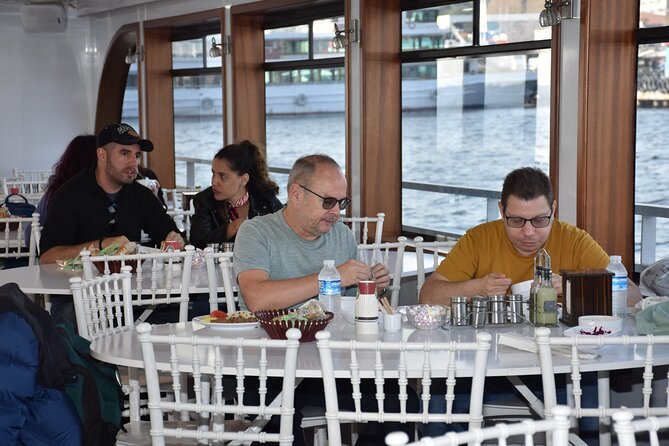
You start at Sarıdemir, Ragıp Gümüşpala Cd. No:36, 34134 Fatih/İstanbul and end back near the same meeting point. No hotel pickup means you’ll want to arrive a bit early and get your bearings on foot and by local transit.
From the start, the cruise moves into one of the most iconic frames of the city: the area around Galata Bridge. This is where the city’s old-meets-new energy is easy to feel. From the boat, you’ll see the connection between the historic core and the modern district feel of Karaköy—plus the promenade-style atmosphere where people are out fishing and walking.
It’s a great opener because it sets expectations. Istanbul is meant to be seen layered: stones, water, bridges, and movement. Then the tour starts layering in the big-name landmarks.
Galata Tower, an Art Museum Pass, and the Dolmabahçe Double-Feature
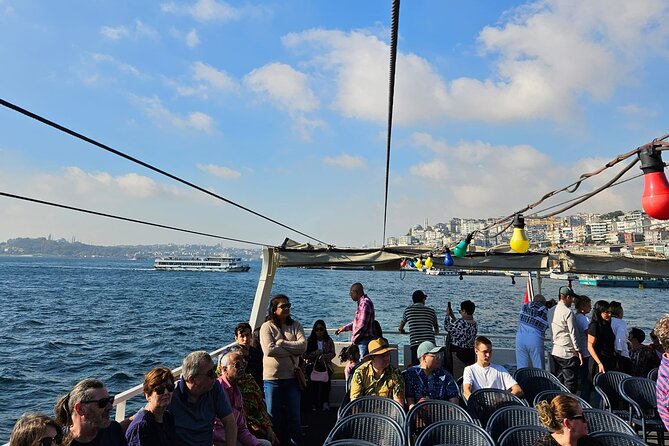
After the early bridge views, the boat heads into the Galata area again from the water side. You’ll take in Galata Tower, which the tour frames not just as a medieval tower but as a legend-filled landmark tied to Ottoman-era stories. Whether you’re into the historical details or just the silhouette, the tower works from the Bosphorus because it rises cleanly from the surrounding district.
Next comes a calmer-looking stop point: the cruise passes by the Istanbul Painting Museum, linked with the legendary Ottoman architect Mimar Sinan. Even if you don’t step in, passing by is still useful. It reminds you that Istanbul’s cultural story isn’t only mosques and palaces—it also includes the country’s visual art evolution.
Then the cruise shifts to the “wow” zone on the European waterfront: Dolmabahçe Mosque and Dolmabahçe Palace. From the water you see why these places matter. The mosque’s ornate architecture comes into view from angles you don’t get on the street, and you also get a peaceful sense of space from the shoreline perspective.
Dolmabahçe Palace is the dramatic moment. You’ll notice the European-inspired design language mixed with Ottoman artistry. The waterfront setting is what makes it feel special: palace windows and façades reflect light across the Bosphorus, and the whole front becomes a theater wall for the moving boat.
Ortaköy’s Waterfront Life and the Photo Rush Under Bosphorus Bridge
When the cruise reaches Ortaköy, you’ll see why this neighborhood is a favorite for walking around and lingering. The area has cobblestones and a lively mix of daily life and scenic scenery, and from the water it all reads as a postcard you can move past.
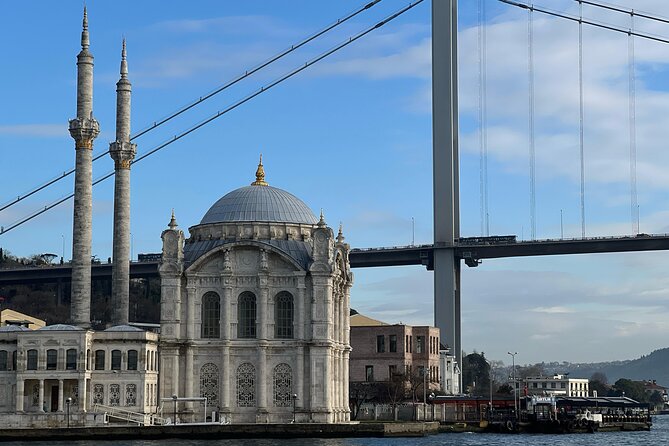
A highlight here is the Ortaköy Mosque, which tends to look almost like it’s sitting in the water because of its waterfront position. The dome and ornate details show up best when the light hits at the right angle, so plan to slow down mentally for photos even if your brain wants to keep moving.
Then comes one of the main-ticket sensations: you sail directly under the Bosphorus Bridge. That moment matters because it changes scale. On the water, the suspension bridge doesn’t feel like a distant landmark. It feels like you’re passing through the artery of Istanbul—literally between Europe and Asia.
Bebek to Hidiv Kasrı: A Breather of Green and Elegance
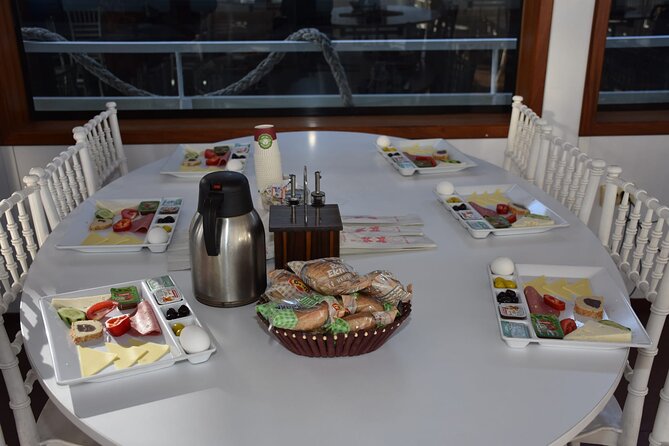
After the big bridge moment, the scenery becomes more residential and landscaped. You’ll cruise through Bebek, where the waterfront mood shifts from monument-heavy to mansion-and-garden views. That matters because it gives you a pause after the palace-and-fort intensity.
The tour specifically highlights Bebek Khedive Pavilion (Hidiv Kasrı). From the boat, it can look like a quiet secret among green areas—more refined and delicate than the massive fortresses. It’s the kind of stop where you’ll either love the details or appreciate that it breaks up the heavier sights.
If you care about photography, this is a nice time to switch from wide shots (bridges and palaces) to medium framing (buildings, shoreline lines, and reflections).



Ottoman Fortresses in Motion: Rumeli Hisarı and Anadolu Hisarı
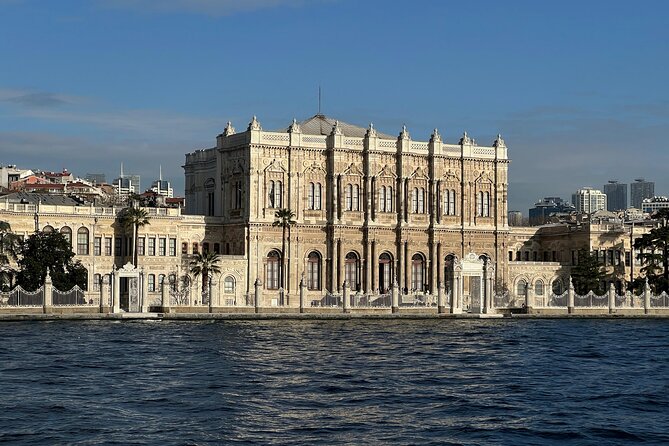
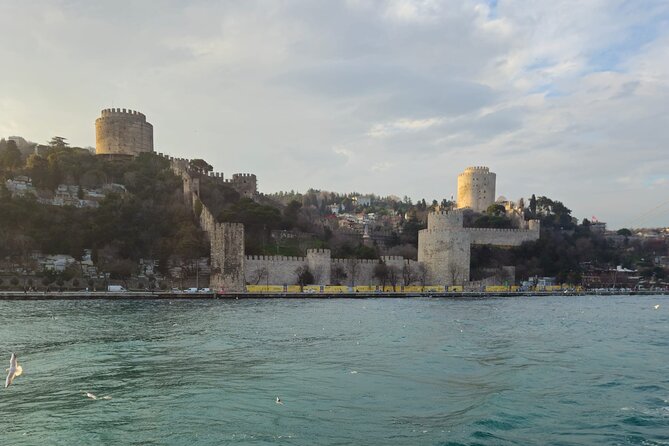
Now you hit the power scenery: Rumeli Hisarı. Its massive walls and commanding towers rise from the European shore, and from the Bosphorus the fortress reads like a defensive wall built for controlling the waterway. The tour ties it to Ottoman conquest strategy and Sultan Mehmed the Conqueror—whether you focus on that story or just the stone size, the effect is the same: you feel how serious the geography was.
After that, the cruise passes beneath the Fatih Sultan Mehmet Bridge, again giving you that Europe-Asia scale shift. The modern bridge is a strong contrast to Ottoman-era stone, and it helps you understand how the strait’s crossing points have shaped the city over centuries.
Then you move to the Asian-side fortress highlight: Anadolu Hisarı. It’s smaller than Rumeli Hisarı, but that’s part of the charm. It’s older in the tour’s telling, linked to Ottoman beginnings before the conquest era, and you’ll notice the weathered stone and compact tower feel that makes it feel less like a museum façade and more like a living chunk of shoreline history.
Küçüksu Pavilion and Kuleli Military High School: Smaller Landmarks, Clear Views
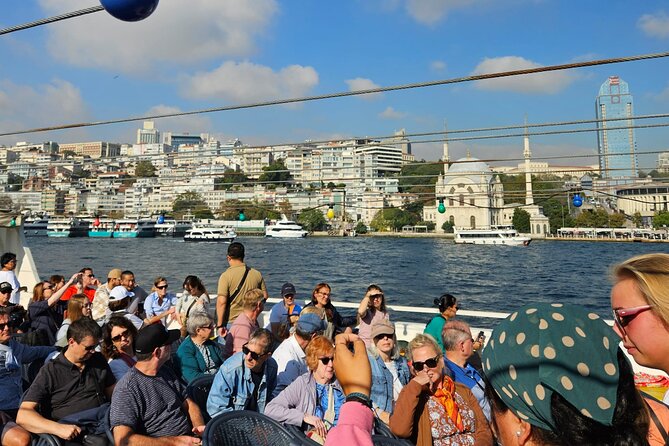
On the Asian side, the boat continues past Küçüksu Pavilion (Küçüksu Kasrı), a 19th-century summer retreat with a Rococo style feel. Again, what works is not only the building, but the way it sits against the water. You get a different kind of beauty here—less monumental, more decorative, like a pause between major landmarks.
Next up is Kuleli Military High School, known in the tour description for its red-brick, castle-like presence on the Bosphorus. From the boat, it shows up like an institutional fortress—less fairytale, more serious education-and-discipline energy. The shoreline framing makes it easier to understand why this location would matter.
Between these stops, don’t ignore the obvious gift: the Bosphorus scenery itself. Mansions, waterfront walls, and the long curves of the strait are what you’re buying. The monuments are important, but the water is the main character.
Beylerbeyi: The Asian-Side Stop That Can Add Context Fast
The tour includes a one-hour stop in Beylerbeyi on the Asian side. This is where the cruise stops feeling like pure sightseeing-by-viewport and becomes a real walking and looking break. Your time here is the difference-maker if you want more than photos.
You have the chance to visit Beylerbeyi Palace, and the tour notes that the admission ticket is free for this stop. Even if you only get to admire the exterior and wander a bit, the palace setting helps you understand the Ottoman summer-residence idea—how elite life adapted to the Bosphorus.
The Beylerbeyi area also gives you a more local-feeling street view compared to the mega-monument zones. And the photo opportunity backdrop is excellent, especially with the Bosphorus Bridge overhead in the composition.
One practical note: this stop is scheduled for one hour, but timing can tighten depending on the day. If your group has kids or you need extra time to walk at a relaxed pace, plan to move earlier rather than later.
Maiden’s Tower to Süleymaniye: Big Peninsula Icons from the Water
As you head back toward the historic peninsula, you’ll pass by Maiden’s Tower (Kız Kulesi), set on a tiny islet at the Bosphorus threshold. It’s hard to overstate how distinctive it looks from water. Even when you’re not memorizing legends, the shape and placement give you that wow feeling—especially as daylight changes and the tower becomes a focal point.
Then comes Topkapı Palace. From the water, you see how the complex stretches down toward the Bosphorus, with courts and pavilions cascading into the skyline. It’s a different view than standing inside or looking from a single street angle. You get a sense of scale and the fortress-palace logic of the site.
Next is Yeni Camii (New Mosque) near Eminönü, positioned at the entrance to the Golden Horn. From the cruise perspective, the domes and minarets command attention even with the busy waterfront energy nearby. It’s a strong visual bridge between Bosphorus views and the historic peninsula’s religious skyline.
Finally, the tour closes with Süleymaniye Mosque. You get the grand dome and minarets rising above the city’s hills, and from the water you really feel the harmonious size of the architecture. Ending here works because it turns the trip from “linear waterfront viewing” into “city skyline conclusion.”
Seats, Sound, and Weather: How to Make This Trip Feel Easy
This is the practical section where small choices matter.
1) Pick your side. A common tip is to sit on the left side of the boat for best views. If you can choose seating when you board, do it. Otherwise, just aim for a spot where you can clearly see both the shoreline and the bridge moments without twisting your neck.
2) Bring warm layers. The boat can get cold, and a review pointed out there may be no heat on the lower level in late fall/winter. Even if you start the day in mild weather, Istanbul’s wind on open water changes fast.
3) Don’t assume you’ll hear everything. Some days the narration can be hard to catch depending on sound levels and where you sit. If you want the full story, sit closer to where you can hear the guide and keep your expectations realistic if the boat is busy or windy.
4) Expect timing variation. The tour notes a 3-hour base with about ±30 minutes possible due to wind currents. That’s normal for the Bosphorus, and it’s why your day plan should be flexible.
5) Wi‑Fi is included. It’s included on board, which helps for quick map checks or keeping your photos backed up if you’re traveling with kids.
Price and Value: What $12.09 Buys You in Real Terms
At about $12.09 per person, the value is the big story. You’re not paying for a fancy dining experience or a long guided walking day. You’re paying for concentrated views: bridges, palaces, fortresses, and skyline icons packed into roughly three hours.
What makes that price feel fair is the mix of included items:
- All fees and taxes
- An in-person guide
- Wi‑Fi on board
What keeps expectations grounded:
- No hotel pickup or drop-off
- No brunch
- Soda/pop beverages aren’t included
So think of this as your “best views per hour” purchase. If you’re spending most of your budget on guided tours that require long entry lines or heavy transit, this one often works as the easy add-on that still gives you major payoff.
Should You Book This Bosphorus Boat Tour?
Book it if you want a fast, scenic way to understand Istanbul’s geography—Europe on one side, Asia on the other, and bridges and palaces strung along the water like chapters in a book. It’s a good fit for families, first-timers, and anyone who wants the main landmarks without turning the day into a sprint.
I’d think twice if you’re sensitive to cold or you need the narration to be crystal clear the whole time. Sitting well and dressing warmly solves a lot of that. Also, if you’re counting on a full hour on the Asian-side stop, keep a little flexibility in your schedule.
If you like views, this tour is one of the most straightforward ways to get them.
FAQ
How long is the Bosphorus boat tour?
The duration is listed as 2 to 4 hours, and it notes about 3 hours with possible variation of ±30 minutes due to wind currents.
Is the tour in English?
Yes. The tour is offered in English.
What is included in the ticket price?
The ticket includes all fees and taxes, an in-person guide, and Wi‑Fi on board.
What is not included?
Soda/pop beverages are not included, and brunch is not included. Hotel pickup and drop-off are also not included.
Where does the tour start and end?
It starts at Sarıdemir, Ragıp Gümüşpala Cd. No:36, 34134 Fatih/İstanbul, Türkiye, and it ends back at the meeting point.
Does the tour go under major Bosphorus bridges?
Yes. You will pass directly under the Bosphorus Bridge and also sail directly beneath the Fatih Sultan Mehmet Bridge.
Do you have time to get off the boat on the Asian side?
Yes. There is a one-hour stop in Beylerbeyi on the Asian side.
Is Beylerbeyi Palace admission included?
The tour indicates that the Beylerbeyi stop includes admission ticket free for the Beylerbeyi Palace visit.
How many people are on the tour at once?
The tour has a maximum of 100 travelers.
What happens if weather is bad or I cancel?
The tour requires good weather. If it’s canceled due to poor weather, you’ll be offered a different date or a full refund. Cancellation is free up to 24 hours in advance for a full refund.