REVIEW · ISTANBUL
Ephesus Pamukkale Tour by Plane
Book on Viator →Operated by Before Travel Agency · Bookable on Viator
A sunrise pick-up is a great way to beat the crowds. This two-day Ephesus to Pamukkale trip is built for people who want the highlights without turning vacation into a logistics project. You’ll travel by plane to save time, then focus your energy on ruins, marble streets, and the famous calcified terraces at Pamukkale.
What I like most is the combination of a small group (15 or fewer) and a professional guide who keeps the stops moving and meaningful. I also appreciate that overnight accommodations and meals are included, so you’re not hunting for hotels and lunches after a long day of walking.
One drawback to consider: there’s a real chance of early, very structured timing. One negative account flagged confusion around flight details after hotel pick-up, so I’d plan to double-check the day-of travel instructions and keep your documents handy before you leave.
In This Review
- Key things to know before you go
- Flying to Pamukkale: why it matters on a tight schedule
- 5:00 am Istanbul pickup and how the day gets structured
- Entering Ephesus: Celsus Library, Hadrian, and the main highlights
- What to watch for
- Magnesia Gate downhill walk: how the ruins start to make sense
- Temple of Hadrian and Meryemana: two spiritual stops in one day
- A practical note
- The Temple of Artemis and the Seven Wonders connection
- Kuşadası Castle and overnight in Kuşadası
- Hierapolis and Pamukkale Theater: the lead-in to the terraces
- Pamukkale Thermal Pools: calcified terraces and real time to soak in
- Cleopatra Pools: optional, and not included in the ticket
- Price and value: is $814.49 worth it?
- Who this tour fits best (and who should think twice)
- Should you book this Ephesus Pamukkale by Plane tour?
- FAQ
- FAQ
- What time does the tour start?
- How big is the group?
- Are hotel pickup and drop-off included?
- Are meals included?
- Are admission tickets included?
- Where do you stay overnight?
- Can I cancel for a full refund?
Key things to know before you go
- Small-group pacing: max 15 people means you’re not stuck behind a human wall for every photo.
- Hotel + meals included: breakfast and lunch are built in, and you get an overnight stop in Kuşadası.
- Most admissions included: entry fees for Ephesus, major sites, and Pamukkale stops are covered except Cleopatra Pools.
- Guided walking route through Ephesus: starting at Magnesia Gate and moving downhill helps you follow the ancient layout.
- Pamukkale’s thermal pools are the payoff: the schedule ends with time at Pamukkale Thermal Pools and optional Cleopatra Pools.
- Very early start: 5:00 am means you’ll want to be packed and ready the night before.
Flying to Pamukkale: why it matters on a tight schedule
This tour is designed around time efficiency. The headline is traveling by plane, so you spend less time on long road transfers and more time at the sites you came for.
In practice, that matters because Ephesus and Pamukkale both demand stamina. If you try to do them “from scratch” with trains and multiple bus legs, you’ll burn hours just getting from one stop to the next. Here, the structure is meant to keep you moving forward without constantly re-planning.
The trade-off is that air travel means you should stay extra alert to timing and instructions. Keep your phone charged, your confirmations accessible, and your boarding details clear when the day changes.
You can also read our reviews of more tours and experiences in Istanbul.


5:00 am Istanbul pickup and how the day gets structured
The tour begins at 5:00 am, with pick-up from hotels in Istanbul (including the Sultanahmet District as the listed starting area). That’s early, but it’s also the logic behind the schedule: you’re trying to see big-name sights while you still have momentum.
Because pick-up and drop-off are included, you avoid the hardest part of big touring days—figuring out where you need to be and when. The list also shows that the initial phase is short, which typically means you’ll quickly get on the move rather than spending the morning standing around.
Pack for a full day of walking. You’ll be on archaeological ground, which usually means uneven stone and lots of sun exposure as the day progresses. And because drinks aren’t included, plan ahead for water breaks rather than counting on them being part of the tour rhythm.
Entering Ephesus: Celsus Library, Hadrian, and the main highlights
Ephesus is one of those rare places where ruins still feel organized. A guide makes a huge difference here, because the site is vast and it’s easy to wander without understanding what you’re looking at.
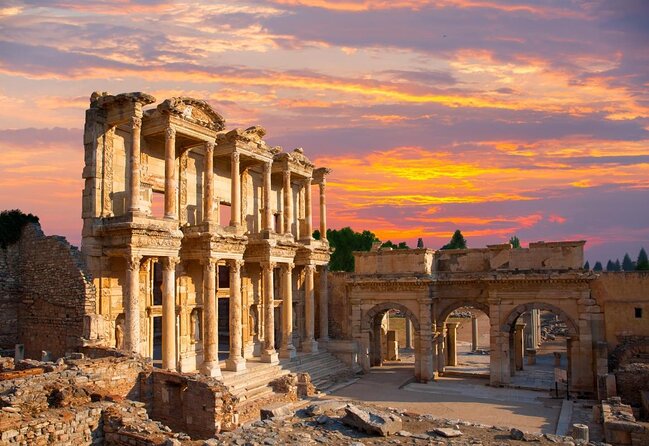
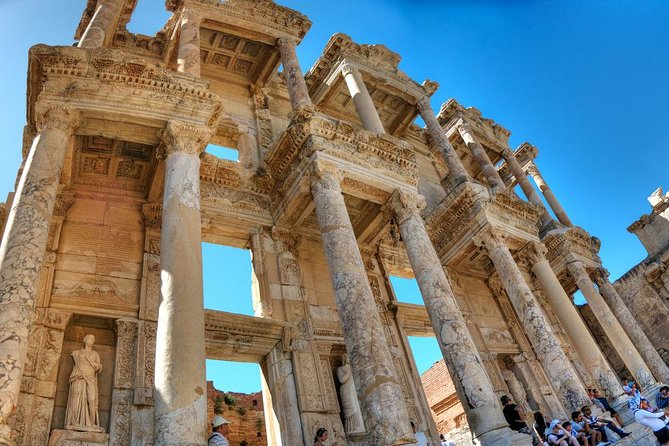
Your schedule starts with a stop at the Bibliothèque de Celsus (Library of Celsus) for about an hour, with admission included. This is a standout photo moment, but the bigger value is learning how it fits into the city’s life. The library sits right on the axis of Ephesus, so it helps you get your bearings fast for everything that follows.
From there, you’ll move through other Ephesus landmarks. The route is described as passing key sights like the Temple of Hadrian, the Fountain of Trajan, and the Great Theatre, plus the Odem and the Celsus Library area. Even if you don’t know these names yet, the guide can explain what each structure was for and why the placement matters.
What to watch for
- Look for how sightlines line up with major streets and gates.
- Ask the guide to point out how the terrain changes as you walk—Ephesus isn’t flat.
- Take a moment at the theatre and library area even if photos tempt you. It’s good orientation before the deeper walking.
Magnesia Gate downhill walk: how the ruins start to make sense
The heart of the Ephesus experience here is a guided walk through the ancient city, entering at the Magnesia Gate and heading downhill. That downhill layout is useful. It changes how you perceive the ruins and it helps you connect buildings to the city’s flow rather than treating every stone as a separate stop.
You’re scheduled for about an hour at the Ancient City of Ephesus, with admission included. The guide’s role is especially important on a site like this because the Roman-era and earlier layers can blur together without context.
If you want the ruins to feel like a place (not just a collection), start by focusing on street lines, building edges, and the “why” behind positioning. A good guide will point out how major monuments relate to each other, and that turns the walk into a story you can follow.



Temple of Hadrian and Meryemana: two spiritual stops in one day
After the big Ephesus anchors, the itinerary adds two very different landmarks that still connect through theme: power, belief, and community.
First is the Temple of Hadrian, listed for about an hour with admission included. This stop is useful for understanding how rulers used architecture to leave a visible mark. In Roman cities, temples often acted like public statements, and the guide can help you read that in the structure and placement.
Then comes Meryemana (The Virgin Mary’s House), also around an hour, with admission included. This is a small house in the Solmissos Mountains, and it’s known by the Vatican as her final resting place. That detail matters because it explains why the site draws visitors with a faith-based connection, not just archaeology fans.
A practical note
Meryemana can feel calmer than the dense ruin areas. If you’re sensitive to steep paths or long walking days, pace yourself here and take breaks before you head back into the hotter, busier touring zones.
The Temple of Artemis and the Seven Wonders connection
Next up is the Temple of Artemis, scheduled for about an hour with admission included. It’s famous as one of the Seven Wonders of the Ancient World, and that name tends to do half the marketing for you.
Here’s what makes the stop more satisfying: Artemis isn’t just “a thing that used to exist.” A guided visit helps you understand the scale and ambition behind the temple, even though much of what you see today is remnants rather than a complete structure.
If you’re the type who likes context, ask your guide how the temple’s story relates to Ephesus as a major city. That connection can turn a checklist stop into a better understanding of why this region mattered.
Kuşadası Castle and overnight in Kuşadası
After the Ephesus cluster, you’ll head to Kuşadası. The itinerary lists a stop at Kuşadası Castle for part of the day and then overnight in Kuşadası for about 12 hours, with admission included.
That overnight matters for two reasons. First, it saves you from doing another all-night transfer. Second, it gives your body a chance to reset after a day of ancient-site walking. You get the comforts of a hotel stay without having to decide anything mid-trip.
The castle stop is also a smart transition. It shifts you from Roman-era grandeur to a vantage point where you can think about the modern coastline in relation to the historical region.
Hierapolis and Pamukkale Theater: the lead-in to the terraces
Day two is where the trip earns its name. You start with Pamukkale Theater (Hierapolis) for about an hour, with admission included. Hierapolis is the staging ground for what comes next. The theatre is a clue to how big and organized this region’s urban life was before time did its work.
Then you have Hierapolis & Pamukkale for about an hour. This block is valuable because it ties the area together. If you only see the terraces without understanding the broader site, Pamukkale can feel like a photo stop. With Hierapolis included, it becomes part of a larger ancient story.
This is also where your guide’s pacing really matters. If you move too quickly, Pamukkale feels like you’re just walking around white terraces. If you slow down, you can start to appreciate the geography and the feel of the place.
Pamukkale Thermal Pools: calcified terraces and real time to soak in
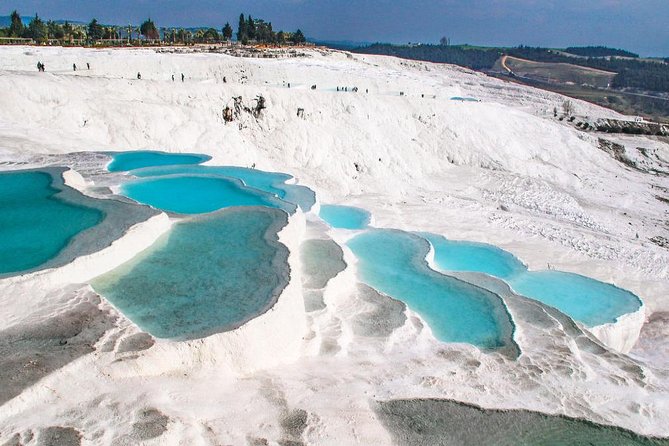
The scheduled finale includes Pamukkale Thermal Pools for about an hour, with admission included. This is the signature experience: the calcified terraces and pools that made Pamukkale famous.
Even if you’ve seen pictures, seeing it in person hits differently. The white mineral look is dramatic, but it’s the texture and the way the pools relate to the terraces that makes it special. A guide can also help you understand what you’re looking at and what to expect as you move between viewpoints.
Wear footwear you’re comfortable taking slowly. These are not pristine museum floors. You’ll want stable footing as you navigate around shallow pool edges and uneven surfaces.
Cleopatra Pools: optional, and not included in the ticket
The itinerary includes Cleopatra Pools for about an hour, but it’s listed as admission ticket not included. That means you might have to pay extra if you want this specific pool experience.
If you’re deciding on the spot, consider what you care about most. Pamukkale Thermal Pools are included and already give you the main terraces-and-pools experience. Cleopatra Pools are an add-on. If your budget is tight, you can still get a satisfying end to the trip without choosing the optional entry.
Price and value: is $814.49 worth it?
At $814.49 per person, this tour isn’t a budget play. But it also isn’t selling you just seat time to a couple of stops.
Here’s what you’re actually buying:
- Overnight accommodations
- Breakfast and lunch
- A professional guide
- Hotel/port pickup and drop-off in Istanbul
- Admission tickets included for most listed stops (except Cleopatra Pools)
- A small group capped at 15 travelers
- Plane travel, meant to cut transfer time
That’s the key point: you’re not paying only for sightseeing. You’re paying for the whole “package machine” that handles lodging, meals, and entry fees. For two days, that can end up good value compared with building your own schedule—especially if you want a guide and you don’t want to spend vacation hours on ticket lines and routing.
What could reduce value for some people is the all-early schedule. Starting at 5:00 am and staying structured means you’ll lose flexibility. If you hate tight timelines, you may feel the cost more sharply.
Who this tour fits best (and who should think twice)
This is a strong match if you want:
- A small-group guide-led route
- Ephesus and Pamukkale in one streamlined trip
- Included hotel and meals so you don’t plan every meal and night
- A schedule that uses plane travel to save time
It’s less ideal if:
- You hate early mornings
- You want lots of unscheduled free time
- You’re the type who needs every single travel detail spelled out well in advance (because, based on at least one negative account, flight-day clarity may not always be as smooth as you’d hope)
If you book, I’d treat it like a “do your prep” situation. Print or save your confirmations, confirm your flight information ahead of travel day, and keep your documents ready.
Should you book this Ephesus Pamukkale by Plane tour?
If your priority is seeing the big-ticket sites—Ephesus highlights like the Library of Celsus, plus Pamukkale’s terraces and thermal pools—with overnight lodging, meals, admissions, and a guide already handled, this tour is built for you.
I’d book it if you’re comfortable with a 5:00 am start and you like structured sightseeing. I’d be cautious if you’re the kind of traveler who needs rock-solid operational communication for flight segments; at minimum, verify your flight details before you’re relying on day-of instructions.
FAQ
FAQ
What time does the tour start?
The tour start time is 5:00 am.
How big is the group?
The tour has a maximum of 15 travelers.
Are hotel pickup and drop-off included?
Yes. Hotel/port pickup and drop-off are included.
Are meals included?
Yes. Breakfast and lunch are included per the itinerary. Drinks are not included.
Are admission tickets included?
Admission tickets are included for most listed stops, but Cleopatra Pools is listed as admission ticket not included.
Where do you stay overnight?
You stay overnight in Kuşadası.
Can I cancel for a full refund?
Yes. You can cancel for a full refund if you cancel at least 24 hours before the experience’s start time. Free cancellation is offered.