REVIEW · ISTANBUL
Ephesus tour from Istanbul flights included
Book on Viator →Operated by AYHAN AKKILIC · Bookable on Viator
Ephesus in one long day sounds wild. Yet this setup works because you fly out of Istanbul and spend your time where it counts: major Christian landmarks, then the big archaeological hits. I love the small-group pace (up to 14 people), and I love that you get two styles of interpreting the sites: a local guide plus an art historian–type approach. One thing to consider: it’s a very full day, and the return flight timing can feel tight if you have an early next-day connection.
You start with pickup from centrally located hotels in Istanbul. Then you jump straight into the day’s structure: short, focused visits (like St. John and Mary’s House) and one longer block for ancient Ephesus. The upside is focus instead of wandering. The tradeoff is you’ll want comfortable shoes and a “pack light, move fast” mindset.
In This Review
- Key Points I’d Use to Plan Your Day
- A Same-Day Flight Plan That Actually Makes Sense
- Pickup From Istanbul City Center: The Easy Start
- Stop 1: Basilica of St. John for a Focused Christian Moment
- Stop 2: Meryemana (House of the Virgin Mary) and Its Quiet Power
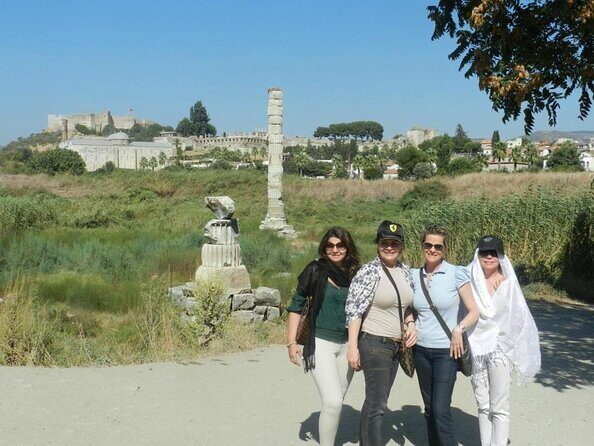
- Stop 3: Temple of Artemis for the Fast-Track Big Name
- Stop 4: Ancient City of Ephesus for the Big 3-Hour Payoff
- Guides and Art History Support: Why Explanations Matter
- Price and Value: Paying for Flights and a Guided Plan
- Food Planning: Don’t Let Hunger Steal Your Focus
- Flight Timing Matters: Protect Yourself on the Return
- Who Should Book This Ephesus Flight Tour?
- Practical Tips Before You Go
- Should You Book This Ephesus Tour?
- FAQ
- What’s the duration of the Istanbul to Ephesus tour?
- Are flights from Istanbul included?
- Do you get hotel pickup in Istanbul?
- How many people are in the group?
- What language is the tour offered in?
- What sites are included during the tour?
- Are entrance fees included?
- Is food included?
- What’s the cancellation policy?
- Does the tour depend on weather?
Key Points I’d Use to Plan Your Day
Small group (max 14) keeps the tour from feeling like a herd.
Flights are included, so you’re not losing half a day to buses.
Christian landmarks plus archaeology gives you two lenses for the same place.
Short site stops, one longer Ephesus block means better momentum.
Food isn’t included, so plan a meal budget early.
A Same-Day Flight Plan That Actually Makes Sense
This is an “Ephesus, but efficiently” day. Instead of treating Ephesus like a multi-night trip, you use domestic flights so the schedule stays realistic. The result is a 12–14 hour day that still fits first-time goals: you see the headline sites, you get context, and you don’t spend your best daylight trapped in traffic.
The tour is also designed to feel guided but not chaotic. With a maximum of 14 people, you get more back-and-forth than you would on huge buses. And the guide team matters. The experience is led by a local guide, and it also includes a professional art historian guide, which is a big deal for places where you’re looking at ruins and trying to understand what you’re seeing.
The practical catch is simple: your day is long. Even with flights, the total time includes transfers, site entry, and the time needed for group movement. If you hate long travel days, this may test your patience.
You can also read our reviews of more tours and experiences in Istanbul.



Pickup From Istanbul City Center: The Easy Start
Pickup is offered from hotels in central Istanbul. That matters because you don’t have to figure out the meeting spot and then rush across town. It’s one less logistical headache before the day even starts.
You should still plan like a grown-up about timing: aim to be ready early. When you’re going to fly and you’re moving as a group, any delay multiplies quickly. The best strategy is simple—keep your pre-tour routine calm, and don’t schedule anything stressful right after.
Also note the basic rider requirements: you need a moderate fitness level, and the tour is for ages 18+ only. There’s walking across ancient surfaces and through historic areas, and the pace is structured.
Stop 1: Basilica of St. John for a Focused Christian Moment
The day begins with a visit to the Basilica of St. John, including the Church of St John. Your time here is about 35 minutes. That short window is intentional. It’s not trying to turn this into an all-day devotion. It’s giving you an anchor point in the Christian story connected to Ephesus.
What I like about this stop is that it sets the tone. Ephesus can feel like a place of broken stone unless you know what those places meant. Starting with a landmark tied to early Christian tradition helps you “read” the rest of the day with more clarity.
A possible drawback: 35 minutes can feel quick if you like to linger. If you’re the type who reads every plaque twice, you may want to balance this by soaking up extra context at the later stops where there’s more time.
Stop 2: Meryemana (House of the Virgin Mary) and Its Quiet Power
Next is Meryemana, also known as the House of Mary, with about 45 minutes. This is the stop that many people treat as the emotional core of the day, and it makes sense. It’s less about architecture and more about atmosphere—something you feel in the pacing, the stillness, and the way people move through the space.
In one of the experiences that really stood out for quality, the guide’s explanation made the moment feel spiritual and coherent. That’s the value of having an experienced guide here: you’re not just looking—you’re understanding why the site matters to believers and why it’s still a destination.
Time is long enough to sit for a moment, but not long enough to wander for an hour. If you want to photograph and pray and just breathe, treat the 45 minutes as a gift, not a deadline.
Stop 3: Temple of Artemis for the Fast-Track Big Name
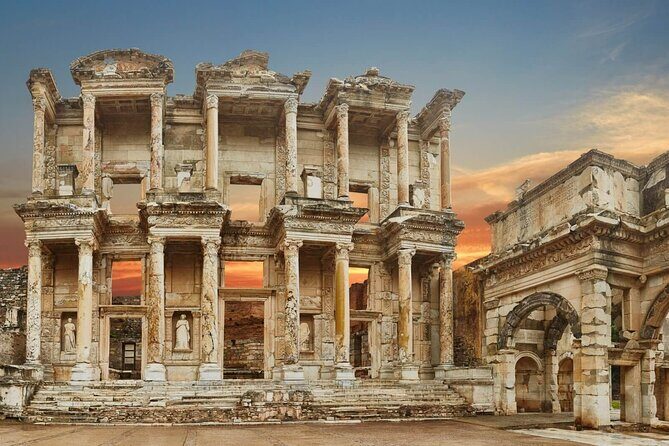
Then you hit the Temple of Artemis for around 30 minutes. The ticket is listed as free, which is a nice bonus on a day where some entrances may cost extra.
This stop can be a little polarizing. If you love archaeology and enjoy imagining what used to be here, it’s a great palate cleanser. If you want every site to be perfectly preserved, you may feel slightly underwhelmed by what remains.
But in a good itinerary, Artemis works as a “scale check.” It reminds you that Ephesus wasn’t just Christian history. It was also a major power center in the ancient Greek world. Thirty minutes is enough time to connect the dots without dragging the schedule.



Stop 4: Ancient City of Ephesus for the Big 3-Hour Payoff
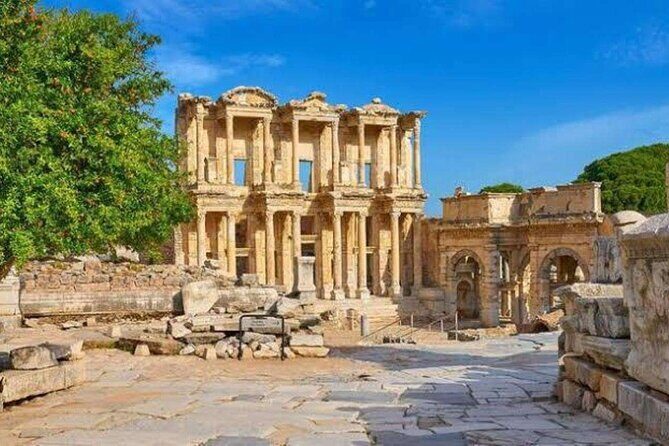
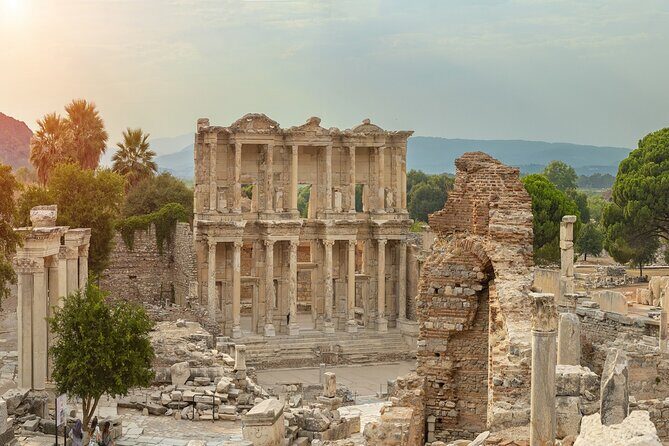
Your main archaeological block is the Ancient City of Ephesus—about 3 hours. This is where the tour earns its keep. Even if you’ve seen photos, standing in the area gives you a better sense of scale.
Here’s what I’d expect you to focus on during the 3 hours:
- Look for how the streets and major structures were arranged, because the layout is what makes the place feel logical.
- Pay attention to how the guide explains daily life in a Roman-era city versus the spiritual layers from later periods.
- Use your time to connect the dots between different types of buildings—religious, civic, and commercial.
The best value of a guided approach shows up here. Ruins can turn into a blur if you’re left to figure everything out alone. A strong guide gives you a framework—what matters, what you’re looking at, and why it’s important.
A drawback to plan for: 3 hours is enough to feel fulfilled, but not enough to “museum slow.” If you want to go at a personal pace with long stops for photos, you might feel rushed. The workaround is simple: decide in advance which parts matter most to you and let the rest be a pass.
Guides and Art History Support: Why Explanations Matter
This tour includes both a local guide and a professional art historian guide. That combination is smart. Local knowledge helps you understand the site in practical, place-specific terms. An art history–style approach helps you read details—how design choices communicated status, belief, and power.
One guide name you may hear associated with this experience is Selda. In feedback, Selda was praised for clear explanations and a strong grasp of the story behind what you’re seeing. That matters because Ephesus isn’t one single story. It’s layered: ancient Greek and Roman greatness, then later Christian significance.
If you care about meaning, not just sightseeing, this guide structure can be the difference between a “nice day” and a day that sticks with you.
Price and Value: Paying for Flights and a Guided Plan
The price is $532.32 per person for an approximately 12–14 hour day. At that rate, you’re mainly paying for three things:
1) Domestic flights included,
2) guiding support (local guide + art historian guide), and
3) an organized, time-efficient route.
Food is not included, and entrance fees are listed as not included overall, even though some individual sites show admissions as included and one site as free. So treat it like this: some entries may be covered in the tour package, but you should budget for site-related costs and confirm what’s actually included before you go.
In other words, you’re not just paying for a bus and a ticket. You’re paying for the “how” of reaching the sites and for the explanation that turns ruins into something you can follow.
If you compare against DIY day trips, the value often comes down to one question: do you want to spend your time negotiating transportation and tickets, or do you want your time spent learning?
Food Planning: Don’t Let Hunger Steal Your Focus
Food and drinks are not included. That’s a real factor on a long day.
In practice, you’ll want to plan a meal budget. If you usually get hangry after a few hours, pack a sensible snack before pickup if allowed by the team, or plan to buy food on the way. Either way, avoid counting on the day’s schedule to magically handle your energy levels.
A long tour plus early morning plus walking equals a simple truth: you’ll enjoy the sights more if you eat like a person, not like a legend.
Flight Timing Matters: Protect Yourself on the Return
Because flights are included, the biggest logistical risk is not the sightseeing—it’s the flight schedule. One issue has been reported around return-flight timing, where a traveler wanted an earlier flight back and ended up dealing with changes.
Here’s how you protect yourself (and save stress):
- When you book, verify your outbound and return flight times in writing.
- If you have an early next-day departure (like a 3:00 am type of situation), build buffer time around it.
- If the schedule feels too tight for your other plans, ask whether adjustments are possible before you commit.
This isn’t about being paranoid. It’s about being smart. Flights can shift, and the day runs on a group timetable.
Who Should Book This Ephesus Flight Tour?
This one is a great fit if:
- You’re seeing Ephesus as a first big stop and want a high-structure day.
- You like your history with a spiritual or religious lens as well as archaeology.
- You prefer a small group and a guide you can actually interact with.
- You’re short on days and want to avoid a slower overland approach.
It may be less ideal if:
- You hate long days or dislike being on a schedule for 12–14 hours.
- You strongly dislike walking through uneven ancient surfaces.
- You need maximum flexibility for meal timing and long independent wandering.
If you’re the type who wants total freedom, you might prefer a self-planned Ephesus day. But if you want clarity and momentum, this tour’s format is built for you.
Practical Tips Before You Go
A few no-drama pointers to get the most out of the day:
- Wear comfortable shoes. Ancient areas are not gentle on feet.
- Bring a light layer. Indoors and outdoors can vary, and waiting time can make you feel it.
- Keep essentials small and easy to access. You’ll switch locations often.
- Have your camera ready early, but don’t let photos rush your reading of the guide’s explanations.
And one more: ask questions during transitions. That’s when guides have the best rhythm for answering without disrupting the whole group.
Should You Book This Ephesus Tour?
I’d book it if you want an organized, guided Christian + ancient Ephesus day that’s efficient because flights do the heavy lifting. The biggest strengths are the structure, the small group limit, and the added guide depth that helps ruins make sense. If you’re okay with a long day and you plan for meals and site costs, it’s a strong way to get a full Ephesus experience without turning your vacation into a logistics project.
If you’re extremely sensitive to flight schedule changes or you have a tight next-day plan, do extra confirmation before booking. The sightseeing itself is the payoff, but the day’s machine runs on timing.
FAQ
What’s the duration of the Istanbul to Ephesus tour?
It runs about 12 to 14 hours total.
Are flights from Istanbul included?
Yes. Domestic flights are included as part of the tour.
Do you get hotel pickup in Istanbul?
Yes. Pickup is offered from hotels in central Istanbul.
How many people are in the group?
The tour has a maximum of 14 travelers.
What language is the tour offered in?
The tour is offered in English.
What sites are included during the tour?
You visit the Basilica of St. John (Church of St John), Meryemana (House of Mary), the Temple of Artemis, and the Ancient City of Ephesus.
Are entrance fees included?
Entrance fees are not included as a general note, even though some site admissions may be listed as included for specific stops.
Is food included?
No. Food and drinks are not included.
What’s the cancellation policy?
Free cancellation is available up to 24 hours in advance for a full refund. Canceling less than 24 hours before the start time isn’t refundable.
Does the tour depend on weather?
Yes. It requires good weather, and if it’s canceled due to poor weather, you’ll be offered a different date or a full refund.