REVIEW · ISTANBUL
ISTANBUL BEST: Iconic Landmarks Full Day PRIVATE Guided City Tour
Book on Viator →Operated by Istanbultourmatt · Bookable on Viator
Big Istanbul hits, one easy day. This private tour is built for people who want the iconic landmarks of Sultanahmet without spending your trip wrestling with directions, lines, and timing. You’ll move through Byzantine and Ottoman-era sites in a logical route, with an English-speaking guide who keeps the day flowing.
I especially love how much you fit in—Hagia Sophia, the Blue Mosque, Topkapi Palace, Basilica Cistern, and the Grand Bazaar in one go—while still getting room to look closely. I also like the added focus on traditional crafts time in the Sultanahmet area, so you’re not only sightseeing with your feet, you’re learning what people actually buy and why.
One consideration: museum entrance fees and lunch aren’t included, so budget a bit extra beyond the $80 per person.
In This Review
- Key things that make this tour worth your time
- Why this Istanbul day tour works (even if you only have one day)
- The pickup and timing details you should actually plan around
- Stop 1: Hagia Sophia Grand Mosque (Ayasofya) and what to notice
- Stop 2: Blue Mosque (Sultan Ahmed Mosque) in a short, perfect window
- Stop 3: Hippodrome (Sultanahmet Square) for the Constantinople backstory
- Stop 4: Topkapi Palace—where Ottoman power turns into objects
- Stop 5: Basilica Cistern (Yerebatan Sarayı) and the fun of going underground
- Stop 6: Sultanahmet District craft time—carpets, ceramics, leather, and tea
- Stop 7: Grand Bazaar (Kapalıçarşı) for the full Istanbul market feeling
- What “private” really changes on this route
- Price and value: $80 per person, plus what you’ll likely add
- Who this tour suits best (and who should think twice)
- Weather, closures, and how guides handle the real world
- Should you book this Istanbul private highlights tour?
Key things that make this tour worth your time
- Private guide, private pace: your group only, with a route adjusted to how you like to see places
- Six heavyweight stops: Hagia Sophia, Blue Mosque, Topkapi, Basilica Cistern, Hippodrome, Grand Bazaar/Special replacement
- Smart swap options: Topkapi closed Tuesdays and Grand Bazaar closed Sundays get replaced with alternatives
- Photo-friendly viewpoints: guides often help you find the best angles as you walk the sites
- Hands-on shopping time: Turkish carpets, leathers, ceramics, and spices show up in the plan
- Pickup that works for cruises and central stays: hotel/Airbnb or Galataport meeting
Why this Istanbul day tour works (even if you only have one day)
If Istanbul is your first stop in Türkiye—or your time window is tight—this kind of full-day tour is a practical way to build your mental map fast. You start in Sultanahmet, the heart of the historic peninsula, and you leave with a clear sense of what’s Byzantine, what’s Ottoman, and what’s still very much part of everyday Istanbul life.
The “private” part matters more than it sounds. On a day packed with major sites, you don’t want to be stuck in a large group’s rhythm. In the guide stories people shared, names like Zel, Musa, Volkan, and Mehmet come up again and again for pacing, clarity, and patience. One account even highlighted how a guide helped when someone in the group had mobility needs. That’s the difference between a tour that just moves you from stop to stop and one that actually manages the human parts of the day—fatigue, photos, questions, and the occasional unexpected weather hiccup.
Now the trade-off: this is “full day,” so it’s not a slow Sunday stroll. You’ll walk, you’ll stand, and you’ll want comfortable shoes. And you’ll pay some things on top of the tour price—mainly museum entrance fees and lunch.
You can also read our reviews of more guided tours in Istanbul



The pickup and timing details you should actually plan around
This tour offers pickup from central places in Istanbul: hotels, Airbnb locations, and the cruise port (Galataport – Sali Pazari). There are three pickup/transport options, and which one you choose affects how much stress you’ll have getting around.
- Private guided tour (no transfers): best if you’re already in Sultanahmet, staying on the European side nearby, or you’re a cruise passenger who can meet easily.
- Private guided tour with transfers: pickup and drop-off included. This suits more of the European-side hotels and some Airbnbs.
- Private guided tour with full day vehicle (spice market included): for certain central-luxury hotels on both sides of the Bosphorus, plus some cruise passengers.
Two timing notes matter:
- The schedule runs about 6 to 8 hours, depending on when you start.
- If the tour starts at 12:00, the duration is about 6 hours.
One more practical detail: the tour is near public transportation. That can help if your day plan changes, but it doesn’t replace the value of having a guide coordinate the route.
Stop 1: Hagia Sophia Grand Mosque (Ayasofya) and what to notice
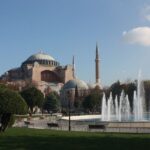
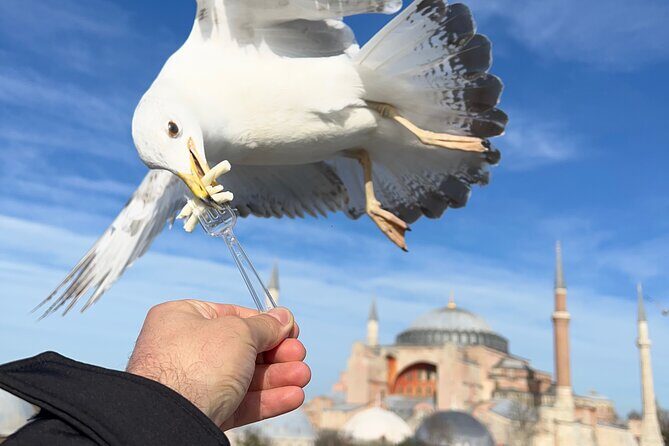
Your day’s first big wow is Hagia Sophia. It’s one of those places where the building does half the teaching for you. You’ll spend about 1 hour here, and admission is not included, so you’ll want that ticket budget ready.
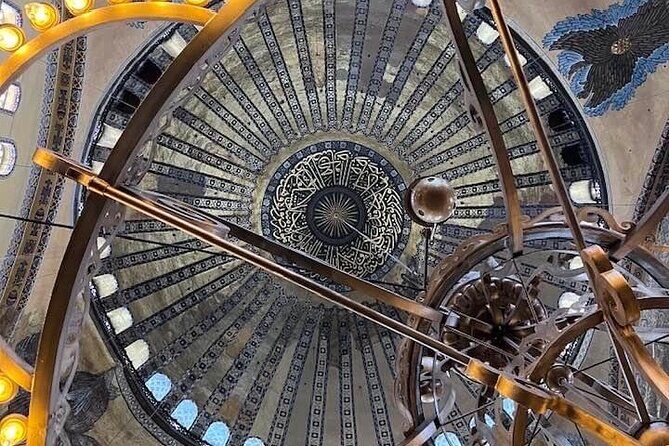
What makes Hagia Sophia special is the way layers of power show up in the architecture. It began as a Byzantine cathedral in the 6th century, then became a mosque under the Ottoman Empire. Later, it was converted into a museum (in 1935), and in 2020 it reconverted into a mosque. Even if you don’t know the dates, the building makes the timeline feel physical: scale, design, and ornament all feel like “eras piled on top of each other.”
Look for the massive dome and the visual storytelling through mosaics. The guides in the accounts I read—people like Zel, Volkan, and Mehmet—were praised for explaining the architecture and history clearly while keeping people moving at a good pace.
Possible drawback: Hagia Sophia is a top destination, so it can be crowded. If you hate waiting, go in with a plan: wear quick-to-remove layers (mosque rules often involve covering), and be ready to stand where you can.
Stop 2: Blue Mosque (Sultan Ahmed Mosque) in a short, perfect window
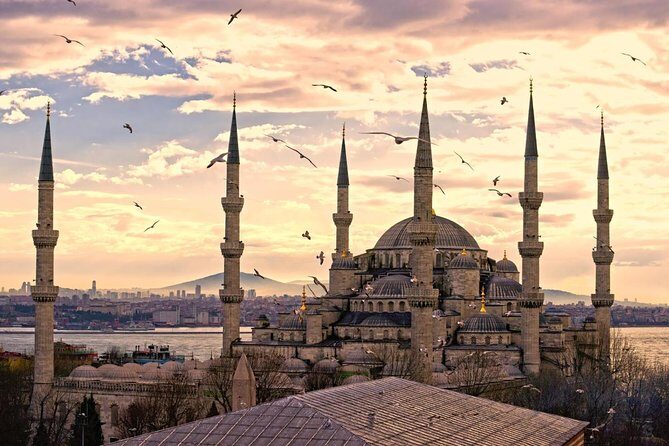
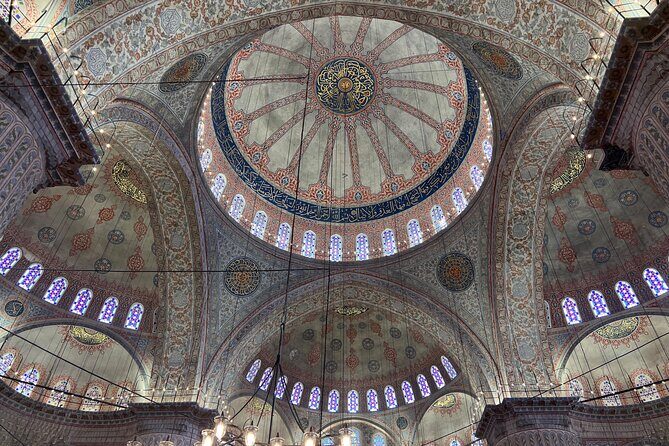
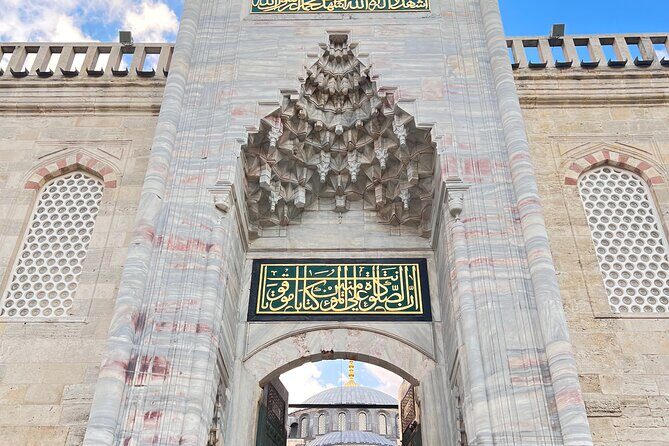
Then it’s on to the Blue Mosque, also called Sultan Ahmed Mosque. You’ll get about 30 minutes here, and admission is free.
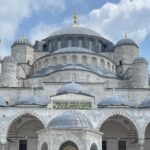
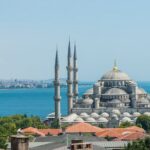
This is the stop where the nickname earns itself. The mosque is known for its six minarets and the interior blue tiles that give it that famous look. Even in a short time, you can understand why it’s one of Istanbul’s most photographed interiors.
Tip: for the Blue Mosque, I’d treat it like a “slow gaze” stop, not a sprint. Take a moment to look at how the interior space is arranged, then shift your attention to details in the tile work.
Also note the practical cultural requirement mentioned for the tour: ladies should bring a scarf to cover heads. Even if you’ve done this before, bring one you’re comfortable moving in.
Stop 3: Hippodrome (Sultanahmet Square) for the Constantinople backstory
After the big mosques, you get a breather at the Hippodrome of Constantinople, also known as Sultanahmet Square. This is about 30 minutes and free.
This area used to be the Byzantine sporting and social hub: a chariot racing track and a major public stage. Today you’re not walking inside a museum building—you’re standing in a public square where old monuments still create a sense of what this city used to be.
The monuments you might see include:
- Obelisk of Theodosius
- Serpent Column
- Column of Constantine
I like this stop because it helps connect Hagia Sophia and the Blue Mosque to the broader idea of imperial Istanbul. It’s not only “buildings”—it’s where the city performed in front of itself.
You can also read our reviews of more city tours in Istanbul




Stop 4: Topkapi Palace—where Ottoman power turns into objects
Next up is Topkapi Palace, about 2 hours. Admission is not included, and it’s also one of the places where time really matters. You don’t want to be rushed, because the palace complex rewards attention.
Topkapi served as the Ottoman sultans’ primary residence and administrative base for nearly 400 years. The complex is organized around courtyards and buildings, and you’ll likely pass through spaces tied to:
- the broader palace complex
- the Imperial Harem (residential areas of the sultan’s family)
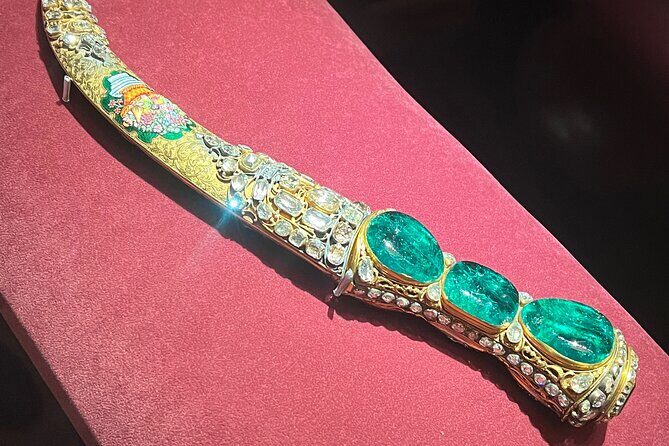
- the Treasury, which is famous for priceless collections and jewels (like the Spoonmaker’s Diamond and the Topkapi Dagger, as highlighted in the tour description)
Guides were repeatedly praised for making these objects make sense, not just listing facts. In one review, a guide helped guests with photo angles and also offered helpful suggestions for what to look at when they had a little time to themselves inside Topkapi.
Important day-of note: Topkapi Palace is closed on Tuesdays. When that happens, it’s replaced with alternatives. Before you go, you might want to check what that replacement is for your specific date so you’re not surprised by the swap.
Stop 5: Basilica Cistern (Yerebatan Sarayı) and the fun of going underground
After palace power, it’s time to go under ground—about 30 minutes at the Basilica Cistern, also nicknamed Yerebatan Sarayı (Sunken Palace). Again, admission is not included.
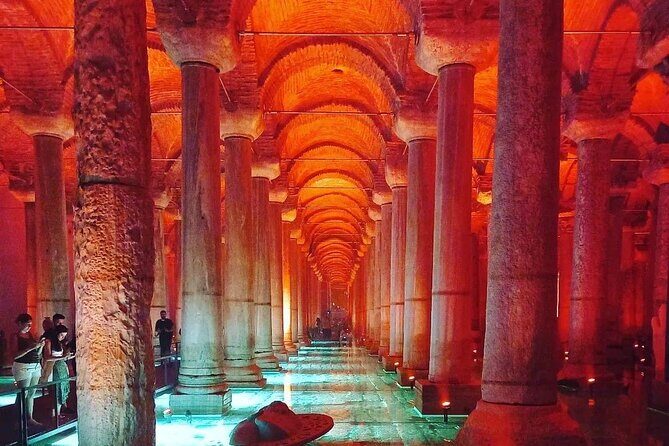
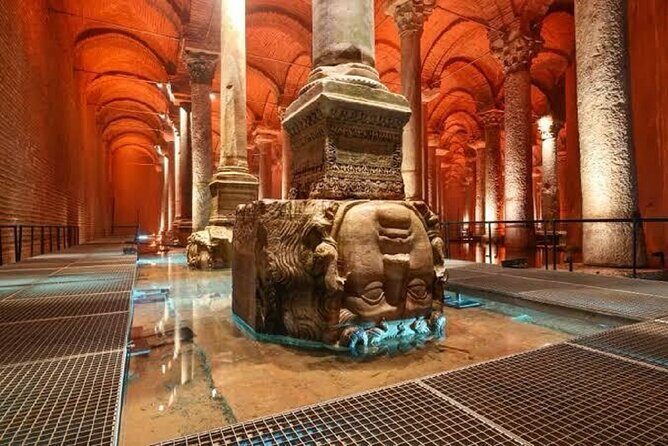
This is the “Sunken Palace” for a reason. It’s a grand Roman-era underground cistern built under Emperor Justinian I (527–565). Marble columns rise from the water, making the space feel like an underground forest.
This stop is also linked to pop culture references in the tour info: it’s been featured in Dan Brown’s Inferno and a James Bond film mention. Even if you don’t care about that stuff, the place works as a visual reset. It’s cool, quiet, and different from the bright courtyards above.
One caution: this can be crowded and the light inside is dim. If you care about photos, give yourself patience. A guide who understands the best angles can save time and help you get shots without bouncing around.
Stop 6: Sultanahmet District craft time—carpets, ceramics, leather, and tea
Next you’ll spend about 1 hour in the Sultanahmet District for Turkish handcrafts. This is a free stop in the itinerary and includes time described as Turkish handcrafts and traditional arts gallery.
The focus here is on shopping—but not the vague, random kind. You’re supposed to see trades tied to:
- Turkish carpets
- leathers
- ceramics
- (and often) tea and spices in nearby shops
Some guide stories praised negotiation help and navigating the market without feeling lost. For example, Sam was specifically mentioned for supporting a carpet purchase in a way that still felt comfortable. Other reviews praised guides for pointing out local shops and helping guests find entrances/exits if they wanted to return.
Balanced reality check: one review mentioned a guide leading them into shops that felt sales-heavy. So here’s my advice: treat this hour like a curated tour of options, not a command. Decide what you want to buy before you arrive, set a budget, and feel free to say no.
Stop 7: Grand Bazaar (Kapalıçarşı) for the full Istanbul market feeling
Finally, you reach the Grand Bazaar, about 2 hours, and it’s free to enter as part of the tour structure (while purchases are, of course, optional). This covered market is one of the world’s oldest and largest, with 4,000+ shops arranged across many streets and alleys.
The Grand Bazaar is great for getting a sensory understanding of Istanbul commerce:
- jewelry
- carpets and textiles
- ceramics
- spices
- leather goods
- lots of smaller Turkish crafts
What I love here is the structure of the place. It’s not one open plaza where you wander aimlessly. It’s a maze with routes, doors, and specialties—so a guide helps you avoid wasting time.
On the important logistics side: Grand Bazaar is closed on Sundays. When that happens, it’s replaced with Spice Market options.
A fun detail from the guide stories: Kazim adapted when Sunday meant the bazaar wasn’t open, swapping in a Bosphorus boat ride. That’s a strong reminder that the best guiding isn’t rigid. If your day has closures or weather problems, a good guide will pivot.
What “private” really changes on this route
This day tour is labeled private, which means only your group participates. But it also changes how you experience each site.
- At Hagia Sophia and the Blue Mosque, you’re not stuck waiting for the slowest person.
- At Topkapi, you can move through at a pace that matches your attention span—fast if you want an overview, slower if you want the palace stories.
- In the bazaar, you can ask for specific things. Some guide accounts praised matching shoppers with shops that fit what they wanted, from scarves to tea.
That flexibility shows up in reviews too. Guides like Mehmet and Sabit Kara were repeatedly described as patient, with strong English. Volkan got compliments for photo spots and for helping guests connect with local vendors for handmade crafts without pressure in the stories I saw.
Price and value: $80 per person, plus what you’ll likely add
At $80 per person, this tour is positioned as a value way to see the big Istanbul landmarks with a guide and pickup. The biggest factor in real cost is what’s not included.
Not included:
- Museum entrance fees (Hagia Sophia, Topkapi Palace, Basilica Cistern are specifically listed as not included)
- Lunch and gratuities
- Transfer by vehicle depends on option selected
- Each day’s closures may change what you pay for, since replacements can differ
So is it worth it? For me, yes—if you value time and direction. You’re paying for:
- a private guide coordinating multiple major sites
- a route that covers Sultanahmet in a tight loop
- pickup from hotels or Galataport
- structured craft-market time
If you’re the type who hates paying for guides, you can do this itinerary independently. But you’ll spend that money in time—time spent figuring out tickets, entry windows, and the best order for your day.
Who this tour suits best (and who should think twice)
This tour fits best if:
- it’s your first visit to Istanbul and you want a strong orientation
- you’re short on time and want major sights in one day
- you want someone to explain what you’re seeing, not just point at it
- you want pickup because you’re staying in hotels or as a cruise passenger
You might think twice if:
- you dislike shopping stops, even optional ones
- you can’t handle walking and standing in crowded areas
- your budget can’t absorb museum tickets and lunch on top of the $80
For mosque visits, remember the practical note: bring a scarf if you’re a lady, since head covering is mentioned.
Weather, closures, and how guides handle the real world
This experience notes that it requires good weather. If it’s canceled because of poor weather, you’ll be offered a different date or a full refund.
Closures matter too:
- Topkapi Palace closed on Tuesdays → replaced with alternatives
- Grand Bazaar closed on Sundays → replaced with Spice Market
And one reassuring theme in guide stories is adaptability. When conditions made the original plan harder (like rainy days and closed bazaar timing), guides created custom routes. That’s not guaranteed as a policy, but it shows what you can realistically expect from strong local guiding.
Should you book this Istanbul private highlights tour?
I’d book it if you want a high-confidence Istanbul day that hits the big icons—Hagia Sophia, Blue Mosque, Topkapi, Basilica Cistern, Hippodrome, and the Grand Bazaar—with a guide and pickup that reduces friction.
I wouldn’t book it blindly if budget is tight or if you hate shopping. In that case, ask the operator what the craft-market portion looks like for your date, and set your expectations: you’ll be there for major sites plus a planned shopping window.
If you do book, do this and you’ll enjoy it more:
- bring comfortable shoes
- bring a scarf if you need one for mosque rules
- bring a rough plan for what you want to buy (or decide not to buy)
- set aside extra budget for museum tickets and lunch
Done right, this is one of the fastest ways to turn Istanbul from a list of names into a city you actually understand.