REVIEW · ISTANBUL
Istanbul Bosphorus Tour With Whirling Dervish Show
Book on Viator →Operated by Senkron Day Tours · Bookable on Viator
The Bosphorus looks different from the water.
This 2-hour cruise pairs big Istanbul views with an included whirling dervish show, plus a licensed English-speaking guide who keeps the story clear as the coastline slides by. I especially like that it’s timed for an afternoon sail, so you get plenty of sights without the full-day commitment.
My favorite parts are the on-the-water commentary (easy to follow, with a running explanation as you pass major landmarks) and the way the itinerary strings together both “famous photo” spots and the Ottoman-era power moves. One review highlighted that the cruise starts with time inside at your allocated table, then shifts to the top deck for a different angle on the Bosphorus.
The main thing to consider is that this experience depends on good weather, and it’s focused on sightseeing from the boat rather than going inside palaces or museums.
In This Review
- Key highlights to know before you go
- Two continents in a 2-hour cruise: how the timing works
- Where you meet: Senkron Tur-Seremonî Teknesi and what to expect
- Golden Horn to Galata Bridge: the cruise’s “warm-up” section
- Dolmabahçe Palace from the water: glamour without the palace crowds
- Ortaköy’s coastline feel: the European shore as a chain of villages
- The famous bridges: suspension bridges, plus the Second Bosphorus crossing
- Rumeli Hisarı: Ottoman fortress strategy at the narrow point
- Beylerbeyi Palace and Maiden’s Tower: the “royal residences + landmark tower” finale
- Whirling dervish show onboard: tea, seating choices, and the vibe
- Price and value at about $7.48: what you’re really buying
- Who this tour fits best (and who may prefer another style)
- Should you book the Istanbul Bosphorus tour with whirling dervishes?
- FAQ
- How long is the Bosphorus cruise?
- What time does the tour start?
- Where does the tour start and end?
- Is the tour offered in English?
- What’s included in the price?
- Are meals included?
- Are drinks included?
- Is transportation from your hotel included?
- Do I need to worry about weather?
- How many people are in the group?
Key highlights to know before you go
- Whirling dervish show included as part of the experience, not an add-on you have to hunt down.
- Tea is included, which makes the cruise feel more complete than a basic boat ticket.
- Two-deck viewing setup lets you switch from inside seating to open-air views.
- A well-structured route from Golden Horn to the Bosphorus landmarks, including Dolmabahçe and Beylerbeyi.
- Small-ish group size (up to 50) for a less chaotic feel.
- English mobile ticket and a meeting point that’s near public transport.
Two continents in a 2-hour cruise: how the timing works
This tour is designed to be a sweet spot: long enough to cover multiple iconic stretches of the Bosphorus, but short enough that you’re not stuck commuting all day. It runs for about 2 hours, starting at 3:30 pm, which is a nice time to catch the shoreline features in one continuous ride.
One practical benefit: because the sightseeing happens from the water, you’re not constantly walking. That matters in Istanbul, where traffic and crowds can turn even short museum plans into a half-day project.
Also, the group stays relatively controlled with a maximum of 50 travelers. You won’t be alone out on the water, but it also doesn’t feel like a cattle-car situation.
You can also read our reviews of more tours and experiences in Istanbul.
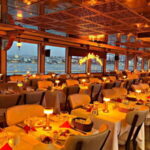

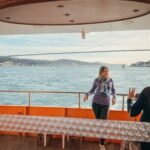
Where you meet: Senkron Tur-Seremonî Teknesi and what to expect
You meet at SENKRON Tur-Seremonİ Teknesi near Balat Parkı / Unkapanı Köprüsü area (Kadir Has Üniversitesi Önü). The good news is that it’s listed as near public transportation, so you’re not locked into a taxi-only start.
At the end, the tour finishes back at the same meeting point. That’s a small detail, but it saves you from the “now what?” feeling that sometimes comes after boat tours.
One thing to plan around: hotel transfer isn’t included. If you’re staying far from the Golden Horn side, you’ll want to budget time for getting to the dock.
Golden Horn to Galata Bridge: the cruise’s “warm-up” section
Your ride begins at the Golden Horn, which is a natural starting point because it gives you the classic Istanbul waterway vibe right away. From here, you sail toward the Bosphorus, using the city’s waterfront as your first big reference point.
Not far into the route, you pass Galata Bridge (Galata Köprüsü), a 490-meter drawbridge that links old Istanbul to the more modern side. Even if you’ve seen it in pictures, it plays differently from the water—more like a moving frame than a static landmark.
This first stretch is also useful for orientation. After a few minutes, you start recognizing how the city’s shape works: neighborhoods cling to the shoreline, and the Bosphorus turns into a corridor of palaces, fortifications, and big bridge engineering.
Dolmabahçe Palace from the water: glamour without the palace crowds
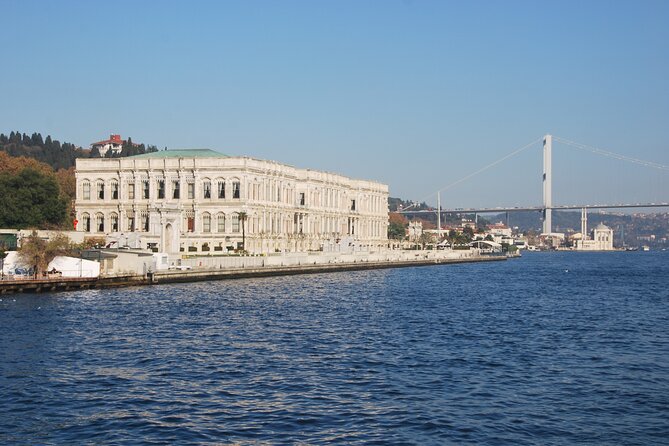
Next up is Dolmabahçe Palace, built in the 19th century and known as the administrative center of the late Ottoman Empire, where the last Ottoman sultans lived. From the Bosphorus, you don’t get museum-style details, but you do get scale—how the palace sits along the water as a power symbol.
This is a good moment to slow down your photo-taking instincts. Instead of hunting for one perfect shot, I like to watch how the palace stacks visually with what comes next: the coastline’s smaller residential-looking pockets and the bigger transportation landmarks farther along.
If your dream is to tour rooms inside Dolmabahçe Palace, this isn’t that day. But as a “see it from the city’s main stage” experience, it works well.
Ortaköy’s coastline feel: the European shore as a chain of villages
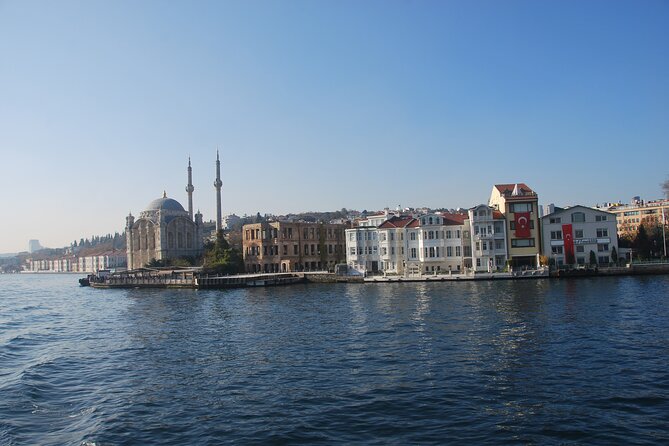
As you continue, the European-side shoreline comes into focus: it’s described as a string of villages, each with its own personality. The route calls out the area around Beşiktaş, Kuruçeşme, and especially Ortaköy—a spot named for the idea of the middle village (orta köy).
From a boat, this kind of coastline description actually becomes tangible. You start noticing how the waterfront changes block by block—some areas feel more “working city,” others more refined, and the transitions happen fast once you’re watching from the waterline.
A small tip: if you’re sensitive to sun or glare, check where the light hits your side of the boat. People often drift to whichever area looks easiest to photograph, but sometimes you can get better views with one small shift in seating.

The famous bridges: suspension bridges, plus the Second Bosphorus crossing
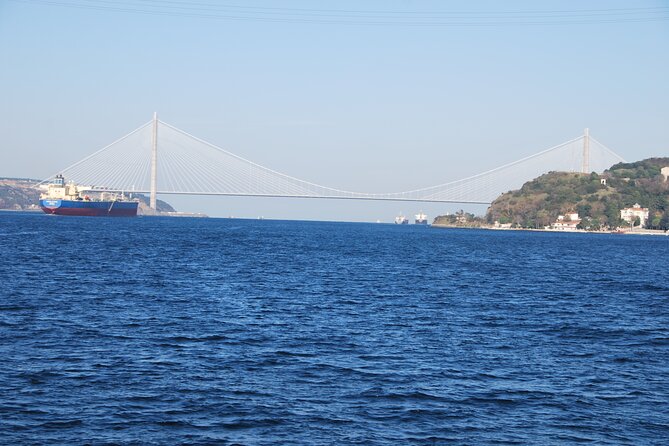
The itinerary includes two major bridge moments, and they’re both worth paying attention to.
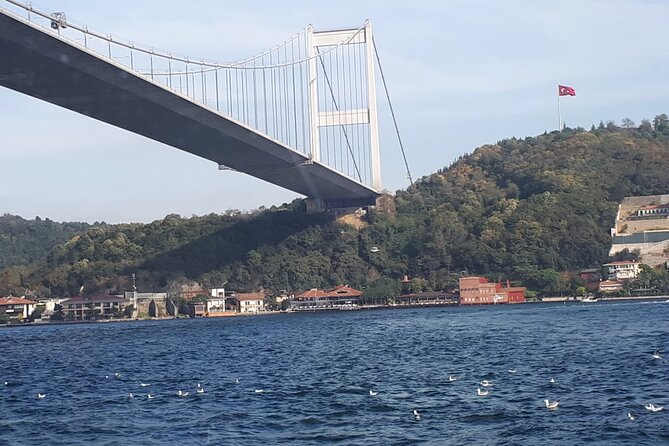
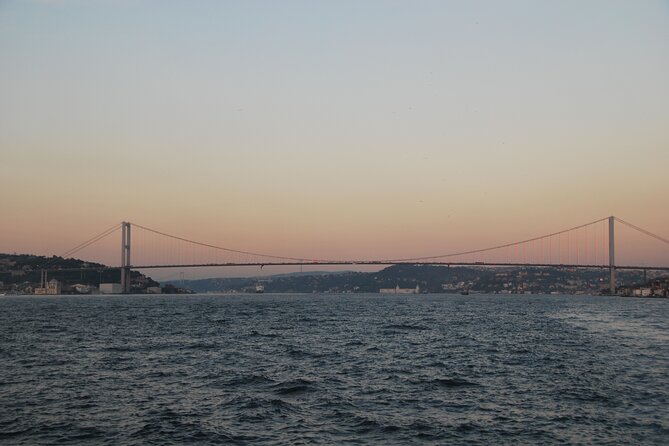
First is the Bosphorus Bridge, also known in recent years as the 15 July Martyrs Bridge. It’s one of the Bosphorus’s best-known suspension bridges, spanning 1,560 meters and connecting the European and Asian continents. The route also references other bridge names in that same family of crossings, which is a hint that this whole stretch is about connecting worlds—not just spanning water.
Then comes a second bridge encounter: Fatih Sultan Mehmet Bridge, also known as the Second Bosphorus Bridge. Construction began in 1986, opened in 1988, and it’s 1,510 meters long, with a main span of 1,090 meters.
What I like about including both bridge types is that you see Istanbul as it really operates: the city isn’t only old stone and palaces. It’s also modern engineering stitching together Europe and Asia in real time.
Rumeli Hisarı: Ottoman fortress strategy at the narrow point
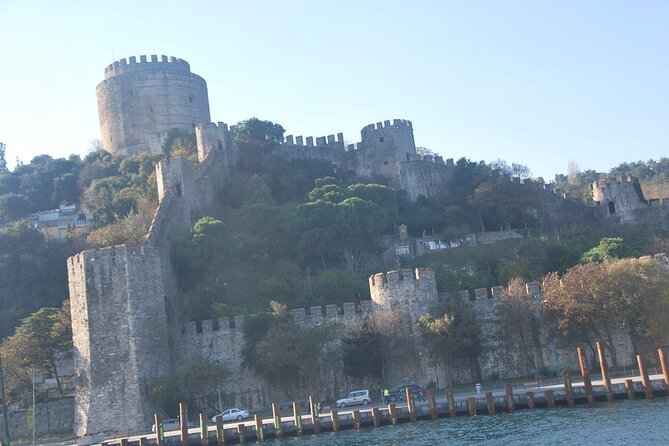
After the big modern crossings, the route shifts into Ottoman military logic with Rumeli Hisarı (Rumeli Hisarı), an Ottoman fortress dating to 1452. It was built by Sultan Mehmed II (Mehmed the Conqueror) in preparation for the conquest of Constantinople.
The fort sits on the Bosphorus shore at its narrowest point, approximately 660 meters wide. That narrow stretch is key: it’s where control of the waterway matters most.
And it’s even more interesting because the cruise description notes how Rumeli Hisarı faces Anadolu Hisarı, another fortress built earlier in 1394 by Bayezid I. Together, these places show how the Ottomans aimed to block military and economic support coming from the north.
If you like “why this place matters” more than just “what it looks like,” this stop delivers.
Beylerbeyi Palace and Maiden’s Tower: the “royal residences + landmark tower” finale
As you continue, you’ll pass Beylerbeyi Palace (Beylerbeyi Sarayı), commissioned by Sultan Abdülaziz to act as an imperial summer residence. The palace is described as having 24 rooms, 6 halls, and even a hammam. From the water, it’s less about reading every detail and more about seeing how another imperial seat sits along the shore.
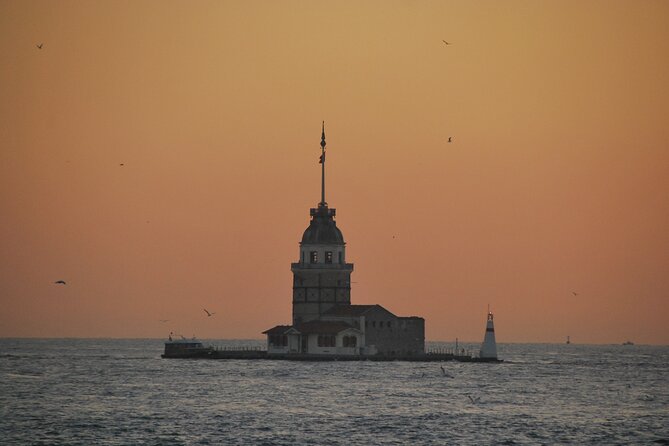
Then the route ends at the sight that many people plan Istanbul around: Maiden’s Tower (Kız Kulesi), also known as Leander’s Tower in the medieval Byzantine period. It’s on a small islet near the southern entrance of the Bosphorus strait—listed as about 200 meters from the coast of Üsküdar.
This tower works visually because it’s isolated. From a moving boat, it looks even more dramatic, like a small punctuation mark at the mouth of the waterway.
Whirling dervish show onboard: tea, seating choices, and the vibe
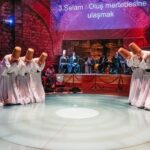
The tour includes a whirling dervish show, and it’s paired with the cruise so you don’t waste time seeking a separate evening program. Tea is included, which is a practical comfort on a boat where you might otherwise end up paying for small refreshments.
One review described the experience in two phases: first, time inside the boat at an allocated table, with the guide commentary running as you watch the sailing portion and the show moments. Then later, people shifted to the top deck for a different viewpoint as the boat keeps moving.
If you care about comfort, note the boat layout details shared in that review: the bottom deck was mostly enclosed with a small outside area at the back, while the top deck had blinds down, with an open back section. When the boat isn’t packed, those side areas around the top deck can feel especially good for taking photos without fighting for space.
Also, one review mentioned a bar and snacks available and that there is a toilet onboard (even if they didn’t use it). Alcohol and non-alcoholic drinks are listed as not included, so treat that bar as optional.
Finally, one account mentioned watching dancing alongside a macaw during the experience. That’s not something you should count on as a guarantee of every show, but it does suggest the onboard entertainment can feel lively rather than purely ceremonial.
Price and value at about $7.48: what you’re really buying
At roughly $7.48 per person, this is priced like an efficient sampler. That’s the main value: you get a guided Bosphorus cruise, tea included, and the whirling dervish show in a short, timed window.
You’re not paying for palace entry tickets or long guided museum time. Instead, you’re paying for the best kind of Bosphorus experience: a moving, viewpoint-driven route through major landmarks, with a professional guide keeping the story straight.
The balance is fair. If you want to spend hours in interiors, you’ll need a different plan. If you want a strong overview with one included cultural performance and some thoughtful commentary, this price makes a lot of sense.
Who this tour fits best (and who may prefer another style)
This works especially well if you’re:
- visiting Istanbul for the first time and want a high-signal overview
- short on time but still want to see palaces, fortresses, and bridges from the water
- interested in the whirling dervish show without having to coordinate a separate ticket and schedule
It may not fit if you’re:
- expecting deep, room-by-room palace tours (this is mainly a from-the-water experience)
- sensitive to weather, since the tour requires good weather
- the type of traveler who wants long stops on land instead of a smooth moving itinerary
Should you book the Istanbul Bosphorus tour with whirling dervishes?
I’d book it if you want a smooth, low-stress Istanbul highlight run: Bosphorus views, Ottoman landmarks, and an included whirling dervish show, all wrapped into about 2 hours. The affordability helps too, especially because tea and a licensed guide are part of the deal.
Before you go, just plan around weather and dress for the deck. Bring a light layer, expect some sun and wind, and arrive with the mindset that you’re seeing Istanbul as a moving postcard—one that also explains what you’re looking at.
If that’s your style, this tour is an easy yes.
FAQ
How long is the Bosphorus cruise?
It runs for about 2 hours.
What time does the tour start?
The start time is 3:30 pm.
Where does the tour start and end?
It starts at SENKRON Tur-Seremonî Teknesi near Balat Parkı / Unkapanı Köprüsü and ends back at the same meeting point.
Is the tour offered in English?
Yes, it’s offered in English.
What’s included in the price?
The tour includes tea, a professional licensed guide, and the whirling dervish show.
Are meals included?
No lunch is included.
Are drinks included?
Alcoholic and non-alcoholic drinks are not included.
Is transportation from your hotel included?
No, hotel transfer is not included.
Do I need to worry about weather?
Yes. The experience requires good weather. If it’s canceled due to poor weather, you’ll be offered a different date or a full refund.
How many people are in the group?
The tour has a maximum of 50 travelers.