REVIEW · ISTANBUL
Istanbul Small-Group City and Secret Streets Tour with Guide
Book on Viator →Operated by Tematique Tours · Bookable on Viator
Sultanahmet in one walk plan. This tour strings together big-name Istanbul landmarks with the kind of street wandering that helps it all click. I especially liked how guides (including Errol, Hüseyin, Gamze, Tolga, and Zeynep Dimple) keep the day practical and easy to follow, and I loved the chance to see the Blue Mosque’s interior up close. The one thing to watch: you should expect lots of walking, and entry details can vary in practice, so confirm what you’ll actually go inside.
For a first visit, this is a smart way to get your bearings fast without turning your day into a ticket-queue marathon. You’ll also get market time at the Spice Market, plus guidance for how to handle crowds and bargain-style shopping without losing your cool.
In This Review
- Key highlights to expect
- Meeting point near Fatih: starting where locals actually move
- The pace and the group size: 15 people, and often fewer
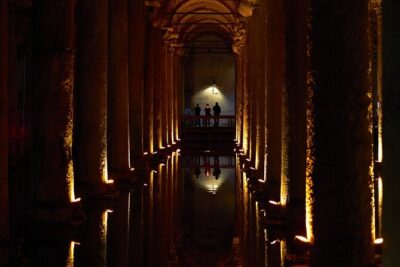
- Basilica Cistern: Roman engineering under your feet
- Sogukcesme Sokak by Topkapi: a quieter Istanbul lane
- Caferaga Medresesi: where traditional arts become real
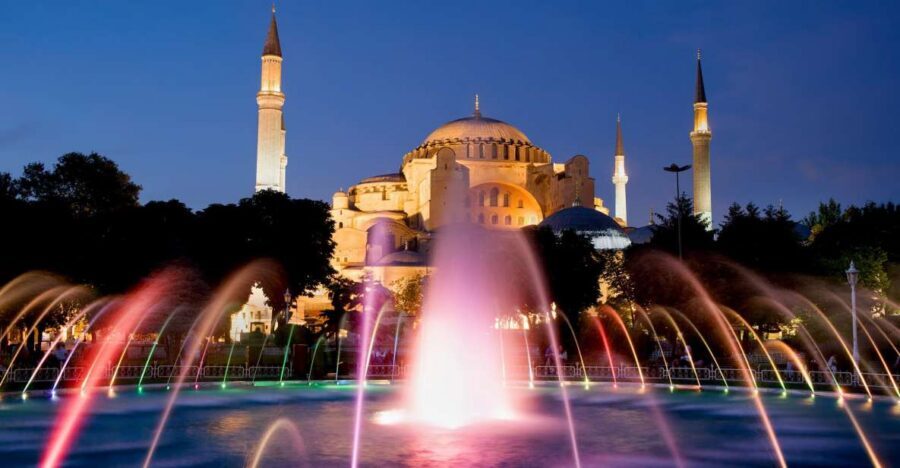
- Hagia Sophia Grand Mosque area: why this site matters
- Topkapi Palace: seeing imperial walls without drowning in details
- Sultanahmet District and the Hippodrome: the power center in plain sight
- Walled Obelisk and German Fountain
- Egyptian Obelisk and the Serpent Column
- Blue Mosque: the interior is the reason to slow down
- Sultanahmet Square: your photo and rest break
- Tahtakale and Misir Çarşısı: market time that still feels guided
- Bargaining tips and how to not get steamrolled
- What makes the guiding style work (and how to pick the right expectations)
- Price and value: what you’re really paying for at $72.59
- The main drawbacks to plan around
- Who should book this tour
- Should you book the Istanbul Small-Group City and Secret Streets Tour?
- FAQ
- How long is the tour?
- Is it a small group tour?
- Where does the tour start and end?
- What’s included in the price?
- Are ticket admissions included?
- Does the tour include hotel pickup and drop-off?
- Do I need to tip?
- Cancellation: can I get a full refund?
Key highlights to expect
- Secret backstreets near Topkapi: leaning-house lanes and Ottoman-era corners that feel calmer than the main sights.
- Roman and Byzantine under Istanbul: the Basilica Cistern stop sets the tone with serious engineering.
- Hagia Sophia area orientation: you’ll understand why Sultanahmet is the center of old power.
- Hippodrome monuments: obelisks and columns that explain Constantinople’s public life.
- Blue Mosque interior time: the tiles and light hit better when someone points out what to look for.
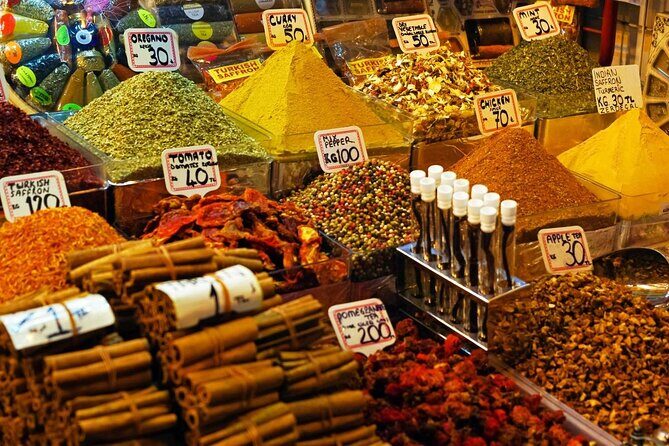
- Spice Market finish: the smells, colors, and snackable browsing at Misir Çarşısı.
Meeting point near Fatih: starting where locals actually move
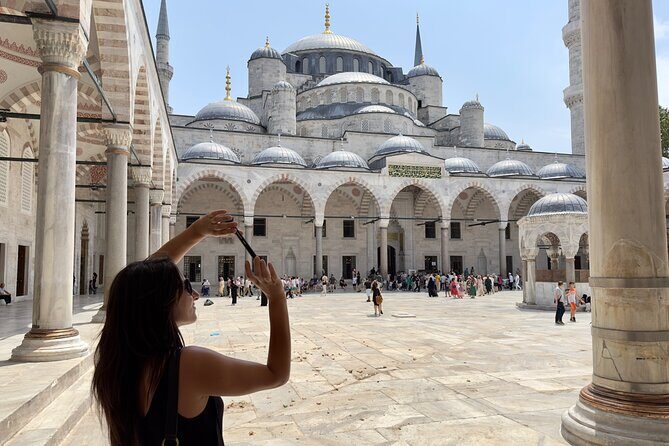
Your tour starts at Foodie-ist Cafe and Brasserie in Fatih (Alemdar area). That neighborhood choice matters. You’re not starting in the middle of the busiest tourist bottleneck, so you can get organized and meet your group without the first-hour chaos.
This is also near public transportation, which helps if you’re combining the tour with other plans later. Even if you’re staying elsewhere, you can usually get here without a long taxi ride.
You can also read our reviews of more guided tours in Istanbul


The pace and the group size: 15 people, and often fewer
The tour is built as a small-group experience with a maximum of 15 people. In practice, I’d treat it as a flexible walk: one person noted it ran with just two participants, so the guide can slow down for questions and tailor the route.
It’s listed as about 3 hours, with short stops along the way. That sounds easy until you realize it’s continuous walking across Sultanahmet/Eminönü area. Bring comfy shoes, and plan for a coffee break if you need one halfway—this route can feel like a lot on hot days.
Basilica Cistern: Roman engineering under your feet
You’ll begin with Basilica Cistern, a huge Roman-built cistern commissioned under Emperor Justinian and built in 532. Even if you don’t go deep into the details, the vibe is instantly different. It’s cool, cavern-like, and visually dramatic, which is why it shows up in films and why people love it as a midday reset.
Here’s the practical part: the tour schedule lists it as a stop with ticket notes, but your actual experience may depend on how entry is handled on your specific day. One common pattern is that the guide gives you the cistern as a key story stop, and entry may be an add-on if you choose to go in. If going inside is a must for you, I’d plan around that and ask your guide clearly at the start.
Sogukcesme Sokak by Topkapi: a quieter Istanbul lane
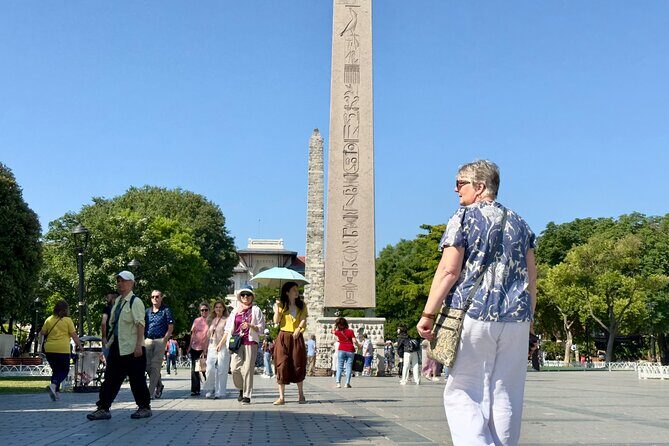
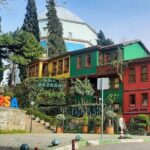
Next comes Sogukcesme Sokak, a small street with historic houses leaning against the wall of Topkapi Palace. This is one of those stops that teaches you something important: Istanbul isn’t just monuments. It’s also tight streets and buildings built up around power.
You’ll get a quick taste of that contrast—grand imperial walls nearby, and then narrow, human-scale living right beside them. It’s also a good place to notice textures and scale, which makes the larger sites feel less like random photo backgrounds.
Caferaga Medresesi: where traditional arts become real
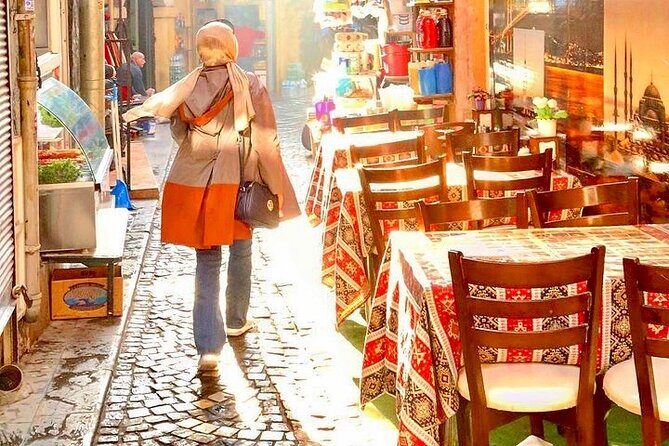
Caferaga Medresesi is often described as a former medrese now recognized for Turkish classical arts. In plain terms, it’s a stop that connects culture to hands-on craft—calligraphy, ceramics, jewelry, and other traditional work.
This matters on a tour like this because the day can tilt toward stone and domes. A quick arts-and-craft stop helps you remember that Ottoman and Byzantine legacies are not only in buildings. They’re also in the things people make and sell.
You can also read our reviews of more city tours in Istanbul


Hagia Sophia Grand Mosque area: why this site matters
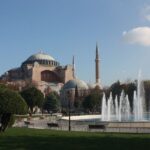
Hagia Sophia is one of the world landmarks that changes meaning depending on who’s in power. It began as a church in 532 AD, became a mosque after the 1453 conquest, and has served different roles since. The iconic dome and the surviving mosaics are the big visual hooks.
What you’ll gain on this tour is context. A good guide doesn’t just point at the building; they explain how Constantinople’s religious and political shifts played out in architecture. For photos, you’ll also learn where to stand so you see scale and structure instead of just crowd-filled angles.
One practical note: schedules and prayer-time rules can affect what you’re able to do in the moment. I’d treat this as a stop where your best move is to go with your guide’s direction and plan to arrive early and stay flexible.
Topkapi Palace: seeing imperial walls without drowning in details
Topkapi Palace is famous for the stories people attach to it—sultans, courtiers, concubines, and intrigue. Even when you’re not entering the palace grounds, the area still teaches you a lot. The courtyard-and-walls views help you understand it as a functioning complex, not a single museum object.
Because the day is time-limited, you usually won’t get a full palace tour. Instead, you get an orientation that makes it easier to choose what to return for later. If Topkapi is your top priority, think of this as the “where to focus next” moment, not the complete experience.
Sultanahmet District and the Hippodrome: the power center in plain sight
Then you move into Sultanahmet District, the heart of the old city where Byzantine and Ottoman empires held center stage. From here, the Hippodrome of Constantinople era monuments make more sense. You’ll see fragments and major markers tied to the chariot-racing track and the public square life of old Constantinople.
The stops around the Hippodrome are especially useful because they connect three things:
- political spectacle (the public arena),
- imperial symbolism (monuments and obelisks),
- and city identity (how Constantinople branded itself).
Walled Obelisk and German Fountain
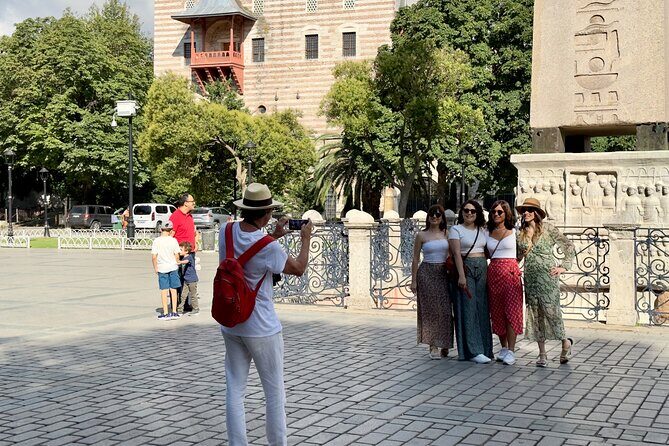
You’ll pass the Walled Obelisk, a Roman obelisk, plus the German Fountain built in 1898 as a gift from Wilhelm II. These are short stops, but the guide angle matters: it’s not “look at a statue,” it’s “here’s how outsiders and empires used monuments to claim meaning.”
Egyptian Obelisk and the Serpent Column
You’ll also hear about the Egyptian Obelisk (stated as 3500 years old in the tour materials) and the Serpent Column. The Serpent Column story links back to a Greek bronze tripod and its relocation to Constantinople under Constantine the Great in 324. Again, you’re not just looking at bronze—you’re learning why artifacts ended up here and what they represented.
Blue Mosque: the interior is the reason to slow down
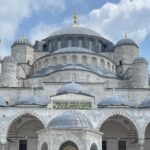
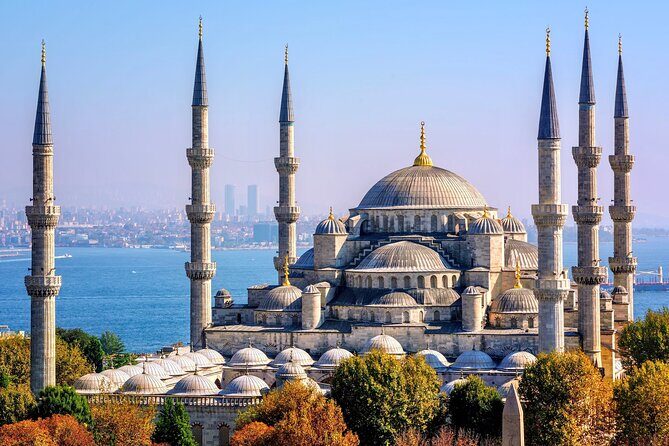
The Blue Mosque (Sultan Ahmed Mosque) is where the tour’s visual payoff often clicks. The big feature is the famous blue tile decoration inside. This is also one of the few places where the tour experience may include time inside during the visit.
This is a great moment to stop treating the day like a checklist. Sit your eyes on the patterns, the light, and the architecture. A strong guide will point out details so you don’t just wander through.
Also: dress rules and prayer-time timing can affect your visit. If your guide is delayed, it can become a real issue. One person reported missing out because prayer-time timing didn’t work out when the guide was late. That’s not something you can control, so your best move is to be punctual yourself, keep your timing calm, and follow the guide’s cues.
Sultanahmet Square: your photo and rest break
Sultanahmet Square is a practical pause. You’ll use it to get photos with Hagia Sophia and the Blue Mosque in view and to catch your breath. This stop is simple but valuable because it gives you time to absorb the morning’s lessons before moving into market energy.
If you want to remember what you saw, this is the moment to check your phone notes or ask one last question. It’s much easier to connect the dots when you’re not rushing.
Tahtakale and Misir Çarşısı: market time that still feels guided
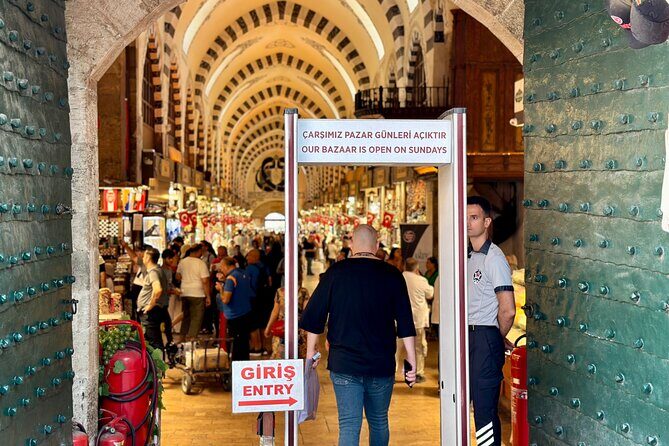
After the big sights, the route heads toward Tahtakale District—often described as “shop till you drop.” You’ll get the idea of Eminönü’s shopping spine, where goods can vary widely in price and style.
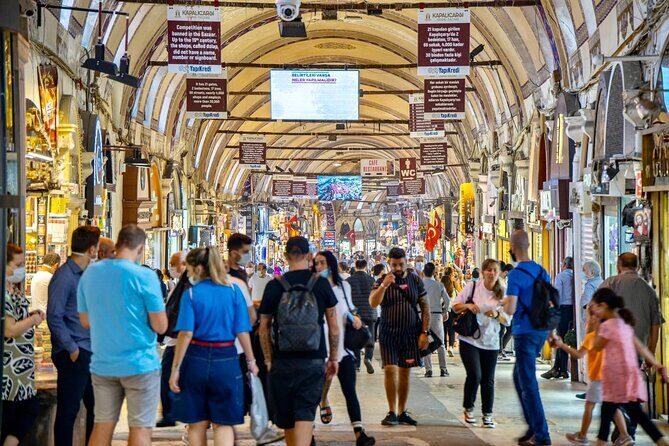
Then you finish at Misir Carsisi, the Spice Market (Spice Bazaar). This is one of Istanbul’s most atmospheric marketplaces. The tour positions it as a must-do stop, with colored spices, lokum (Turkish delight), and stalls selling honey, nuts, dried fruits, and other food souvenirs.
Bargaining tips and how to not get steamrolled
One of the best-value parts of this tour is that your guide can help with basic market strategy—how to negotiate without turning it into a fight. In one case, a guide even showed how to handle the bazaar approach so you can browse instead of feeling trapped by the process.
If you care about spices or edible souvenirs, go slower here. The earlier sights can blur together fast. The spice market is where you’ll actually spend money and bring something home.
What makes the guiding style work (and how to pick the right expectations)
The most praised aspect of this experience is the guiding—friendly, attentive hosts who explain what you’re seeing and why it matters. Guides like Hüseyin and Errol are noted for taking time with questions, while others like Gamze and Tolga are praised for organization in busy areas.
A few examples of what you can hope for, based on real experiences:
- Tailored pacing: if your group has interests, the guide can shape the order or add time.
- Practical city tips: transport and ticket guidance so you can handle Istanbul after the tour.
- Photo spot help: where to stand for the best angles without wasting time.
- Restroom and shade awareness: one guide was specifically praised for keeping the group comfortable during explanations.
- Extra patience: one person reported the guide waited when they were late.
Not every guide will match your listening needs. One complaint described a guide as too quiet to hear clearly. If that happens, speak up right away. Ask for key points to be repeated, or move closer so you can catch the details.
Price and value: what you’re really paying for at $72.59
At about $72.59 per person for roughly 3 hours, you’re mostly paying for:
- an English-speaking guide,
- the route planning across key sites,
- and market navigation and context.
You’re not paying for a long museum day. Several stops are structured as quick orientation looks, and the actual “inside” time can vary. That doesn’t make it bad value. It means you’re buying direction and pacing, not a stack of paid museum tickets.
So the value math works best if you’re:
- short on time,
- new to Istanbul,
- and you want a guided framework before you explore on your own.
The main drawbacks to plan around
Here’s what can trip people up, based on the patterns in real experiences:
- Walking load: if you expected mostly outside views with minimal walking, you might feel the effort. Wear shoes you trust.
- Entry expectations: some descriptions suggest free entry, but in practice, people have reported that entry wasn’t included or that you mainly pass exterior areas. If you want interiors, ask early what’s included and what costs extra.
- Punctuality and prayer times: timing can matter at religious sites. Stay flexible and follow your guide.
- Shopping pressure risk: market days are built for selling. One experience described a pottery stop as high-pressure and overpriced. You can protect yourself by staying firm, taking your time, and treating shopping as optional.
If you go in with these expectations, the tour can be a smooth, confident opener.
Who should book this tour
Book it if you want:
- a first-day or first-morning orientation to Sultanahmet,
- an organized path connecting Hagia Sophia, Topkapi area, the Hippodrome monuments, and the Blue Mosque,
- and a guided finish at the Spice Market.
It’s also a good fit for couples, solo visitors, and small families (one guide was praised for entertaining children ages 10 and 12).
Skip or adjust your expectations if you:
- hate walking,
- only want museum-style “enter every place” time,
- or you get uncomfortable in sales-heavy stops—then plan to use the guide for information and navigation, and be clear about shopping boundaries.
Should you book the Istanbul Small-Group City and Secret Streets Tour?
I think this is worth booking for the right traveler. If you’re new to Istanbul and you want the major landmarks stitched into a coherent story, the guide-driven route is the big win. The finish at the Spice Market plus practical tips for photos and bargaining makes the whole morning feel useful, not just scenic.
Just go in knowing it’s a walk-heavy plan and that not every stop guarantees the same entry experience. If you can handle that, this tour is a strong way to start your trip.
FAQ
How long is the tour?
It runs for about 3 hours.
Is it a small group tour?
Yes. The maximum group size is 15 travelers, and it can run smaller depending on the booking.
Where does the tour start and end?
It starts at Foodie-ist Cafe and Brasserie (Alemdar, Muhterem Efendi Sk. No:13, Fatih). It ends after visiting the Spice Market at Egyptian Bazaar in Eminönü (Rüstem Paşa, Fatih).
What’s included in the price?
The tour includes an English-speaking professional guide and small-group or private tour support, depending on the option you choose.
Are ticket admissions included?
The stop descriptions show admission ticket free for several locations, but admission is not listed in the Included section. If you plan to go inside any site, confirm what is covered for your specific day.
Does the tour include hotel pickup and drop-off?
No. Hotel pickup and drop-off are not included.
Do I need to tip?
Gratuities are not included, and tipping is recommended.
Cancellation: can I get a full refund?
Yes. You can cancel up to 24 hours before the experience starts for a full refund.