REVIEW · ISTANBUL
Multi Cultural Istanbul: Galata Tower – Fener and Balat – Golden Horn by Ferry
Book on Viator →Operated by Tematique Tours · Bookable on Viator
Istanbul can feel huge. This tour helps you connect the dots fast, from the Genoese roots of Galata to the Orthodox spiritual centers in Fener and the painted-stone streets of Balat. It’s interesting because you’re not just looking at sights—you’re moving through neighborhoods that have been shaped by Byzantine, Ottoman, and modern life, with a guide who keeps the story clear.
Two things I really like: you get Galata Tower admission when the all-inclusive option is selected, and you cover the Golden Horn area using a mix of ferry, tram, and bus instead of grinding through everything on foot. One possible drawback: there’s a moderate amount of walking and some of the streets can be steep, so comfy shoes matter. Also, the non-all-inclusive option means the tower ticket can cost extra.
In the groups I’ve read about, guides such as Ergil, Erol, İcil, İsliy, Gamze Aksin, and Can (John) all get praised for explaining architecture and history in a very practical way—answers come quickly, and the pace stays friendly for a small group.
In This Review
- Key highlights worth knowing before you go
- Galata Tower: Genoese fort roots and the art-stairs photo moment
- Beyoğlu (Pera) and the Golden Horn: how the bridge and ferry fit the story
- Fener Rum Patrikhanesi: a short stop with big spiritual context
- Fener & Balat streets: Byzantine-to-Ottoman-to-now, told by walking
- Bulgarian Orthodox Church: the Iron Church story in plain language
- Vlaherna Meryem Ana Church and the Constantinople walls
- Karaköy and the final ferry return near Galata Bridge
- Transport, group size, and meeting points that keep the day workable
- Price and value: what you pay for at about $79.39
- Who should book this multicultural Istanbul walk
- Should you book Multi Cultural Istanbul: Galata Tower – Fener & Balat – Golden Horn by Ferry?
- FAQ
- How long is the tour?
- What is the price per person?
- Is Galata Tower admission included?
- Are the stops in Fener and Balat free to enter?
- What transport is included?
- How large is the group?
- Is this tour stroller accessible?
- What language is the tour offered in?
- Where do I meet and where does the tour end?
Key highlights worth knowing before you go
- Galata Tower panorama with a quick, built-in payoff: skyline views that frame the whole Golden Horn area
- Old and new links through the bascule bridge idea—symbolic and practical across the water
- Fener’s Orthodox spiritual core at the Ecumenical Patriarchate area
- Balat and Fener streets as a walkable timeline of Byzantine-to-Ottoman-to-today neighborhoods
- The Iron Church connection at the Bulgarian Orthodox Church, built from Vienna cast-iron sections in 1896
- Small group max of 8 with a guide who can slow down when streets get steep
Galata Tower: Genoese fort roots and the art-stairs photo moment
You start with Galata Tower, one of Istanbul’s most distinctive landmarks. The tower dates back to the Genoese era in 1348, and your guide frames it as more than a pretty viewpoint—this was a real fortification, and that mindset helps the whole area make sense as you walk.
Then comes the best “instant reward”: the top-floor panorama. You’re looking out over the Golden Horn and the surrounding hills, so you immediately understand why medieval cities cared so much about height and walls. If you like learning what you’re seeing, this is the stop where it clicks.
Right on the way, you’ll pass the famous 19th-century art nouveau stairs that people love for photos. The tricky part is that you’ll likely want to stop there, but you’ll also be moving on to other sites. If you’re serious about pictures, bring your camera battery and plan on a few quick pauses.
Practical tip: wear shoes with grip. Even if the tour is only about four hours, the ground plan in this part of Istanbul can mean short, steep stretches.
You can also read our reviews of more tours and experiences in Istanbul.


Beyoğlu (Pera) and the Golden Horn: how the bridge and ferry fit the story
After the tower, the tour heads into the broader Galata-Beyoğlu area. In Ottoman times, Beyoğlu was often known as Pera, the “European Quarter,” with embassies, trading centers, and those stylish 19th-century Paris-like apartment houses. That explanation matters because it’s easy to walk past facades and miss the “why.”
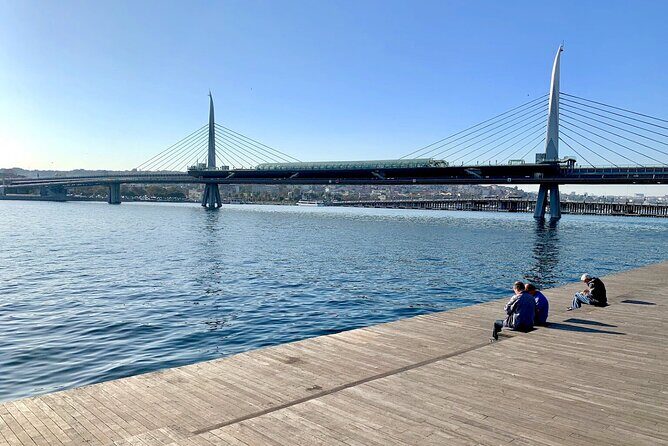
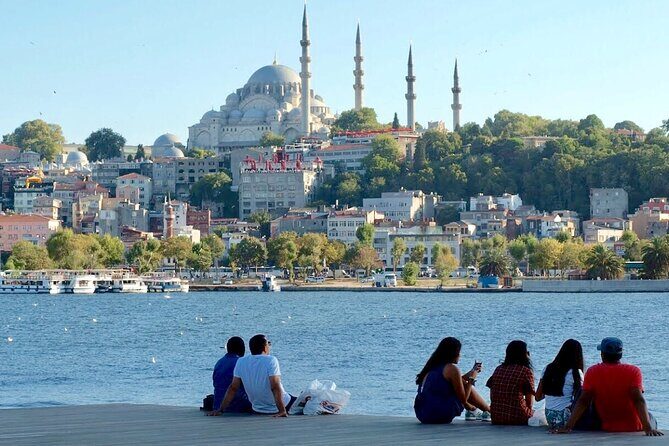
From there, you’ll cross the mental bridge to the Golden Horn (Halic). Your guide points out that it’s an inlet that separates old and new parts of Istanbul. You’ll get views of the water itself, and the day’s light can change the experience a lot. If your time happens to line up with softer light, those Golden Horn views can be extra memorable.
One highlight here is the bascule bridge that spans the Golden Horn. It’s both practical (it connects two sides) and symbolic. Istanbul repeatedly reinvented itself by linking shores, so seeing that connection explained while you’re physically moving through the area makes the city feel less random.
Transport also starts to do its job. Instead of forcing you to walk every segment, the tour uses ferry, tram, and bus. That means you spend more energy on the neighborhoods and less energy negotiating traffic and distance.
A real-world note: one guide-led day had a ferry disruption, and the group still had a great experience thanks to the guide’s flexibility. It doesn’t mean it will happen to you, but it’s a good reminder that ferry operations can be weather- or operations-dependent.
Fener Rum Patrikhanesi: a short stop with big spiritual context
Next is Fener Rum Patrikhanesi, the Ecumenical Patriarchate area. Even with only about 15 minutes, it’s an important anchor point because it represents the spiritual center of Eastern Orthodox Christianity—often compared to the “Vatican” role in the Orthodox world.
This stop is valuable because it gives you language for what you’re seeing later in Fener and Balat. Without that context, you might notice architecture and color but miss the why behind the sites and community layout.
You’ll also get a chance to slow down. The pace of Galata and the streets around it can be energetic; then this becomes a brief grounding moment where the guide can connect religion, history, and geography in plain terms.
Time saver: since the stop is short, show up ready to listen. If you split your attention between your phone and the guide, you’ll miss what makes this part more than a quick photo.
Fener & Balat streets: Byzantine-to-Ottoman-to-now, told by walking
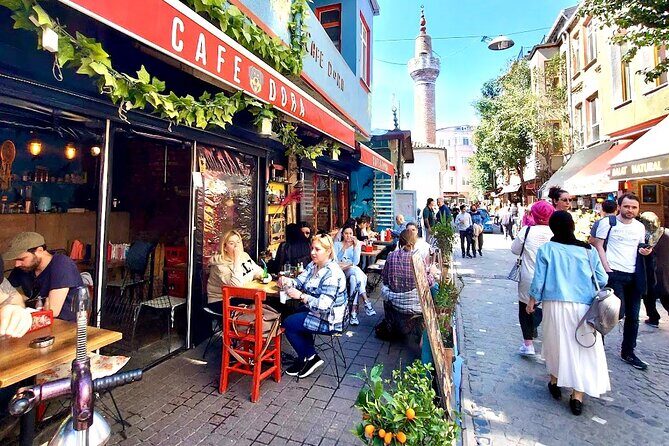
Now you hit the part many people come for: Fener and Balat. The tour treats these areas—Ayvansaray, Balat, and Fener—as a miniature chronicle of different eras. Byzantine, Ottoman, and modern times all show up in street patterns, building styles, and the way communities layered over each other.
You’ll see colorful streets and a sense of neighborhood texture that’s hard to get from a bus window. This is the walking portion where the guide’s storytelling pays off, especially when you learn how empires and communities left marks in everyday places—not just grand monuments.
Your time here is about one hour, and that’s long enough to feel the streets without turning it into a marathon. Still, plan for steep bits. Several guides in past groups were described as thoughtful about pacing and helping people manage the uneven ground.
What to expect on the street level
- Quick changes in views as you wind through smaller lanes
- Plenty of places that look like they were meant for photos (but keep moving so you don’t fall behind)
- An atmosphere that feels local, not museum-only
If you’re traveling with kids or family: the small group size (max 8) helps. One guide was praised for being flexible with family needs, and that kind of adjustment is easier in a smaller group than a large tour bus crowd.
Bulgarian Orthodox Church: the Iron Church story in plain language
The Bulgarian Orthodox Church stop is short (about 15 minutes), but it’s one of the most surprising details on the route.
The church is described as neo-Gothic and white-painted, but the attention-grabber is structural: it’s made from cast iron sections, built (or “cast”) in Vienna in 1896 and then carted all the way to Istanbul. Your guide uses that detail to explain how technology, trade links, and religious community needs connected Europe to Istanbul in a very physical way.
This is a great stop if you like your history with a “how is that even possible?” factor. It also works well for photos because the architecture reads clearly even in a quick visit.
If you don’t care about the technical story, you can still enjoy it as a distinctive visual contrast against the rest of the street scene.



Vlaherna Meryem Ana Church and the Constantinople walls
You then visit Vlaherna Meryem Ana Church, described as emotional and spiritual. With about 10 minutes, this is a moment to be respectful and quiet in the way you’d treat any active religious space. The value here is more about atmosphere than about rushing through exhibits.
After that, the tour brings you to a section tied to the walls of Constantinople—the medieval fortifications that were among the greatest defenses of their time. You’ll see towers and gates, and importantly, some sections still stand in more or less intact form.
This part helps tie the whole day together. Galata Tower was a fortification too. Seeing multiple “defense” points on the same walk helps you understand why Istanbul’s geography mattered so much, and why the city kept rebuilding its boundaries.
Along the way, your guide also connects the big-picture story: Istanbul is the only city in the world on two continents, and it served as capital for Roman, Byzantine, and Ottoman empires. You don’t need a full lecture to benefit from this—it’s the kind of context that makes the streets feel less random.
Karaköy and the final ferry return near Galata Bridge
Near the end, you’re in Karaköy, one of the oldest historic districts and also an important commercial and transport hub today. This is useful because it shows how “old Istanbul” hasn’t frozen in time. It’s still moving.
From there, the tour ends by Karaköy Ferry Terminal, near Galata Bridge, on the Kadıköy and Üsküdar side of the water route.
The ferry leg (when it runs as planned) is one of the most relaxing parts. After steep streets and lots of looking up at buildings, the water view gives you a reset—plus it mirrors the Golden Horn theme you’ve been learning all day.
Tip for comfort: if you’re prone to motion sensitivity, keep that in mind before the ferry portion.
Transport, group size, and meeting points that keep the day workable
This is designed as a small-group experience with a maximum of 8 travelers, led by a professional guide. That matters in Istanbul, where crowds and navigation can turn a “simple walk” into a time drain. In a smaller group, you’re more likely to actually understand where you are as you move.
There’s no hotel pickup, so you’ll want to plan to reach the start point on your own. The meeting point is at Anemon Koleksiyon Galata Otel area, in Beyoğlu (Bereketzade, Büyük Hendek Cd. No:5).
The tour ends near the Karaköy Ferry Terminal by Galata Bridge (Aram Cami / Karaköy Meydanı area), close to the Kadıköy and Üsküdar ferry routes. If you’re staying on the Asian side, it’s a helpful location to finish.
Also, the tour is not stroller accessible, and you should expect moderate walking. If you’re traveling with limited mobility, you’ll need to decide based on your comfort with steep, uneven streets.
Price and value: what you pay for at about $79.39
At $79.39 per person for about 4 hours, the value comes from the combination of:
- A professional guide for the full walking-and-viewing time
- Transport by ferry, tram, and bus
- Donations included
- Galata Tower entry included only with the all-inclusive option
Here’s the key choice point: if you don’t select the all-inclusive option, the Galata Tower entry fee is not included, and it’s listed as 30 EUR per person. That can make or break the value depending on what you planned to do anyway.
Why this structure can be smart: Galata Tower is an obvious “must-see,” so if you want it covered in the package, the all-inclusive option saves you the hassle of figuring out entry details on the spot. If you’d rather handle tower tickets yourself, you may save a bit by skipping the all-inclusive add-on—but you’ll still need to budget for the tower entry.
Either way, compared with a do-it-yourself day, the big win is that someone else handles the sequencing and context. Your guide helps you move from tower to neighborhoods to churches without turning the day into a confusing scavenger hunt.
Who should book this multicultural Istanbul walk
This tour is a strong fit if you want:
- A short, focused day that covers Galata, Fener, Balat, and the Golden Horn without a full-day museum marathon
- A guide who can connect the dots between architecture, religious sites, and empire-level history
- A plan that includes viewpoints plus neighborhood walking, using ferry/tram/bus to reduce walking stress
You might skip it if:
- You need a low-walking plan or stroller access (it’s not stroller accessible)
- You want extended time inside major museums or a long, slow food-and-culture itinerary (this is about walking and key stops)
If you’re the kind of traveler who likes seeing why places look the way they do—why a tower was built, why a neighborhood changed hands, why an iron church exists—you’ll likely love the way this route tells the story.
Should you book Multi Cultural Istanbul: Galata Tower – Fener & Balat – Golden Horn by Ferry?
I’d book it if you want a compact, well-guided day that links the big skyline moment of Galata Tower to the smaller, human-scale details of Fener and Balat. The small group size and guide-led storytelling are the real value drivers, and the route gives you both views and street-level context.
Just pick your option carefully: if you want Galata Tower covered upfront, choose the all-inclusive version so you don’t get surprised by the separate tower ticket. And bring good shoes—you’ll be glad you did on the steeper lane stretches.
FAQ
How long is the tour?
It’s about 4 hours (approximately).
What is the price per person?
The price listed is $79.39 per person.
Is Galata Tower admission included?
It depends on the option you select. With the all-inclusive option, Galata Tower entry is included. If the all-inclusive option is not selected, Galata Tower entry is not included and is listed as 30 EUR per person.
Are the stops in Fener and Balat free to enter?
The tour lists admission as free for the Ecumenical Patriarchate (Fener Rum Patrikhanesi), Fener & Balat, the Bulgarian Orthodox Church, and Vlaherna Meryem Ana Church.
What transport is included?
Transport is included by ferry, tram, and bus.
How large is the group?
The tour has a maximum of 8 travelers.
Is this tour stroller accessible?
No, it’s not stroller accessible.
What language is the tour offered in?
It’s offered in English.
Where do I meet and where does the tour end?
You start at Anemon Koleksiyon Galata Otel in Beyoğlu. The tour ends at the Karaköy Ferry Terminal near Galata Bridge (near Kadıköy and Üsküdar Pier area).