REVIEW · ISTANBUL
Paint on Water – Authentic Turkish Art Experience at Local Home
Book on Viator →Operated by Lokal Bond · Bookable on Viator
A strange art form lives in ordinary homes.
This Turkish paper marbling workshop happens inside an Istanbul residence in Beşiktaş, where you learn Ebru (the Turkish name for water marbling). It’s also recognized as part of a UNESCO cultural heritage tradition, which gives the day more weight than a typical craft class.
I really like that the experience is hands-on with equipment included, so you aren’t hunting down tools or worrying about prep. I also love the pace and attention: with a group capped at 6, your instructor can slow down, repeat, and guide you step-by-step.
One thing to consider: this is a home setting, so it’s best if you’re comfortable following directions calmly and keeping your focus during the active, paint-on-water portion.
In This Review
- Key highlights you’ll care about
- Istanbul’s Beşiktaş home workshop: what makes it feel different
- Meeting Ahmet and settling in fast
- How the workshop actually runs (and why the structure helps)
- 1) Welcome and an Ebru intro
- 2) Learning the craft with different techniques
- 3) Making your own designs
- 4) Leaving with a real sense of completion
- UNESCO-level tradition, but taught in a friendly way
- One-on-one instruction: why small group size changes everything
- Tools included: what that means for your planning
- Price and value: $58 for real technique time
- Who this workshop suits best (and who may not love it)
- Practical notes that affect your day
- Should you book Paint on Water in Istanbul?
- FAQ
- How long is the Paint on Water workshop in Istanbul?
- How many people are in the group?
- Are the tools included?
- Where does the workshop meet?
- What is the price per person?
- What is the cancellation policy?
Key highlights you’ll care about
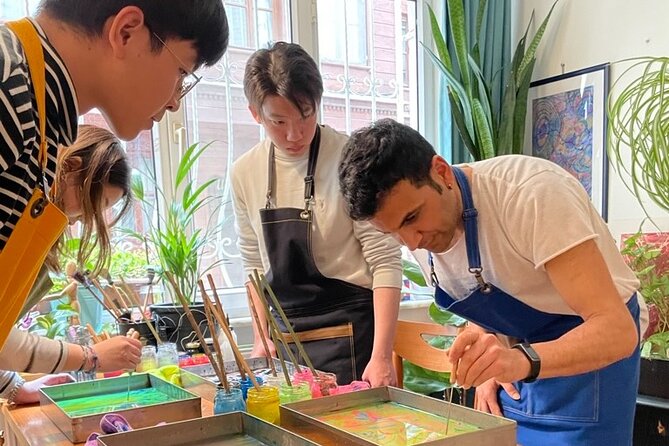
- Ebru basics in a real Istanbul home in Beşiktaş, not a classroom stage setup
- Tools provided for the painting-on-water work, so you just show up
- Small group (max 6) with lots of one-on-one instruction
- Multiple techniques, so your design-making feels like more than one trick
- Turkish hospitality included, with context on daily-life culture alongside the art
- You leave with your own finished marbled designs and a stronger feel for the tradition
Istanbul’s Beşiktaş home workshop: what makes it feel different
Istanbul has big attractions that pull your eyes up. This activity pulls your hands down.
The workshop meets at Yenimahalle Fırın Sokak in Beşiktaş (Cihannüma), and the whole vibe is local and personal. You’re not watching someone do the art from across a room. You’re in the space where the tradition actually lives: a family home, with the kind of comfort that makes it easier to try without fear of messing up.
The best part is how the teaching is tied to culture. Before you start working, you get historical and cultural context about Ebru—and that matters. Paper marbling isn’t just a pretty pattern. It’s a method built around patience, timing, and restraint. When you understand what you’re looking for, the technique stops feeling random and starts feeling learnable.
Also, you’ll hear multiple names for the same craft—like water marbling or marbling art. The instructor keeps it grounded in the Turkish term Ebru, which helps you connect the craft to the people who practice it day to day.
You can also read our reviews of more tours and experiences in Istanbul.


Meeting Ahmet and settling in fast
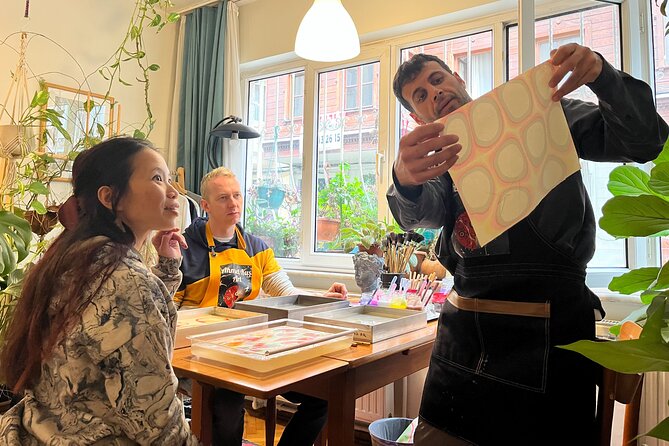
Your experience begins with a warm welcome and a chat with the instructor, Ahmet.
This isn’t a quick handoff where you’re left to figure things out. You’re guided through the story first: what the craft is, why it’s important, and how Turkish households view learning through making. That warm-up period helps you relax into the workflow, especially because marbling can feel a bit magical at first—until you learn the control points.
From the experience description and the feedback, Ahmet stands out for being attentive, informative, and patient. That last part is huge. When you’re working with liquid patterns, you want an instructor who won’t rush you or treat mistakes like failure. You want someone who keeps explaining until the technique makes sense.
And yes, you’re also stepping into Turkish home hospitality in a way that feels practical, not staged. You get that “friend-of-a-friend in the kitchen” feeling—except this kitchen has art materials.
How the workshop actually runs (and why the structure helps)
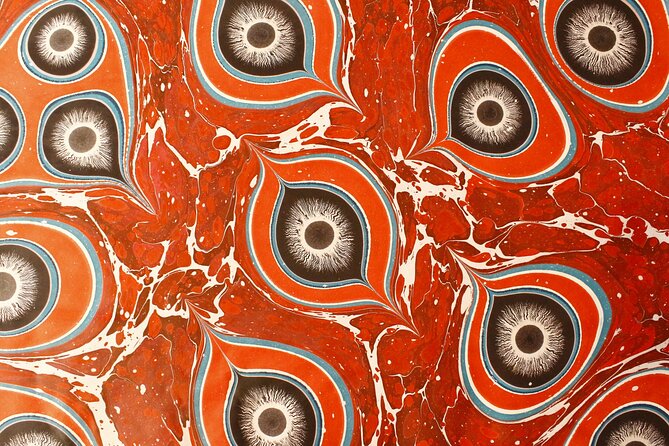
The duration is about 1 hour 30 minutes, which is long enough to learn, practice, and make something you can be proud of. It’s also short enough that you don’t feel drained by concentration.
Here’s the flow you should expect:
1) Welcome and an Ebru intro
First you’ll be welcomed to the home in central Istanbul, then start with the warm-up with Ahmet. After that, you’ll receive historical and cultural information about Turkish paper marbling.
This part sets your expectations. You learn what Ebru means in Turkish and why people treat it as a meaningful tradition. You also get clarity on the names you might hear elsewhere—water marbling and similar terms—so the workshop language stays consistent.
2) Learning the craft with different techniques
Then you begin the hands-on section. The workshop includes training on different techniques used in Turkish/Ottoman paper marbling.
You’re not just copying a single template. You’re learning how patterns behave and how your actions affect the design. That’s one reason Ebru is fun to learn: it rewards observation. When you start seeing the cause-and-effect, it becomes less like luck and more like skill.

3) Making your own designs
Once you’ve covered the basics, you get the chance to create designs with your own creativity. This is where the “paper marbling magic” shows up. The patterns you produce are unique, even when you follow the same instructions—because the materials and motion have their own personality.
4) Leaving with a real sense of completion
At the end, you don’t just walk away with a souvenir. The experience is designed to leave you feeling fulfilled and connected—both to the art and to the local friends you bond with during the session.
That last part is tied to group size and teaching style. With a small group, you naturally chat more, ask more, and share progress. The result is that you feel part of the learning moment, not like a consumer of a class.
UNESCO-level tradition, but taught in a friendly way
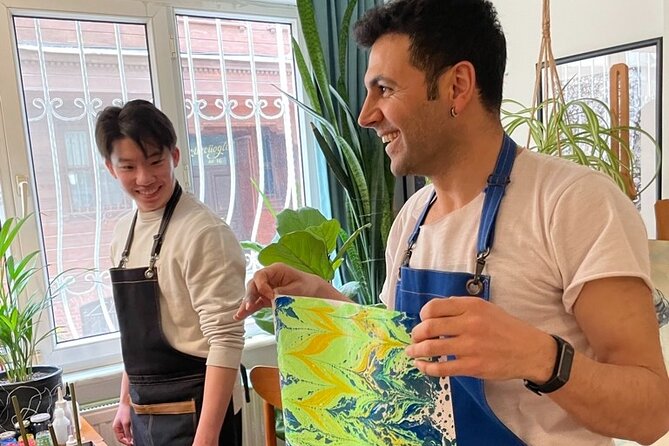
The workshop is based on an art form that’s recognized as UNESCO cultural heritage, and that recognition isn’t just a badge. It signals that you’re learning something with deep roots, not a pop-craft trend.
But here’s the practical part: you don’t need a background in Ottoman art or calligraphy to enjoy this. The class format—warm welcome, context, then hands-on technique—keeps it approachable.
This also helps you understand what makes Ebru special. It’s controlled chaos. Tiny actions can change the outcome. That’s why patience matters. It’s also why having an instructor who can guide you through the steps matters.
If you like crafts, but you hate feeling “graded,” this is the right kind of class. The goal is technique plus creative expression, not performance.
One-on-one instruction: why small group size changes everything
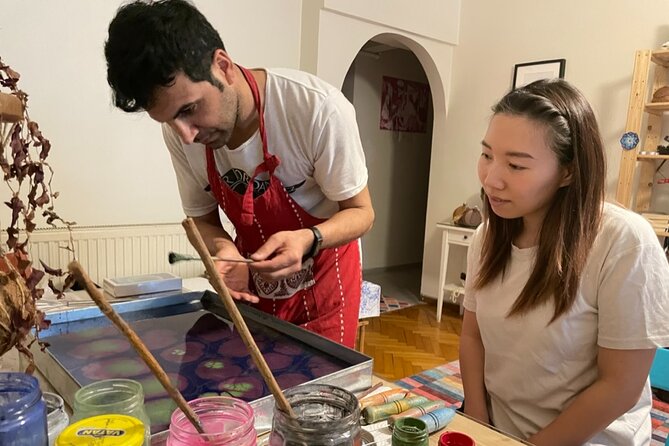
The group size max is 6. That single number affects the whole experience.
In a larger group, you often get the demo and then you’re left to troubleshoot alone. Here, you’re much more likely to get direct help at the exact moment you need it. If something goes off, Ahmet can adjust your approach. If you’re unsure, you get explanations that land.
That’s also why the class is listed as having lots of instruction. You’re not just learning the motion. You’re learning what the instructor watches for—how to correct early, how to stay steady, and how to aim for the effect you want.
So the experience becomes more than a quick art activity. It becomes a real skill-building session.
Tools included: what that means for your planning
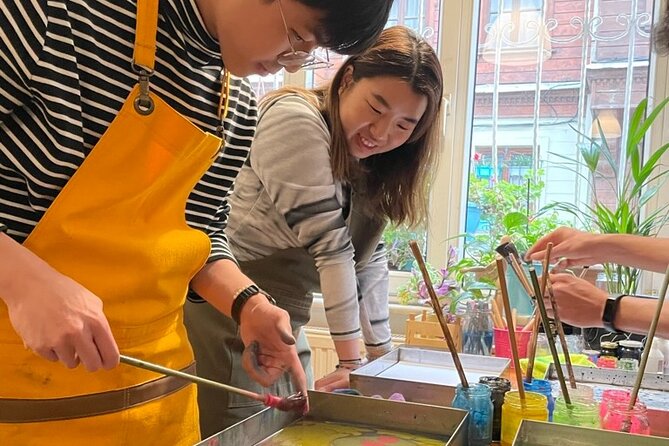
You don’t need to bring marbling tools. The workshop includes the equipment, which removes a major barrier.
For you, that means:
- Less to carry across Istanbul
- Less time thinking about whether you have the right supplies
- More time actually making art
It also means the workshop is set up for comfort and consistency. You’re using the same kind of materials and workflow the instructor uses, so you’re learning the technique as it’s meant to be practiced.
Because it’s paint-on-water work, you might want to wear something you don’t mind getting a little messy—but I’ll keep it honest: the details about dress code aren’t spelled out. Still, basic common sense applies when you’re working with creative materials.
Price and value: $58 for real technique time
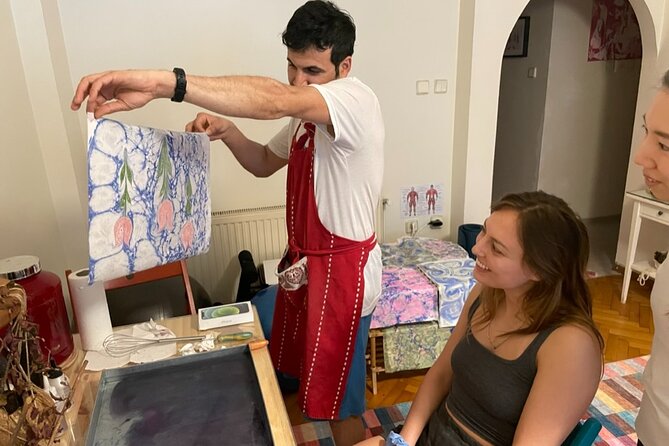
At $58 per person, this isn’t a bargain class priced like a tourist souvenir workshop. It’s priced more like guided instruction in a private, local home.
So what are you actually paying for?
You’re paying for:
- A teaching experience tied to Ebru tradition (not just generic art)
- Tools included, so you’re not hit with add-ons
- Small group size (max 6), which drives more instructor time
- A home hospitality element plus cultural context
- A total duration of about 1 hour 30 minutes, meaning you can learn and finish something
If you usually do “free walking tours” and museum days, this is the kind of activity that balances your trip. You leave with a product of your hands, plus a story you can explain. That combination is what makes the value feel right.
Also, the workshop is typically booked about 29 days in advance on average, which tells me it’s not a mega-popular drop-in thing. If you want a specific day, it’s smart to reserve ahead.
Who this workshop suits best (and who may not love it)
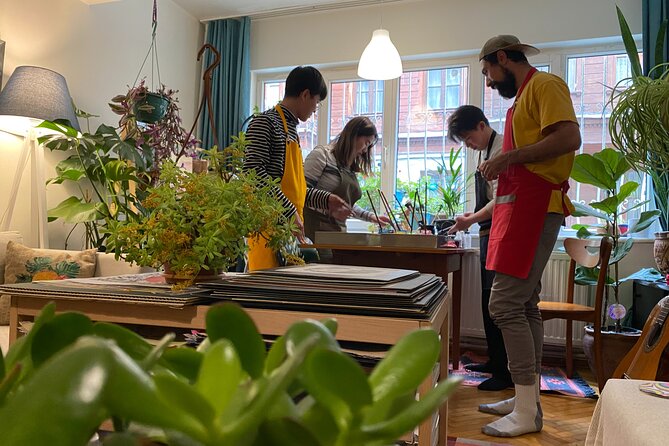
This is a great fit if you:
- Want a hands-on cultural experience in Istanbul, not just sightseeing
- Love crafts and want to learn technique, not just make something once
- Like small groups and more personal instruction
- Appreciate Turkish home hospitality and context with your activity
It may be less ideal if you:
- Want a purely fast, “walk-in and leave in 20 minutes” activity
- Dislike hands-on workshops where you must follow steps and focus on your work
But if you’re open to trying a traditional art in a home setting, you’ll likely find the pace and structure satisfying.
Practical notes that affect your day
A few things to plan around, based on the provided details:
- Confirmation happens at booking time.
- The activity uses a mobile ticket.
- It’s listed as near public transportation, so you’re not totally stranded if you don’t plan to drive.
- Most people can participate, which makes it a safer bet if you’re not sure about your comfort with workshops.
- Service animals are allowed, which can matter for planning.
- The meeting point is in Beşiktaş and the tour ends back there.
If you’re pairing this with other Istanbul plans, give yourself enough buffer time. You’ll be moving from a meeting point to a home setting and back, and you don’t want to rush the final creative steps.
Should you book Paint on Water in Istanbul?
Book this if you want a small-group, hands-on Turkish art experience that feels local, taught by a real instructor in a home setting. The combination of Ebru instruction, Ahmet’s patient guidance, and included tools is exactly what makes it worth your time.
Skip it only if you’re looking for a big-ticket spectacle or you hate getting your hands involved. This workshop rewards curiosity and calm attention.
If you’re the type of person who remembers the smell of places and the feel of things learned by doing, this fits your travel style.
FAQ
How long is the Paint on Water workshop in Istanbul?
It lasts about 1 hour 30 minutes.
How many people are in the group?
The maximum group size is 6 travelers.
Are the tools included?
Yes. The equipment is included, so you don’t need to bring your own tools.
Where does the workshop meet?
The meeting point is Yenimahalle Fırın SokakCihannüma, Yenimahalle Fırın Sk, 34353 Beşiktaş/İstanbul, Türkiye. The activity ends back at the meeting point.
What is the price per person?
The price is $58.00 per person.
What is the cancellation policy?
You can cancel for free up to 24 hours in advance of the experience start time for a full refund.