REVIEW · ISTANBUL
Istanbul old City Tour – Full Day
Book on Viator →Operated by Turkey Tours Planners · Bookable on Viator
Some days in Istanbul need a plan.
This full-day Old City tour hits the big icons of Sultanahmet with clear, ongoing commentary and smart timing, so you spend less time guessing and more time seeing. I like that you get hotel pickup in central Istanbul and a real lunch break instead of a random snack hunt. I also like the mix of heavy hitters (Blue Mosque, Hagia Sophia, Topkapı) with smaller stops that help the area click into place. The one thing to keep in mind is the day can run long and the pace can be brisk—so wear good shoes and don’t schedule anything tight right after.
You’re starting at 8:30am, and that early start matters in a place where lines, prayer moments, and foot traffic all play a role. You’ll mostly be walking between sights, with the air-conditioned vehicle mainly handling the transfer segments. If you want Hagia Sophia museum areas, plan for an extra 25 Euro fee, since that part isn’t included.
In This Review
- Key highlights worth your attention
- Why the 8:30am Sultanahmet route works
- Hippodrome: the square where Constantinople’s energy used to run
- Blue Mosque, Ahmed I, and the kind of details you can actually notice
- German Fountain: a small monument with a big “why”
- Hagia Sophia Grand Mosque: included access, plus the museum fee question
- Grand Bazaar: fast, famous, and best with a plan
- Topkapı Palace: Ottoman power made museum walls
- Hagia Irene and Soğukçeşme Sokağı: the calmer beats you’ll remember
- Caferaga Medresesi: a quieter architecture side note next to Hagia Sophia
- Lunch, guide commentary, and the real pacing of the day
- Price and value: what $200 gets you, and what costs extra
- Who should book this Old City tour—and who should not
- Should you book this Istanbul Old City Tour?
- FAQ
- How long is the Istanbul Old City Tour?
- Is hotel pickup included?
- What’s included in the price?
- Is the tour offered in English?
- Do I have to pay extra for Hagia Sophia?
- How large is the group?
Key highlights worth your attention
- Hotel pickup from central Istanbul hotels and return drop-off so you’re not navigating transit at 8:30am
- Lunch included at a traditional Turkish restaurant, built into the long museum day
- Most admissions free across the major stops, with Hagia Sophia’s museum fee handled separately
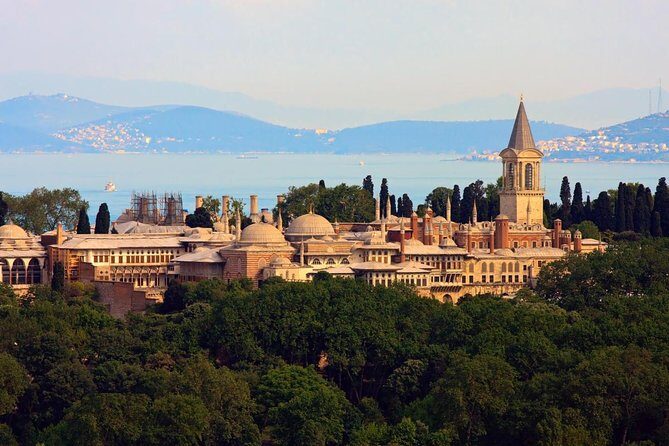
- Sultanahmet on one loop: Hippodrome, Blue Mosque, Hagia Sophia, Topkapı, plus the calmer side streets
- Small group size (up to 25) for better movement through crowded areas
- English commentary throughout, with a guide who keeps the stories tied to what you’re looking at
Why the 8:30am Sultanahmet route works
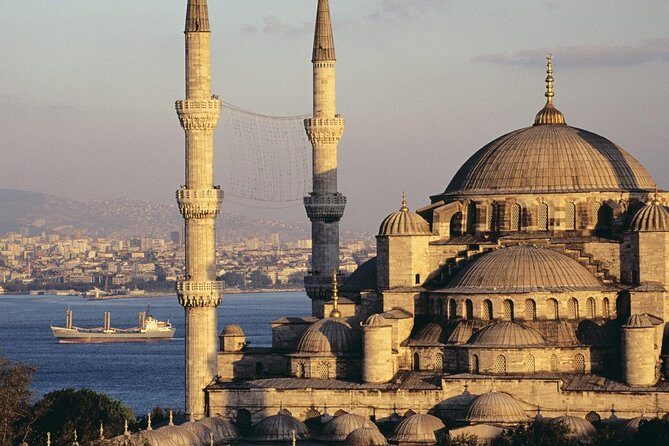
Start early and you win. An 8:30am start helps you beat the worst crush around the Blue Mosque and Hagia Sophia zone, and it gives you more relaxed time for photos and pauses.
This is a full-day outing (about 7–8 hours on paper), and you should mentally plan for a bit more time if crowds build or if the group needs to adjust. The tour also uses an air-conditioned vehicle, but don’t assume you’ll ride it between every stop—this is largely a walk-and-see day.
If you’re the type who hates rushing, this is doable, but you’ll want to keep your pace steady and your expectations flexible. Istanbul can be unpredictable in the moment, especially near active worship sites.
You can also read our reviews of more city tours in Istanbul

Hippodrome: the square where Constantinople’s energy used to run
Your first stop is the Hippodrome of Constantinople, now the Sultanahmet square known as Sultanahmet Meydanı. In its heyday, it was the sporting and social heart of Byzantine Constantinople—a place where crowds gathered for spectacle, not quiet sightseeing.
Today you’re not looking at a full original structure. You’re looking at surviving fragments and the general footprint—so your guide’s commentary really helps you “read” the space. Admission here is free, which is great because it lets you get moving without paying yet another ticket.
Practical tip: treat this as a warm-up stop. Use it to orient yourself before the heavy architecture starts.
Blue Mosque, Ahmed I, and the kind of details you can actually notice
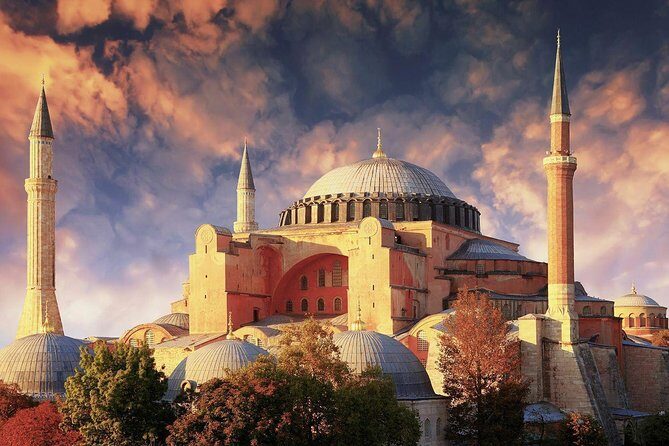
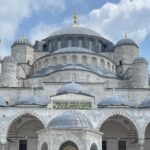
Next up is the Blue Mosque (Sultan Ahmed Mosque). It’s still active as a mosque, and it’s one of those places where the visual impact hits fast.
Construction was carried out between 1609 and 1616 during the rule of Ahmed I. Even if you don’t memorize dates, that timeline matters because it helps explain why the complex feels like a masterpiece of a specific era rather than a generic old building.
Admission is free, so this is a strong value stop. The key is timing and etiquette: plan for prayer moments and keep an eye on what the guide asks you to do. You’ll feel the rhythm of the day shift here—more cameras, more crowds, and more people moving in careful ways.
German Fountain: a small monument with a big “why”
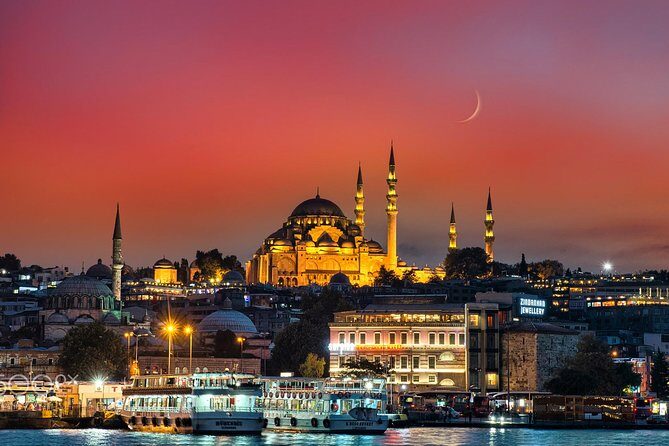
After the mosque area, you’ll see the German Fountain, a gazebo-styled fountain across from the Mausoleum of Sultan Ahmed I. It’s easy to overlook because it’s not the biggest thing on the map, but it’s a perfect example of how the city mixes political gestures with public space.
The fountain was built to commemorate Emperor Wilhelm II’s 1898 visit to Istanbul—specifically the second anniversary of that visit. That small historical hook turns a quick photo stop into a moment that makes sense.
Admission is free, and the stop is short—about 30 minutes—so you’ll likely move through quickly. Still, it’s worth catching a clear view because it adds variety after the massive mosque-and-museum sights.
Hagia Sophia Grand Mosque: included access, plus the museum fee question
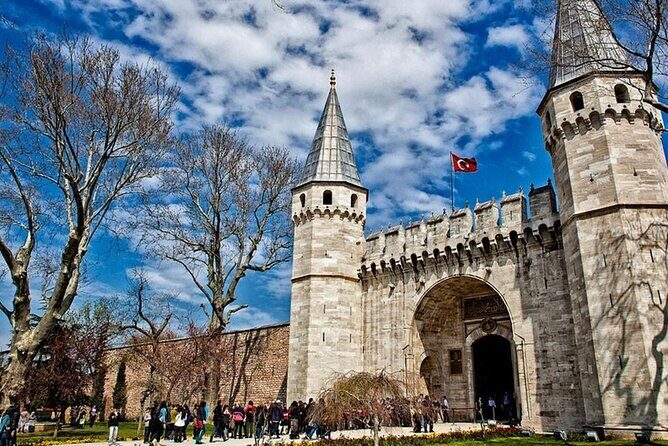
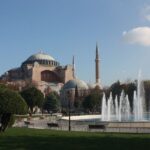
Then comes Hagia Sophia Grand Mosque, one of the most famous structures in the world. The building began in AD 537, and the famous feature is its massive dome—an architectural statement that still grabs you even if you’ve seen photos before.
In the tour plan, you get Hagia Sophia included. But there’s an important catch: the Hagia Sophia museum entrance fee is not included if you want to visit museum areas, and the additional cost noted is 25 Euro per person.
So what should you do with that? Decide based on your style:
- If you like portraits of Ottoman and Byzantine layers, you’ll probably want the museum sections and should budget for the fee.
- If you mainly want the dome space and mosque area, you might feel satisfied with what’s already included.
Also, because this is an active worship site, the flow can change in real time. If people pause to pray or the group needs to adjust access, you may experience a bit of backtracking or reshuffling. That’s not a failure; it’s how the site works.
You can also read our reviews of more tours and experiences in Istanbul


Grand Bazaar: fast, famous, and best with a plan
After Hagia Sophia, you’ll head to the Grand Bazaar, one of the largest and oldest covered markets on Earth. The scale is huge—described as having 61 covered streets and over 4,000 shops, with very high daily foot traffic.
You get about 45 minutes here and free admission. That’s enough time to get the atmosphere and maybe buy a small item or two, but it’s not enough to shop every aisle like a local.
What I recommend: pick a target before you step inside. Maybe you want a Turkish delight style treat, a simple souvenir, or a quick look at crafts. If you try to browse everything without a mission, the bazaar can feel like sensory overload. A guide helps with orientation, but your best weapon is deciding what you actually want.
Topkapı Palace: Ottoman power made museum walls
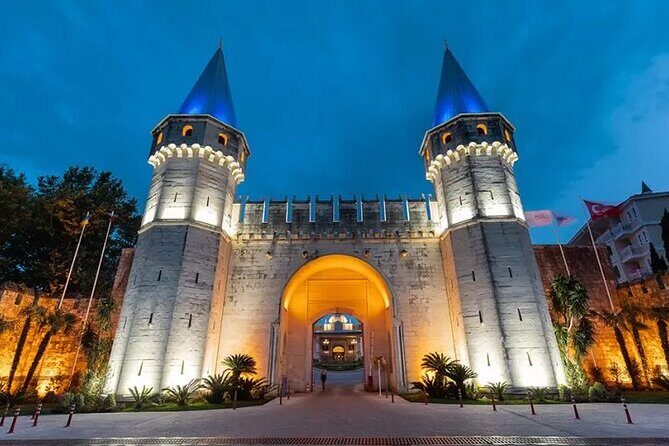
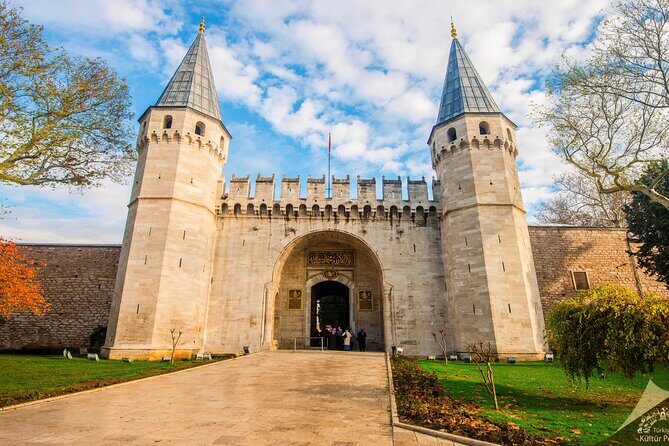
Next is Topkapı Palace, also called the Seraglio. This is where the day shifts from religious grandeur to Ottoman administration and residence.
Construction began in 1459, ordered by Mehmed the Conqueror shortly after the conquest of Constantinople. The palace became the main residence and administrative headquarters of Ottoman sultans, so when you walk through rooms and courtyards, you’re basically touring the machinery of empire.
The tour includes Topkapı Palace admission, and you’ll have around 45 minutes on site. That’s enough for the highlights and a few key viewpoints, but not enough to read every sign like it’s a textbook. Treat it as a “first pass” visit—then, if you want, you can come back later for deeper museum time.
Practical detail: this stop is one where comfortable shoes pay off. Even with a guide keeping the group moving, you’ll still do a solid amount of walking across uneven surfaces.
Hagia Irene and Soğukçeşme Sokağı: the calmer beats you’ll remember
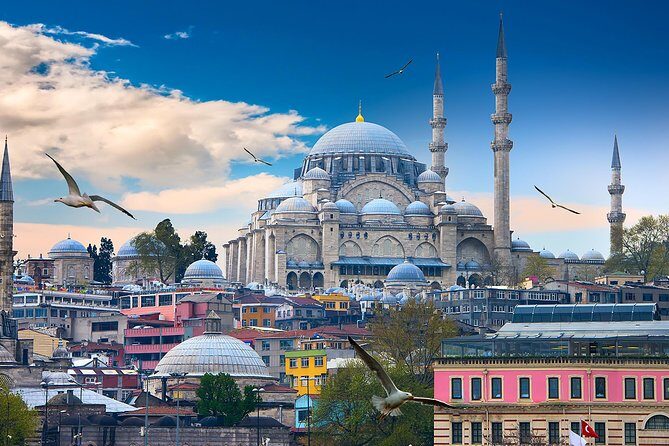
Not everything in Old Istanbul is a mega-site. The tour also includes Hagia Irene (Hagia Eirene), located in the outer courtyard of Topkapı Palace. It’s a Greek Eastern Orthodox church and one of the few churches in Istanbul that has not been converted into a mosque. Today it operates as a museum and concert hall.
This stop is shorter, about 30 minutes, and it’s valuable because it adds a different layer than the main mosques. You get a sense that the city wasn’t only Byzantine-Christian and Ottoman-mosque—it also carried other meanings in the same geography.
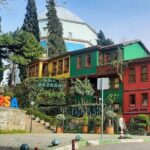
Then you’ll see Soğukçeşme Sokağı, a car-free street with historic houses in the Sultanahmet neighborhood. It sits between Hagia Sophia and Topkapı Palace and is named after the fountain at its end toward Gülhane Park.
This kind of stop matters more than people think. Big monuments can overwhelm your brain. Short breaks like this help you reset and connect what you saw earlier to the streets you’re walking through now.
Caferaga Medresesi: a quieter architecture side note next to Hagia Sophia
You’ll also visit the Caferaga Medresesi, a former medrese near Hagia Sophia. It was built in 1559 by Mimar Sinan, ordered by Cafer Ağa during the reign of Sultan Süleyman the Magnificent.
It’s not the famous stop on everyone’s list, which is exactly why it’s useful. When you see a medrese in context—close to Hagia Sophia—you start understanding the neighborhood as more than one landmark at a time.
Admission is free, and the stop is about 30 minutes. Keep your expectations realistic: you’re not doing a long slow architectural lecture. You’re catching one more piece of the puzzle.
Lunch, guide commentary, and the real pacing of the day
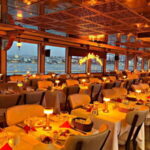
Lunch is included, and it’s described as a traditional Turkish restaurant stop. This is a big deal on a day like this because you’re spending hours in sites where you’d otherwise be tempted into overpriced snacks or random places near the crowds.
The guide’s job is more than facts. The best guides help you understand what you’re seeing in the moment—why a building looks the way it does, what changed over time, and what to pay attention to as you walk.
One thing to plan for: the pace can be brisk. If you tend to walk slowly, expect you may need to keep up with the group to stay on schedule. This is where good footwear is non-negotiable. A half-day of shortcuts can feel fine; a full-day pace mismatch can feel exhausting.
Also, the tour mostly handles the transfer segments with the vehicle and then sends you walking. That means you should treat it as a guided city walk with key stops, not a hop-on-hop-off bus tour.
Price and value: what $200 gets you, and what costs extra
At $200 per person, this tour is priced like a guided, ticket-supported day. You’re getting:
- Hotel pickup and drop-off in central Istanbul
- Tour guide
- Air-conditioned vehicle
- Lunch
- All fees and taxes except Hagia Sophia museum
Many major stops have free admission listed: the Hippodrome, Blue Mosque, German Fountain, Grand Bazaar, Hagia Irene, Caferaga Medresesi, and the street stop. That means your paid value isn’t just ticket access—it’s the guide time, route planning, and included meals.
The main extra you should budget for is the Hagia Sophia museum entrance fee of 25 Euro if you want those museum sections. If you skip the museum areas, you could still enjoy the big architectural moment—just be clear what you’re aiming to see.
If you’re the type who hates ticket lines and likes having someone else handle the order of sights, this price can feel fair. If you prefer wandering freely and buying tickets one by one, you might find cheaper options—but you’d be giving up the guided structure and lunch.
Who should book this Old City tour—and who should not
This tour makes sense if you want:
- A one-day overview of Istanbul’s Old Town landmarks
- A guide to keep the stories tied to what you’re looking at
- Pickup, lunch, and a planned route that minimizes decision fatigue
- A group size capped at 25, which usually feels more manageable than larger bus tours
It’s also a good fit for first-time visitors who want to see the greatest hits—Hagia Sophia, the Blue Mosque, Topkapı, and the bazaar—without building your own itinerary from scratch.
Consider a different approach if:
- You hate walking for hours and you want a more relaxed pace
- You want lots of time to linger inside museums without group timing
- You’re very sensitive to schedule changes due to active worship moments at Hagia Sophia and the Blue Mosque
Should you book this Istanbul Old City Tour?
I’d book it if you want a guided structure for Sultanahmet and you’re okay with a long walk-heavy day. The strongest value comes from the combination of pickup, lunch, and the included admissions for major sites, with most other stops listed as free.
It’s also a good choice when the day is about orientation. You’ll leave knowing how the landmarks fit together geographically and historically, and that makes any future self-guided exploring much easier.
Just do two things before you go:
- Budget for the Hagia Sophia museum fee if that’s on your must-do list.
- Bring comfortable shoes and plan to move steadily.
If you can handle that, this is a solid way to get your bearings in Istanbul’s Old City without turning your day into an itinerary spreadsheet.
FAQ
How long is the Istanbul Old City Tour?
The tour runs about 7 to 8 hours (approx.), starting at 8:30am.
Is hotel pickup included?
Yes. Free pickup and drop-off is offered to hotels in central Istanbul. You should contact the provider first if you have questions about pickup.
What’s included in the price?
The tour includes lunch, an air-conditioned vehicle, tour guide, and all fees and taxes except Hagia Sophia museum.
Is the tour offered in English?
Yes. The tour is offered in English.
Do I have to pay extra for Hagia Sophia?
The Hagia Sophia museum entrance fee is not included. The additional fee listed is 25 Euro per person if you want to visit the museum areas.
How large is the group?
The tour has a maximum of 25 travelers.