REVIEW · ISTANBUL
Private Guided Istanbul City Tour with Transfers
Book on GetYourGuide →Operated by MGT · Bookable on GetYourGuide
One guide turns Istanbul into a map. This private day focuses on the big names in Sultanahmet, then connects the dots between the Roman and Ottoman eras with a guide who can shift the pace to your group.
I love having a dedicated guide who can explain the city without dumping facts on you. If you’re lucky and get Ozzy (also listed as Ozi), you’re in good hands, with a day that feels thorough and easy. I also like the practical skip-the-line ticket purchase setup that helps you start sightseeing faster.
The one real drawback to plan around is inconsistency: skip-the-line can depend on what part of the process it covers, and guide quality may vary. Before you lock in expectations, confirm exactly what you’ll skip at each site, since Topkapi Palace and Basilica Cistern entry tickets are not included.
In This Review
- Key points worth knowing
- Why a private Istanbul highlights day really works in 8 hours
- Pickup and transfers: the difference between a smooth day and a hurried one
- Basilica Cistern: Roman engineering, plus Dan Brown and Bill Clinton trivia
- Blue Mosque (Sultan Ahmed Mosque): six minarets, blue tiles, and a real dress code
- Hagia Sophia: the 6th-century giant that kept changing roles
- Topkapi Palace: Ottoman rule up close, with treasury and relics mentioned
- Hippodrome monuments in Sultanahmet: obelisks, serpent column, and the German Fountain
- Sultanahmet Square break, Hagia Irina, and the culture comparison you came for
- Grand Bazaar wrap-up: 4,000 shops, but keep your plan simple
- Price and logistics: what $156 per group up to 7 actually buys you
- Who this tour suits best (and who should choose a different style)
- Should you book this private guided Istanbul tour?
- FAQ
- What’s included in the price?
- Is hotel pickup and drop-off included?
- How long is the tour?
- Do I need to buy tickets for Topkapi Palace and the Basilica Cistern?
- Is lunch included?
- What’s the dress code for visiting the Blue Mosque?
- Is Topkapi Palace open every day?
- What happens if the Grand Bazaar is closed?
- What language is the guide?
Key points worth knowing
- A focused 8-hour hit list of Sultanahmet monuments, Ottoman palaces, and ancient hippodrome landmarks
- Blue Mosque and Hagia Sophia both in one day, so you can compare the Christian-to-Islamic story line
- Basilica Cistern with famous pop-culture ties to Inferno and James Bond
- Grand Bazaar wrap-up at the end, when shopping energy is highest
- Option for transfers that can save you time if you’re staying away from Sultanahmet
- Dress code basics: long sleeves and a headscarf for women (and head-covering is required)
Why a private Istanbul highlights day really works in 8 hours
Istanbul is huge. Even if you love history, trying to DIY five major sites in one day can turn into a stress sprint.
This tour is built for getting your bearings fast: you get a guide for a full day, plus a route that groups nearby sights. That matters because Sultanahmet is dense, and small detours can eat up your energy. With a private format, you can also ask questions as you go instead of saving them for later.
You’ll also get a clearer story than you’d get from a checklist. The day is organized around how the city shifted from Byzantine power to Ottoman rule, then how the same spaces kept reinventing themselves.
You can also read our reviews of more guided tours in Istanbul


Pickup and transfers: the difference between a smooth day and a hurried one
The big practical advantage here is timing. You’re picked up at Galataport cruise port, or from hotels/Airbnb locations (depending on the option you choose), and you’re dropped back at the end.
That reduces the mental load of figuring out transit and meeting points, especially if you’re traveling with jet lag or you just want your day to start clean. If your hotel is outside the central area, the transfers option can be the part that makes the tour feel worth it.
One more thing: the tour is 8 hours. In real life, that time includes walking, ticket purchase stops, and photo stops. If you want a slower pace, tell your guide early, because guides can adjust the rhythm while still fitting the core sights.
Basilica Cistern: Roman engineering, plus Dan Brown and Bill Clinton trivia
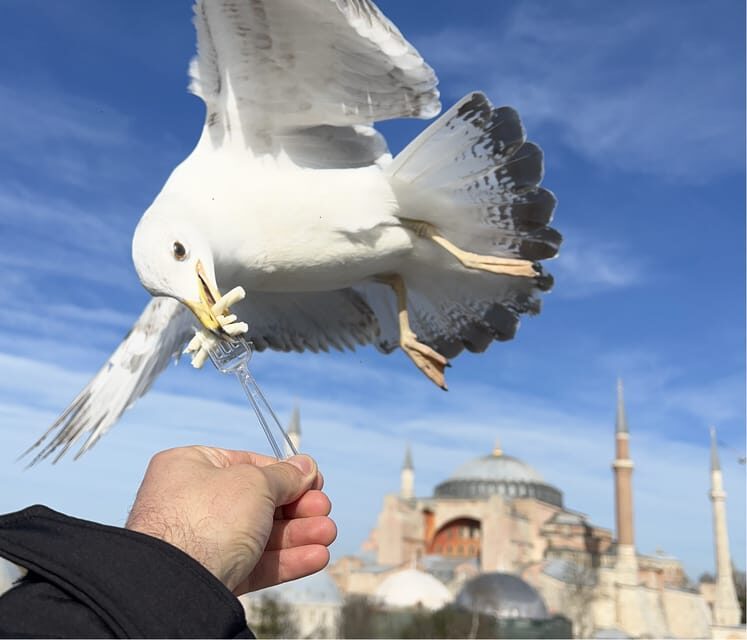
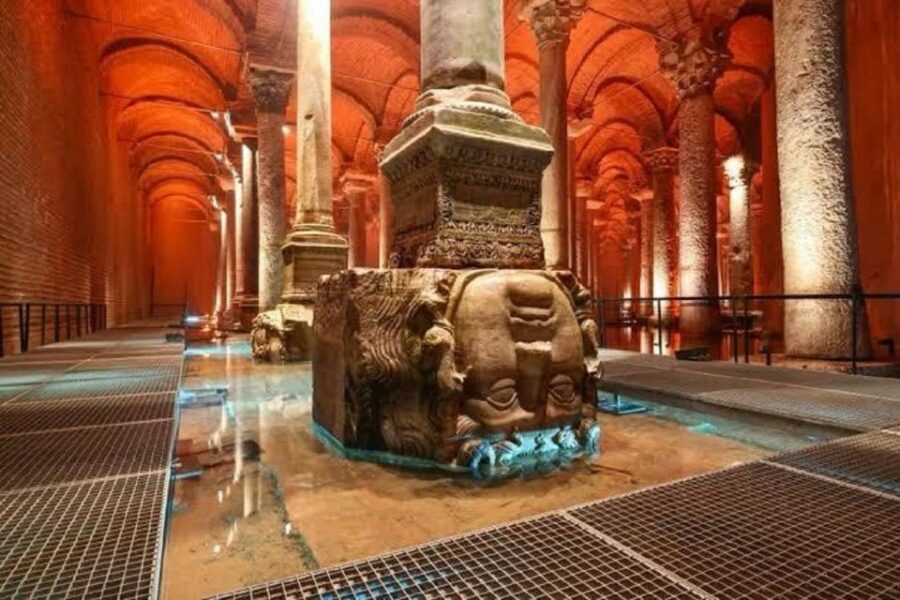
The Basilica Cistern is one of those places that instantly changes your mood. One step inside and everything feels cooler, darker, and older—like Istanbul is holding its breath.
You’ll get a photo stop and a guided visit, with enough time to understand what you’re looking at. It’s a Roman-empire structure famous in pop culture, including connections to Dan Brown’s Inferno, and it’s also tied to a well-known visitor: former U.S. President Bill Clinton.
Since entry tickets for Basilica Cistern aren’t included, you’ll want to factor in that cost separately. The good news is the tour includes skip-the-line access to buy tickets, so you’re not stuck waiting before you even see the cistern.
Practical tip: bring the long-sleeved shirt and (if you’re the kind of person who covers up for comfort indoors) plan for a slightly cooler atmosphere underground.
Blue Mosque (Sultan Ahmed Mosque): six minarets, blue tiles, and a real dress code
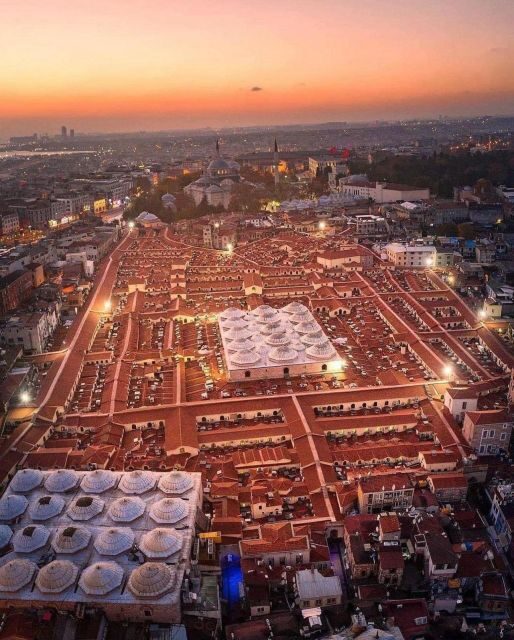
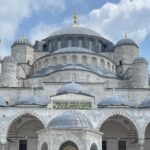
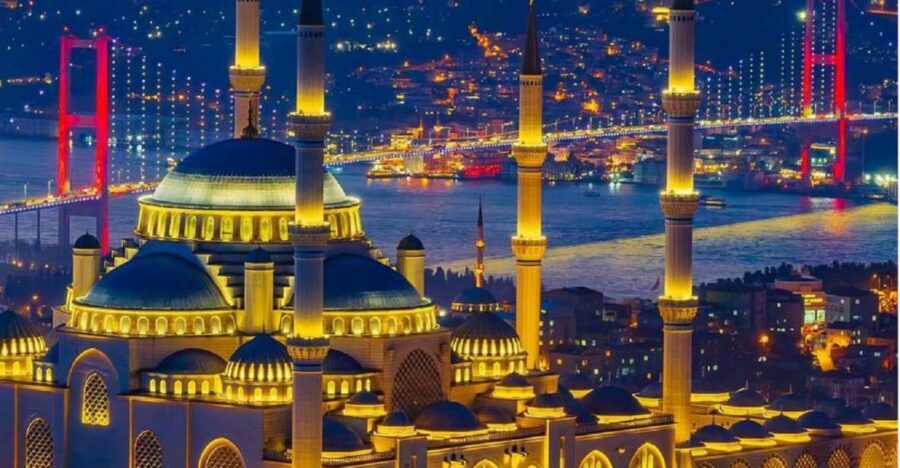
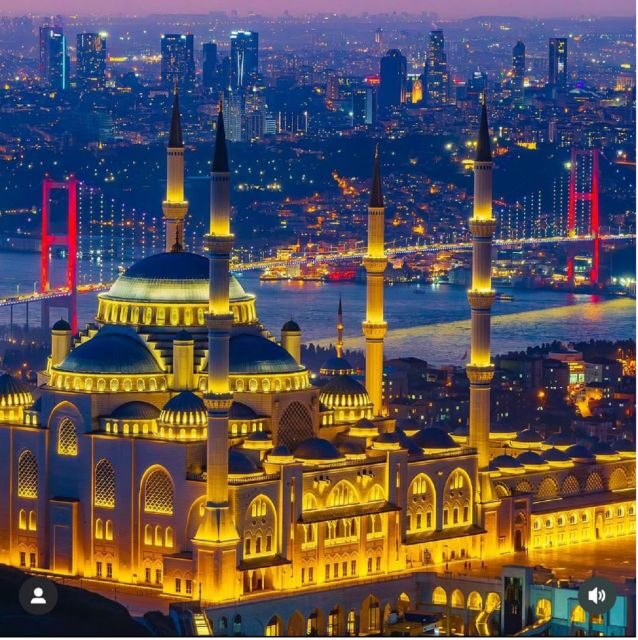
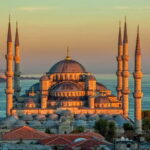
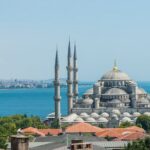
Sultanahmet’s skyline is practically built around the Blue Mosque. This is the stop where the city’s architecture becomes the main event.
You’ll visit with a guide, with sightseeing time to take in the facade and then the interior. The mosque is known for six minarets and its interior blue tile work, which is why it’s commonly called the Blue Mosque.
Dress rules matter here. The tour information specifically tells you to bring a headscarf (women need to cover their head), and to have a long-sleeved shirt. If you show up underdressed, you’ll waste time sorting it out.
Also, plan your expectations: you’re visiting a functioning religious site. Your guide can help you understand what you’re seeing and how to behave respectfully while still enjoying the photos.
Hagia Sophia: the 6th-century giant that kept changing roles
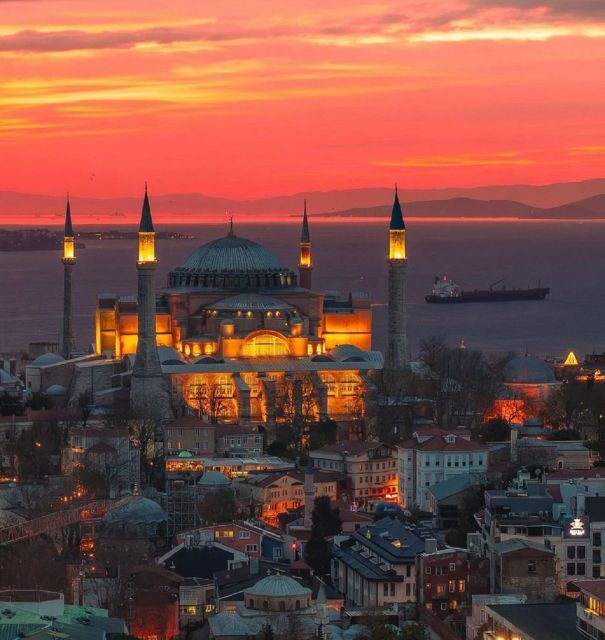
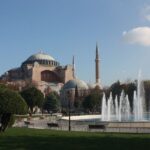
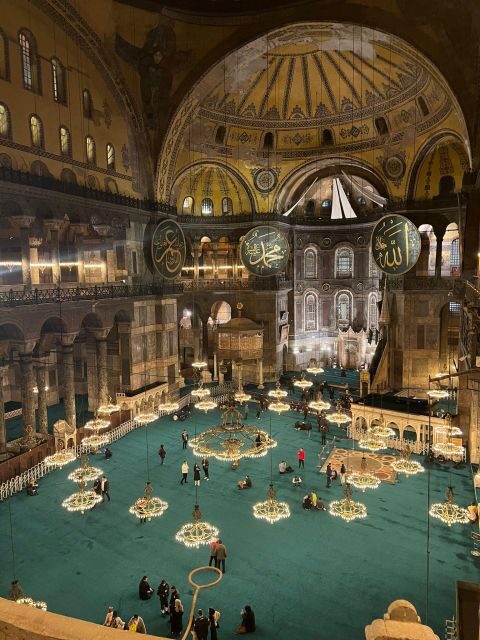
Hagia Sophia is the kind of place where even non-history people stop talking. The scale hits first, then the story lands once your guide puts it into context.
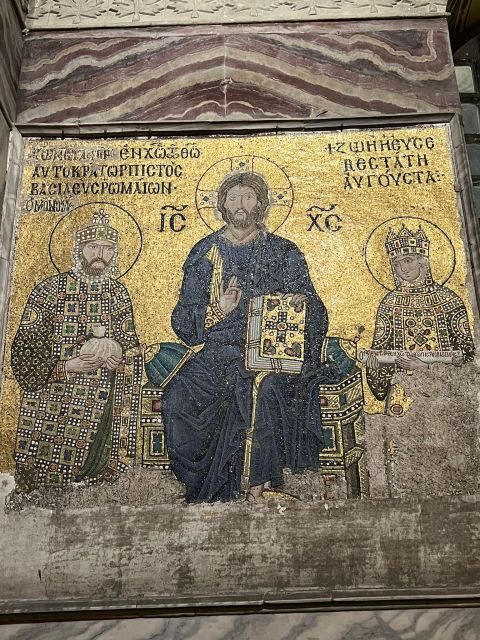
You’ll have a photo stop and a guided visit. What makes this stop especially valuable is the message you get from the building itself: it was originally built by the Byzantine Empire in the 6th century as a massive cathedral, then later converted into a mosque during Ottoman rule.
That Christian-to-Islamic transition is a core theme of the day. You’ll see the overlap in nearby sites and understand how power, faith, and art left layered marks on the same geography.
Practical tip: even on a guided tour, arrive mentally ready to look up and look around. Hagia Sophia rewards attention, and the guide’s job is to keep you from getting lost in details that don’t matter.
You can also read our reviews of more city tours in Istanbul



Topkapi Palace: Ottoman rule up close, with treasury and relics mentioned
Topkapi Palace is the heavy-hitter. This is where the Ottoman empire shows itself not just through monuments, but through how it ran the world.
You’ll stop for photos and then a guided visit. Topkapi served as the Ottoman sultans’ primary residence and administrative headquarters for 400 years. The tour description also points to the Treasury area, including information about cloths and weapons, plus holy relics.
Two key planning notes:
- Topkapi Palace entry tickets aren’t included, so you’ll pay separately.
- Topkapi Palace is closed on Tuesdays. If your day lands on a Tuesday, the tour plan will need an adjustment.
This is a great stop if you want something beyond church/mosque sightseeing. Topkapi adds a government-and-empire angle, which makes the Roman-to-Ottoman story feel more complete.
Hippodrome monuments in Sultanahmet: obelisks, serpent column, and the German Fountain
The hippodrome area is where Istanbul starts acting like a museum of reused symbols. You’ll get guided walking time and photo stops around these landmarks.
Expect to see major pieces tied to different periods, including:
- Obelisk of Theodosius III
- Serpent Column
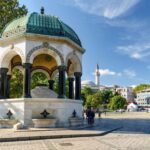
- German Fountain
- And the surrounding Sultanahmet Square area tied to the ancient chariot-racing track of Constantinople
This is one of the best parts of the day for understanding how empires love repurposing what came before. A guide can connect why these stones are here, what they represent, and how the space functioned socially—way beyond the simple fact that it looks cool in photos.
If you like “small details that make the big picture make sense,” this section is for you.
Sultanahmet Square break, Hagia Irina, and the culture comparison you came for
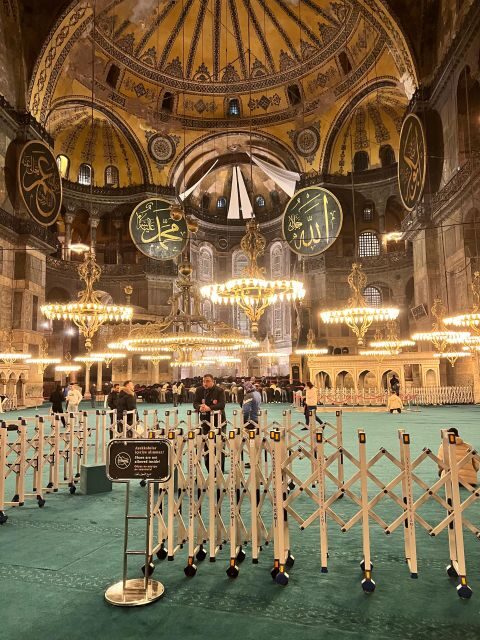
You’ll pause at Sultanahmet Square for a break, plus sightseeing and photo time, and some free time (including shopping opportunities in the area).
This is also where the tour’s culture comparison becomes practical. You’re seeing Christian and Islamic influences side by side, not just as separate attractions but as connected layers across time.
The tour highlights also mention Hagia Irina, described as the first church in Istanbul built in the 4th century. If it’s included on your exact route that day, it’s a meaningful counterpoint: a quieter, earlier thread in the same neighborhood story.
Don’t rush this break. If you want the day to feel enjoyable, take the rest stop. It’s also easier to ask your guide questions when you’re not in full motion mode.
Grand Bazaar wrap-up: 4,000 shops, but keep your plan simple
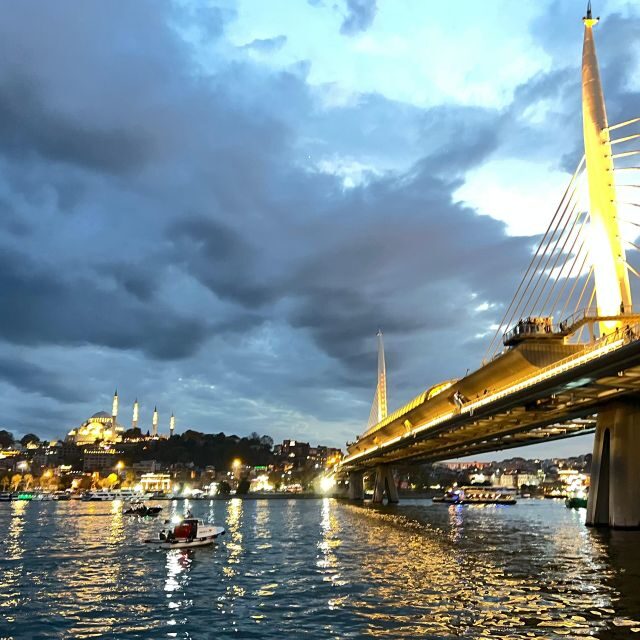
The day often ends at the Grand Bazaar, with time to browse and shop. The bazaar is described as having around 4,000 shops, so it’s not the place to wander aimlessly with no strategy.
You’ll have photo stop time and a guided sightseeing experience. Since it’s a shopping finish, your guide can also help you focus on what’s worth your money and time. The tour description mentions expertise around Turkish handicrafts, which is exactly where a guide can save you from buying the wrong thing at the wrong price.
One important timing note:
- The Grand Bazaar is closed on Sundays. On Sundays, it’s replaced with the Arasta Bazaar or the Spice Bazaar.
If you’re traveling on a Sunday, don’t feel cheated. You’ll still get the market atmosphere, just with a different mix of stalls.
Practical shopping tip: decide early what you’re shopping for—spices, ceramics, textiles, or small gifts. A guide can help you compare what’s available and what’s a good match for your budget.
Price and logistics: what $156 per group up to 7 actually buys you
The price is $156 per group up to 7, for a total duration of 8 hours. That’s where the value math can get very favorable.
If you’re traveling solo, you’ll feel the cost more, because private guides spread best across a group. But if you’re a couple or a small family, you can split the cost and get a full-day guide that covers multiple top sights in one go.
Transfers are part of the equation too. One option includes transfers, which can add real value if your pickup isn’t convenient on your own. It’s often cheaper than the time and hassle of repeated transit planning.
Two costs to plan for:
- Topkapi Palace and Basilica Cistern entry tickets are not included
- Lunch is not included
The good side: you should still get guidance for food choices. The tour description includes the idea of tasting local food (meat/vegetarian/dessert). Just remember you may pay for the meal yourself.
Finally, about that skip-the-line promise. The tour includes skip-the-line access to buy tickets, which helps with the first bottleneck at major sites. Still, confirm what the skip covers for each location, since entry lines and ticket purchase lines don’t always move the same way.
Who this tour suits best (and who should choose a different style)
This is a strong match for:
- First-time Istanbul visitors who want the top Sultanahmet hits in one day
- Small groups and families who want a private pace and easier navigation
- People who want the Roman-to-Ottoman story explained, not just photographed
It may be less ideal if:
- You’re the type who wants zero structure and prefers a totally self-guided day
- You need fully guaranteed fast entry everywhere (the tour only promises skip access to buy tickets)
Also, because the quality of a private guide can make or break the experience, you’ll benefit from being clear about what you want. Ask for your priorities up front—architecture photos, palace details, cistern photography, or shopping focus.
Should you book this private guided Istanbul tour?
I’d book it if you want a guided, efficient Sultanahmet day with transfers and you’re okay paying for site entry tickets and lunch separately. The structure makes sense: iconic buildings, then the ancient hippodrome stones, then a market finish.
Before you go, do three simple things:
- Confirm what skip-the-line means for ticket purchase at each stop
- Note that Topkapi Palace is closed on Tuesdays
- Bring the basics for the mosques: headscarf and long sleeves
If you get a guide who communicates well and matches your pace, this turns into a day where the city feels connected, not just collected.
FAQ
What’s included in the price?
A private tour with a private professional guide, skip-the-line access to buy tickets, and transfers (in the option where transfers are selected).
Is hotel pickup and drop-off included?
Hotel pickup and drop-off are included if you choose the option that includes transfers. The guide can also meet you at Galataport and other listed pickup locations.
How long is the tour?
It lasts 8 hours.
Do I need to buy tickets for Topkapi Palace and the Basilica Cistern?
Yes. Topkapi Palace and Basilica Cistern entry tickets are not included.
Is lunch included?
No. Lunch is not included.
What’s the dress code for visiting the Blue Mosque?
You should bring a long-sleeved shirt and a headscarf. Women need to wear a scarf to cover their head.
Is Topkapi Palace open every day?
No. Topkapi Palace is closed on Tuesdays.
What happens if the Grand Bazaar is closed?
The Grand Bazaar is closed on Sundays. On those days, it’s replaced with the Arasta Bazaar or the Spice Bazaar.
What language is the guide?
The tour is guided in English.