REVIEW · ISTANBUL
Private İstanbul Old City Tour
Book on Viator →Operated by One Day in Ephesus Tours · Bookable on Viator
Istanbul’s old city moves fast. This private tour strings together the big names—Roman, Byzantine, and Ottoman—so you get the story in order, not as random postcards. I like the select hotel pickup plus private transport because it keeps the day from turning into a transit scavenger hunt. I also like how the plan covers the major landmarks with a real guide walking you through what you’re seeing.
The one thing to consider: entrance fees aren’t fully included, and Topkapi Palace admission is listed as not included. So your total cost may creep up a bit depending on what you choose to enter and any final add-ons like beverages.
In This Review
- Key Highlights to Know Before You Go
- First Stop: The Byzantine Hippodrome and Its Spolia
- Blue Mosque: Iznik Tile Drama and Still-Active Worship
- Ayasofya (Hagia Sophia): One Building, Multiple Identities
- Lunch Break and Ottoman Power at Topkapi Palace
- Grand Bazaar: Shopping Time Without the Guesswork
- Price and Value: Is $100 a Fair Deal?
- Languages and Group Style That Actually Matter
- Who Should Book This Tour?
- Should You Book This Private Istanbul Old City Tour?
- FAQ
- How long is the private Istanbul Old City tour?
- Is hotel pickup included?
- Which major sites are included during the day?
- Are entrance fees included in the price?
- Is lunch included, and are beverages included?
- Is this tour private, and can I cancel for free?
Key Highlights to Know Before You Go
- Pickup + private transport help you start smoothly and avoid wasting time in Istanbul traffic.
- Hippodrome to Blue Mosque keeps the walking logic simple, since they’re right next door.
- Hagia Sophia gives you the big “how did this place change hands?” moment in about an hour.
- Topkapi Palace is the Ottoman payoff, but you’ll want to budget for entry since it’s not included.
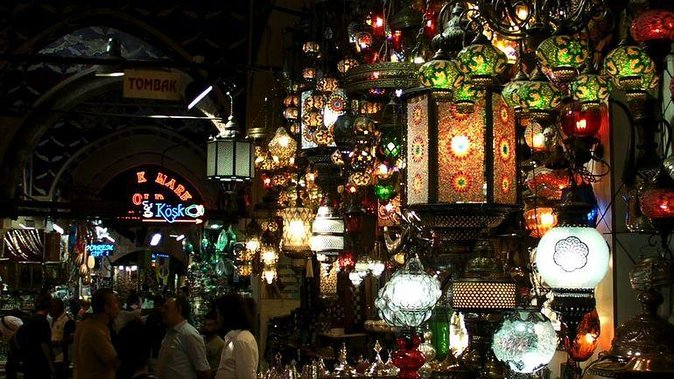
- Grand Bazaar wraps the day with shopping time for traditional goods.
First Stop: The Byzantine Hippodrome and Its Spolia

Your day starts with a pickup at your hotel (when selected), then straight to the Byzantine Hippodrome area, once the stage for chariot races and huge crowds in Roman times. Even before you reach the big skyline views, it helps to look at the site like a time machine: this was the loud center of public spectacle long before the sultans built their palaces here.
What makes this stop feel special is the mix of visible remnants tied to different eras. You’ll see the Egyptian Obelisk (dating back to the 16th century BC), the Serpentine Colums (from the 5th century BC), and the Stone Obelisk (erected in the 10th century AD). It’s a neat way to understand how Istanbul reused and repurposed monuments over centuries. These aren’t just decorations; they’re evidence of how power liked to borrow symbols.
This first stop is about 30 minutes, so it’s not a slow museum crawl. The goal is orientation. You want to leave knowing what the Hippodrome was for, so the next stop—where crowds gathered under domes—hits with more meaning.
One practical tip: since the Hippodrome visit includes a free admission ticket, don’t overthink the ticket process. Your guide will handle the flow, and you can focus on watching and listening.
You can also read our reviews of more city tours in Istanbul

Blue Mosque: Iznik Tile Drama and Still-Active Worship
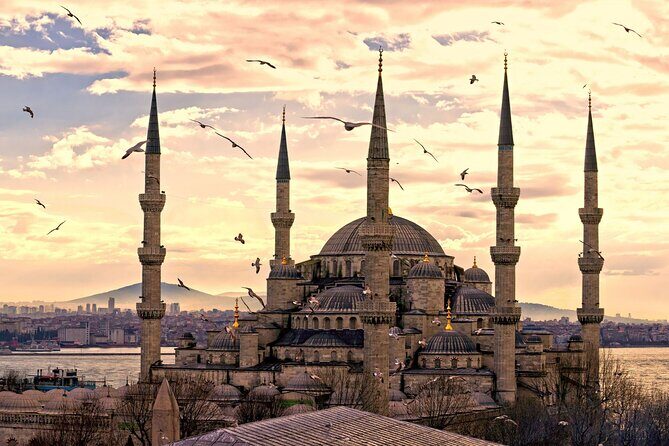
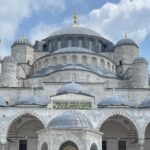
Next comes the Blue Mosque, right beside the Hippodrome. From the outside, it’s already dramatic—six minarets, plus the reputation of its interior tilework—but the real impact is that the mosque is still in use. That changes the vibe. You’re not just sightseeing; you’re stepping into a living religious space.
The Blue Mosque was built in the 17th century and is famous for its Iznik tiles. This is one of those places where a guide matters because you’ll get directed toward the right details—what to notice, where the tilework stands out, and how it relates to the building’s design.
Time here is about 45 minutes, with free admission. That’s enough to see the important features without feeling rushed, especially if you keep an eye on how people move in and out and follow the guide’s pace.
If you’re sensitive to crowds or busy spaces, this is still a very manageable stop because the tour is private. You’re not sharing your guide’s attention with a big bus group. That can make a huge difference at major landmarks in Istanbul.
Ayasofya (Hagia Sophia): One Building, Multiple Identities
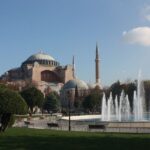
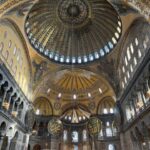
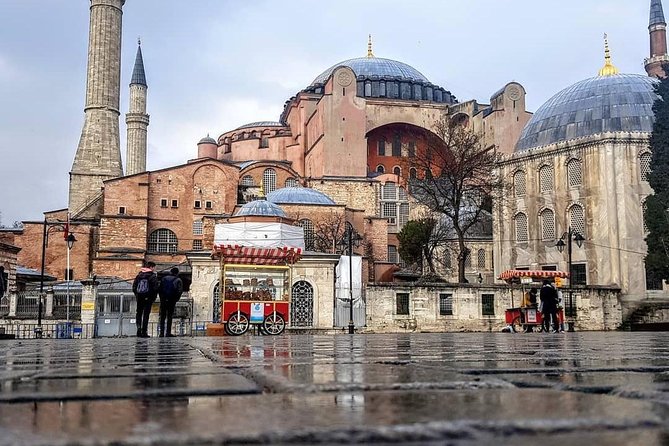
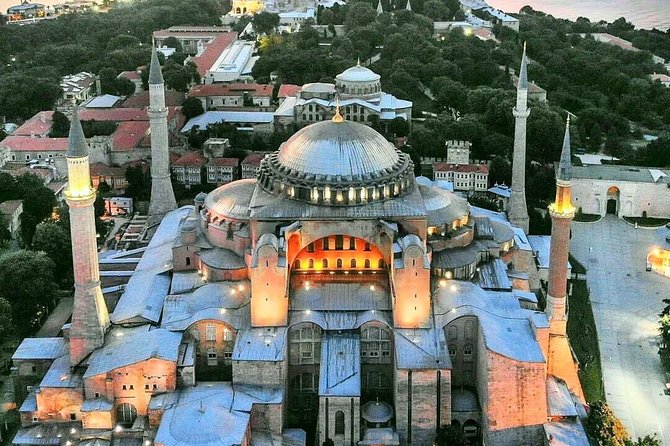
After the Blue Mosque, the tour heads to Ayasofya, known today as Hagia Sophia. You’ll spend about 1 hour here, and this is one of the most important stops on the itinerary because it explains how Istanbul’s big religions and empires overlapped—and changed.
Hagia Sophia was built in the 6th century as a Byzantine church and is famous for its gold-leafed mosaics. Later, after the Ottoman conquest of Constantinople in the 15th century, it was converted into a mosque. Then, after the Republic, it became a museum.
That sequence is the whole point. You’re looking at one structure that got reinterpreted again and again. Your guide should help you read the place in layers, so you don’t just see beautiful domes—you understand why the building’s function kept shifting with the political world.
Admission is free on this tour for this stop. Still, plan mentally for how tiring Hagia Sophia can be just from scale. The building is huge. Even with a guide and a set time, it helps to keep your expectations realistic: you’ll focus on major highlights, not try to memorize every inch.
If you want the clearest payoff from this hour, show up ready to connect dots: church to mosque to museum isn’t a trivia line. It’s a story about who controlled Istanbul at each moment.
Lunch Break and Ottoman Power at Topkapi Palace
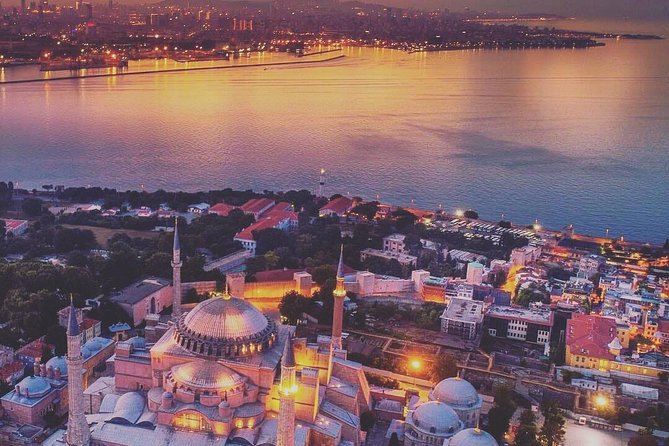
After lunch, the tour moves to Topkapi Palace, on a hilltop overlooking the Bosphorus and the Golden Horn. This is where the Ottoman Empire’s presence becomes physical. The palace was the Ottoman residence of the sultans, and today it functions as a museum.
You’ll get about 1 hour here. The time is short enough that you should expect a guided selection of highlights—rather than a full palace marathon. That’s good news if you’re the type who wants context and the best scenes, not endless corridors.
You can expect to see precious displays connected to sultans’ costumes and the Treasury, which is the kind of detail that makes palace history feel less abstract. Instead of kings as names in a textbook, you start seeing how wealth, ceremony, and power looked in real life.
Here’s the key budget note: Topkapi Palace admission is not included. So if you’re comparing value, remember that this is the most likely place where extra ticket costs land.
Also note the tour includes lunch, but it doesn’t include beverages. Bring that in your planning so you’re not surprised when you want a drink during or after the meal.
Grand Bazaar: Shopping Time Without the Guesswork
To wrap things up, you’ll head to the Grand Bazaar, where you can shop for traditional goods. This is about 1 hour and the admission for this stop is free.
The Bazaar is a classic Istanbul experience, but the best way to enjoy it is with a plan. You don’t need to buy everything. Think of this hour as your chance to pick up a few things you actually want—spices, small crafts, textiles, or souvenirs tied to local markets.
A private guide can help here too, because you’re not wandering in circles trying to figure out where the most interesting lanes are. If your guide offers shopping recommendations, take them. In at least one past experience, a guide named Necdet was described as always looking out for the group and sharing useful recommendations—exactly what you want when your time is limited.
Keep an eye on your stamina during the last hour. By now, you’ve already hit multiple major landmarks. Use the Bazaar time to focus on your targets and keep purchases simple.
You can also read our reviews of more private tours in Istanbul



Price and Value: Is $100 a Fair Deal?
At $100 per person for a private, guided 6–8 hour day, the value comes from what’s bundled. This isn’t just a guide walking beside you. You also get private transportation, select hotel pickup, lunch, and professional guiding.
So where does the money go?
- You pay for time savings: pickup and transport mean less waiting and fewer route headaches.
- You pay for focus: one guide helps you understand what you’re seeing at Hippodrome, Blue Mosque, and Hagia Sophia instead of just passing through.
- You pay for convenience: lunch and a structured sequence reduce decision fatigue.
Where you might spend more:
- Topkapi Palace entrance isn’t included.
- Beverages and tips aren’t included.
- General entrance fees can be extra depending on how your day flows.
In plain terms: if you want a private “best of” route through the old city without the stress of planning timing and logistics yourself, this price can make sense. If you’re trying to keep every cost locked down and you already know you want to spend extra time in museums and pay multiple entrances, you’ll want to factor in Topkapi’s ticket.
Languages and Group Style That Actually Matter
This tour offers guides in German, English, French, and Spanish, which is a big deal if you want accurate explanations rather than guesswork. Being able to ask questions in your language is one of the main advantages of private guiding.
It’s also explicitly private—only your group participates. That means you can keep a calmer pace, stop to look at details, and avoid the feeling of being shuffled along with strangers. It also helps at busy places like the Blue Mosque and Hagia Sophia, where crowd dynamics can change fast.
Finally, there’s a mobile ticket. That’s a small thing, but it usually means fewer paper tangles on the day.
Who Should Book This Tour?
This one fits well if you:
- Want the old city’s key landmarks in one day, without building your own route
- Prefer a private guide who can explain the connections between Roman, Byzantine, and Ottoman Istanbul
- Appreciate having a plan for lunch and transport, not just a list of stops
It may be less ideal if you’re someone who loves long, slow museum time. This itinerary gives you highlights with set time blocks, not hours and hours of free roaming.
Should You Book This Private Istanbul Old City Tour?
I’d book this if your goal is to get oriented fast and leave the day feeling like you understand what you saw—Hippodrome to Blue Mosque to Hagia Sophia to Topkapi—without wrangling transport or timing. The private format, pickup option, and included lunch make it practical.
I’d hesitate if you’re trying to travel strictly on a fixed budget, because Topkapi Palace admission is not included and entrance-related costs can add up. If you can handle a small “extras” budget for tickets and beverages, this is a solid way to cover the old city highlights in a single, well-structured day.
FAQ
How long is the private Istanbul Old City tour?
The tour runs about 6 to 8 hours.
Is hotel pickup included?
Yes, select hotel pickup is offered, and you’ll also have private transportation.
Which major sites are included during the day?
You’ll visit the Hippodrome, Blue Mosque, Hagia Sophia (Ayasofya), Topkapi Palace, and the Grand Bazaar.
Are entrance fees included in the price?
Some admissions are listed as free (Hippodrome, Blue Mosque, Hagia Sophia, and Grand Bazaar), but Topkapi Palace admission is not included. Entrances fees are listed as not included overall.
Is lunch included, and are beverages included?
Lunch is included, but beverages are not included.
Is this tour private, and can I cancel for free?
Yes, it’s private (only your group participates). You can cancel for a full refund up to 24 hours before the experience’s start time.