REVIEW · ISTANBUL
Constantinople to Istanbul – Full-Day Small Group Tour
Book on Viator →Operated by TRAVELIUM · Bookable on Viator
You can see a whole empire story fast. This full-day small-group route strings together the key landmarks on Istanbul’s historic peninsula, with hotel pickup and drop-off so you spend less time wrestling with the city and more time looking up. You also get an English-speaking guide who helps connect what you see at places like the Blue Mosque and Hagia Sophia.
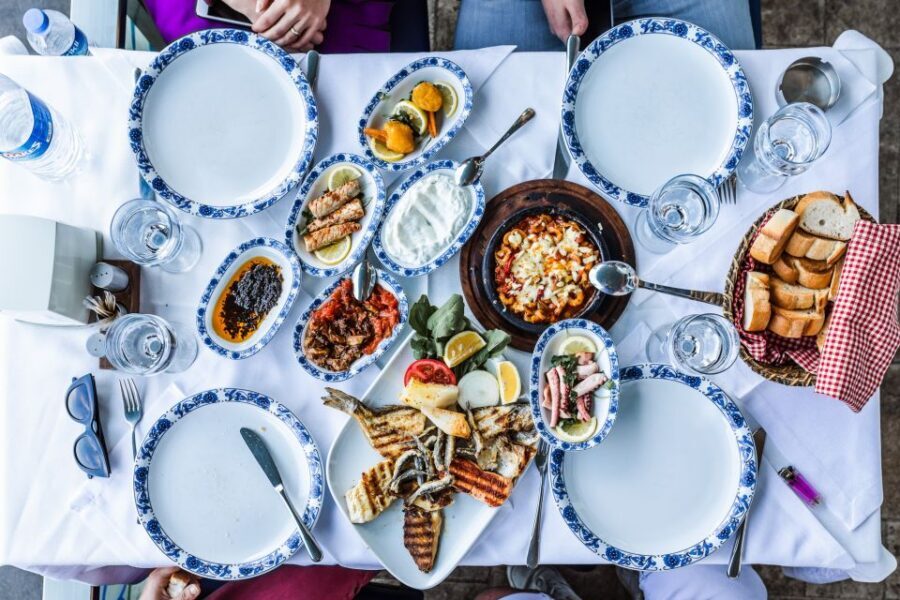
What I like most is the pacing: you get focused time at each stop, not a frantic photo sprint. I also like the practical add-ons—skip-the-line access and a lunch option via a traditional Turkish restaurant stop (lunch isn’t included, but the choice is). One thing to plan for: mosque visits can be affected by prayer times, and you’ll want appropriate clothing and patience for crowds.
If you’re lucky, you’ll get a guide like Miss Sevinc—clear, engaging, and great at explaining what you’re looking at. That kind of guiding makes the day feel like it has a point, not just a list of sights.
In This Review
- Key highlights worth your attention
- Istanbul’s historic peninsula, mapped in plain terms
- Start at the Hippodrome: Constantinople’s “Horse Square” in context
- Quick tip for this stop
- German Fountain: a small monument with a big “how it traveled” story
- Blue Mosque (Sultan Ahmed Mosque): Ottoman grandeur in working order
- Mosque etiquette matters here
- Hagia Sophia (Ayasofya): how one building became many religions
- How to get more out of your hour
- Topkapi Palace: the day’s big guided payoff (and the part you pay for)
- Practical Topkapi advice
- Grand Bazaar: browsing one of the world’s biggest covered markets
- How to shop without losing your mind
- Logistics that can make or break the day
- Price and value: why $387.41 can still make sense
- Who this tour suits best
- Should you book this Constantinople to Istanbul tour?
- FAQ
- How long is the Constantinople to Istanbul full-day small group tour?
- What time does the tour start?
- Where is the meeting point, and where do we end?
- Is lunch included?
- Are museum admission tickets included?
- Is this tour a small group?
- Are there dress rules for the mosque stops?
- Is skip-the-line access included?
Key highlights worth your attention
- Small group size (max 16): easier to hear the guide and manage the schedule.
- Hotel round-trip transportation: you avoid Istanbul’s navigation stress before 10 a.m.
- Skip-the-line / fast-track access: a big deal at major sites like Hagia Sophia and Topkapi.
- A balanced Byzantine-to-Ottoman route: Hippodrome and Hagia Sophia sit in the same story arc as the Blue Mosque and Topkapi.
- Topkapi Palace is the “guided” centerpiece: the guide specifically brings expertise here so you don’t wander randomly.
- Grand Bazaar time is built in: enough to browse the covered market without rushing.
Istanbul’s historic peninsula, mapped in plain terms
Istanbul’s top sights are close on a map, but that doesn’t mean they’re easy. The crowds, the walking, and the constantly changing streets can wear you down before you even reach the big places.
This tour is designed for people who want the essentials without playing transport roulette. You start around 8:15 am and run for about 8 hours, covering the classic arc from the old imperial center around Sultanahmet to the Ottoman power symbolized by Topkapi Palace, then ending with the shopping-and-chaos comfort of the Grand Bazaar.
Because it’s a maximum of 16 travelers, it feels closer to a guided day out than a cattle-call bus circuit. And with a professional English-speaking guide, you’re not stuck trying to guess what each dome, column, and courtyard used to mean.
You can also read our reviews of more tours and experiences in Istanbul
Start at the Hippodrome: Constantinople’s “Horse Square” in context
Your day begins at the Hippodrome of Constantinople, now Sultanahmet Meydanı (Sultan Ahmet Square). This wasn’t just a pretty open space. In Byzantine times, it served as the sporting and social center of the empire’s capital—horse and chariot racing, big public events, the kind of place where politics and spectacle often shared the same air.
You’ll also learn the language clue baked into the name. The word hippodrome comes from Greek roots for horse and path/way. In Turkish, you’ll sometimes hear Atmeydanı, which points to the same idea: the horse square.
This stop is short—about 30 minutes—but it matters because it sets the stage. Without this context, Hagia Sophia and the Blue Mosque can feel like two separate attractions. With the Hippodrome first, you understand you’re walking through a city that organized public life around monumental spaces.
Quick tip for this stop
Wear shoes that handle uneven paving and crowds. Even though the Hippodrome stop is free and brief, it’s still in the thick of the action.
German Fountain: a small monument with a big “how it traveled” story
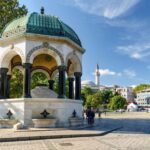
Next is the German Fountain across from the mausoleum of Sultan Ahmed I. It’s easy to miss if you rush, but it’s one of those details that makes Istanbul feel like a crossroads rather than a museum piece.
This fountain was built to mark the second anniversary of Kaiser Wilhelm II’s visit in 1898. The wild part: it was made in Germany, then shipped and assembled piece by piece in Istanbul by 1900.
It also has an architectural clue. The gazebo-styled neo-Byzantine structure includes an octagonal dome with eight marble columns and interior golden mosaics. Even if you only get a few minutes, that’s enough time to spot the style cues and the “international history” angle.
Blue Mosque (Sultan Ahmed Mosque): Ottoman grandeur in working order
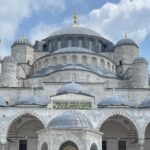
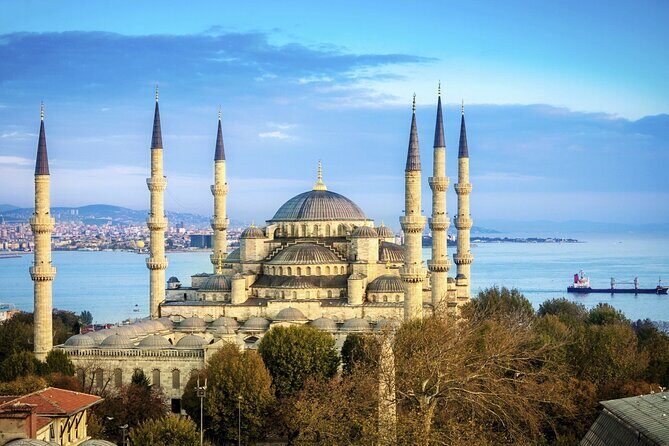
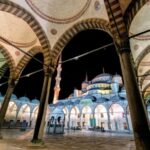
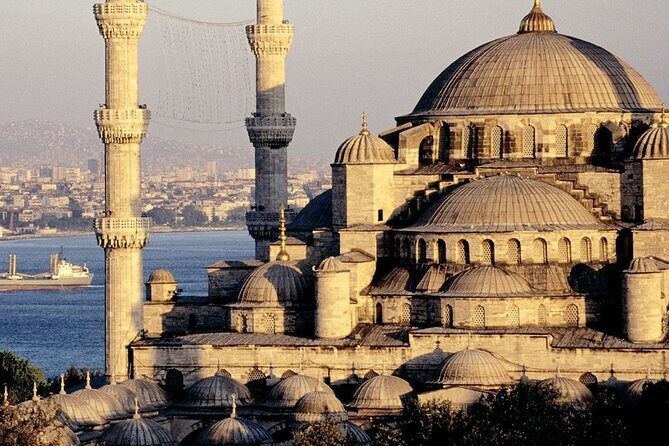
Then you move to the Blue Mosque, or Sultan Ahmed Mosque. This is an Ottoman-era mosque built between 1609 and 1616 under Ahmed I. It’s still functioning as a mosque, and that’s part of what makes it more than a photo stop.
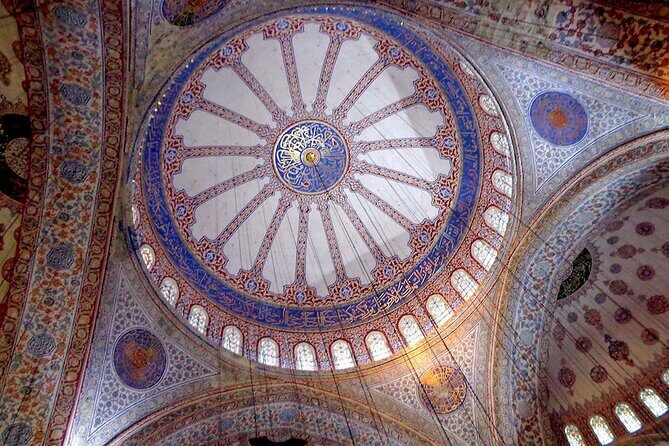
Inside, the hand-painted blue tiles are the big visual clue. It’s also part of a larger complex (a külliye) that includes Ahmed’s tomb plus a madrasah and a hospice. The mosque’s architecture is symmetrical and highly designed, with five main domes and multiple supporting domes that create a strong sense of scale.
Your scheduled time here is about 30 minutes, and admission is free. In daylight, you won’t get the nighttime lighting effect mentioned for the mosque, but you still see the interior tile work clearly. During a full-day itinerary, this stop works best if you treat it as a “slow look,” not a checklist.




Mosque etiquette matters here
Because the tour visits an operating mosque, you’ll need to follow mosque etiquette. That means dressing appropriately and being respectful during prayer periods. The tour notes that visits happen between praying times, so plan for waiting if schedules shift.
Hagia Sophia (Ayasofya): how one building became many religions
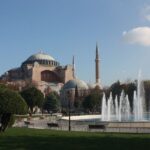
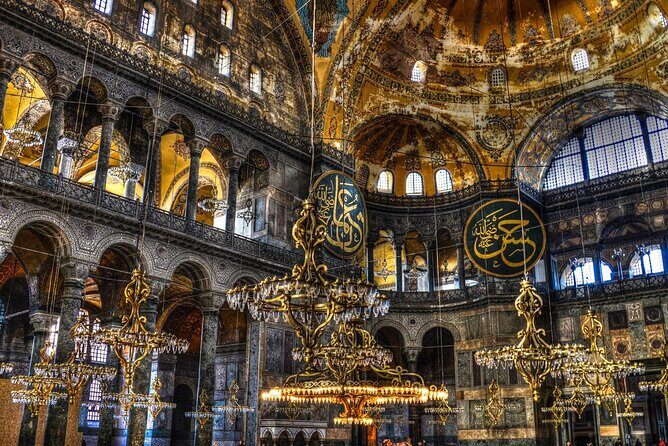
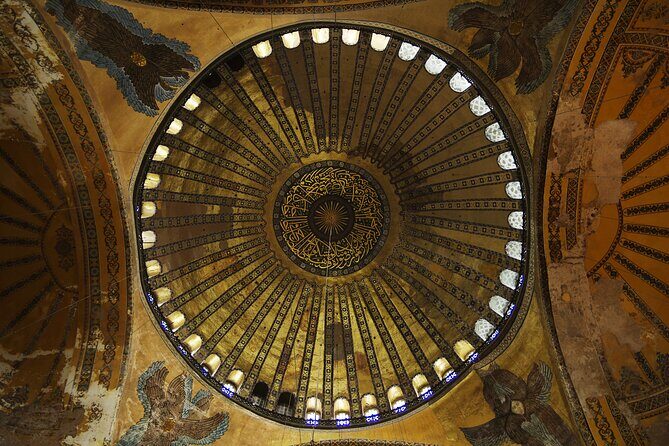
After the Blue Mosque, the day shifts into “whoa” territory at Ayasofya (Hagia Sophia). Built in 537, it started as the imperial cathedral of Constantinople and later became central to Eastern Orthodox worship—then transitioned under Ottoman rule, reflecting the city’s political and religious changes.
You’ll be seeing a building that carries multiple layers of identity in its very bones. It was the largest Christian church of the Eastern Roman (Byzantine) Empire for long stretches, and it also served as a major hub for the Eastern Orthodox Church. The Latin Empire period (1204 to 1261) brought Roman Catholic use for a time, before the Ottoman conquest changed its role again.
Now, it’s officially the Hagia Sophia Grand Mosque, and your visit is about one hour. Admission is listed as free for the stop, which is a nice bonus considering how often Hagia Sophia ends up as the most expensive line-item at other tours.
How to get more out of your hour
Spend your time where the building gives you instant clues. Look at the big structural forms first, then shift to details you can only notice once the scale stops overwhelming you—like how the space is organized to direct your attention.
With a skip-the-line setup, you can keep that hour as actual viewing time instead of waiting time, which is one reason this kind of tour is worth the higher price tag.
Topkapi Palace: the day’s big guided payoff (and the part you pay for)
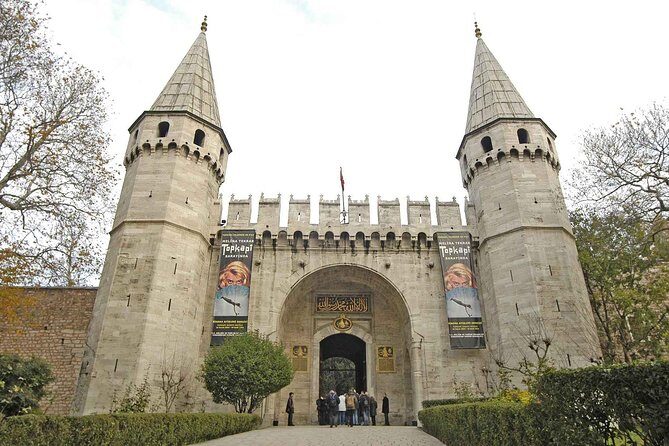
At some point, Istanbul becomes less about “sightseeing” and more about “reading the empire.” That’s where Topkapi Palace fits.
This stop is scheduled for about 4 hours, and it’s the one major admission cost that’s not included. That’s the trade-off: you’re paying extra for access to an enormous palace complex where time matters. The good news is that you get fast-track/skip-the-line access, which can save a chunk of your day.
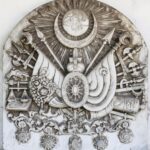
The palace marks the Ottoman turn after 1453, when Mehmed II conquered Constantinople and established a new Ottoman capital. Topkapi’s story starts with palace-building momentum: the “new palace” was completed in 1465 and opened for the House of Osman.
Why this place needs a guide: it’s not just pretty courtyards. The palace’s architecture and layout connect to social structure—who could go where, and when. If you’re the type who can get lost in big complexes, this tour’s emphasis on the guide’s expertise with Topkapi is a real advantage. You’ll be less likely to wander past key areas without knowing what you’re looking at.
Practical Topkapi advice
Expect lots of walking. Even with skip-the-line, you’ll be moving between buildings and courtyards for those four hours. If you have limited stamina, pacing yourself early makes the difference between enjoying the palace and counting down the minutes.
Grand Bazaar: browsing one of the world’s biggest covered markets
After palace time, the mood shifts to sensory overload—in a good way—at the Grand Bazaar.
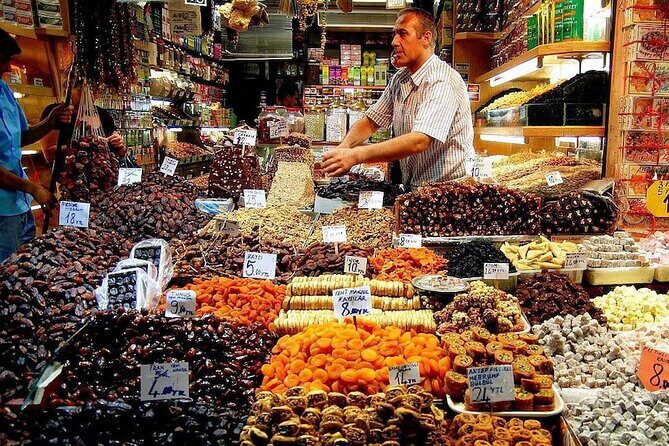
This covered market is described as one of the oldest and largest in the world, with 61 covered streets and over 4,000 shops across about 30,700 m². The visitor numbers are huge, with estimates of 250,000 to 400,000 visitors daily. That’s not quiet background shopping. It’s a living marketplace system that has the momentum of a city inside the city.
Your scheduled visit is about 2 hours, and it’s listed as free (no admission ticket for the bazaar itself). It’s also the perfect “pressure release” after earlier formal sightseeing. You can browse at your own pace within the time window.
How to shop without losing your mind
Set expectations before you enter. Think in terms of what you actually want to buy—maybe Turkish rugs, ceramics, spices—then let the rest be window-shopping. If you try to see every stall deeply, you’ll burn time fast.
Also, the tour includes a Turpet rug making demonstration during the day. That’s useful because it gives you a context lens for what you might see later. When you understand what goes into a rug, shopping becomes less random.
Logistics that can make or break the day
This is an 8-hour full-day itinerary with a start time of 8:15 am and an end back at the meeting point. That structure matters in Istanbul because mornings are often your best window for fewer headaches and more efficient movement.
Pickup and drop-off are part of what you’re paying for: round-trip transportation from your hotel means you don’t have to map out where to meet in the middle of busy streets. The tour also notes it’s near public transportation, which is comforting if you ever need a backup plan.
The group size is capped at 16, which helps with crowd flow. You’re not sprinting between stops and you’re not spending half your time waiting for the slowest person to find the meeting point.
Finally, plan for a moderate fitness level. You’re moving around major sites in central Istanbul, and while the schedule is broken into timed stops, the walking adds up.
Price and value: why $387.41 can still make sense
At $387.41 per person, this isn’t a budget day trip. But it’s also not just a bus ride to a handful of landmarks.
Here’s where the value comes from:
- Hotel pickup and drop-off (real time savings)
- English-speaking professional guide (the explanation is the multiplier)
- Skip-the-line access (especially important for Hagia Sophia and Topkapi)
- A route that combines Byzantine + Ottoman touchstones, so you get a coherent story rather than unrelated stops
What’s not included:
- Lunch and beverages
- Admission fees to museums (with Topkapi specifically listed as not included)
So the decision comes down to this: if you want to maximize your time and reduce Istanbul navigation stress, the price buys convenience plus guided interpretation. If you’re the type who enjoys planning and handles crowds well on your own, you might spend less by DIY.
But for a first-time visit to the historic peninsula, this route is a strong “time-efficient” choice.
Who this tour suits best
This one fits you if you want:
- The biggest Istanbul landmarks on the historic peninsula in one day
- A guide to help connect Ottoman and Byzantine layers
- Less waiting in lines thanks to fast-track access
- A manageable small-group experience
It may not be ideal if you hate structured timelines or you want maximum free time in one place. The schedule is built around “seeing a lot,” even though each stop has its own moment to breathe.
Also, if you have strong interest in deep museum study where you’d linger for hours, you’ll likely want extra time beyond the set Topkapi Palace (4 hours) slot.
Should you book this Constantinople to Istanbul tour?
I’d book it if your priority is getting the core sights—Hippodrome, Blue Mosque, Hagia Sophia, Topkapi Palace, and Grand Bazaar—done with guidance and minimal line stress. The structure, the skip-the-line approach, and the focus on both Byzantine and Ottoman landmarks make it a smart way to see Istanbul’s main story arc without burning a whole day charting logistics.
I’d think twice if you’re on a strict budget or if you already love doing Istanbul sights independently and you don’t mind lines. In that case, you can DIY. But if you want a guided, efficient day that feels coherent from start to finish, this is one of the clearer choices.
FAQ
How long is the Constantinople to Istanbul full-day small group tour?
It runs for about 8 hours.
What time does the tour start?
The start time is 8:15 am.
Where is the meeting point, and where do we end?
The meeting point is Hereke Carpets Alemdar, Nuru Osmaniye Cd. No:35, 34110 Fatih/İstanbul, Türkiye. The activity ends back at the meeting point.
Is lunch included?
No. Lunch and beverages are not included.
Are museum admission tickets included?
Museum admission fees are not included. The specific stops like Hippodrome, German Fountain, Blue Mosque, Hagia Sophia, and Grand Bazaar are listed as free, while Topkapi Palace admission is not included.
Is this tour a small group?
Yes. The maximum group size is 16 travelers.
Are there dress rules for the mosque stops?
Operating mosques require visitors to wear accordingly to mosque etiquette, and they can be visited between praying times.
Is skip-the-line access included?
Yes. The tour includes fast-track access to the sites with skip-the-line tickets.