REVIEW · ISTANBUL
Istanbul: Full-Day Imperial & Asia Small Group Tour
Book on GetYourGuide →Operated by Adore Tour & Travel · Bookable on GetYourGuide
Eight hours, two continents, zero time wasted. This Imperial & Asia small-group day layers the classic Sultanahmet monuments with Grand Bazaar shopping and then swings over to the Asian side via the Bosphorus Bridge. You’ll travel with an English-speaking guide, skip the ticket line at major stops, and have entrance fees covered, which makes the day feel smoother than trying to stitch it together on your own.
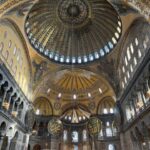
I especially like the way the morning sights are organized around what you can actually see and appreciate. The Hagia Sophia tour puts focus on the big visual hits—like the massive dome and the mosaics—then the Blue Mosque delivers on its famous tilework and scale. And lunch is included as a proper break, with a four-course meal and a vegetarian option.
One consideration: this is not a slow stroll day. The tour involves walking and it’s not recommended for walking difficulties and not suitable for wheelchair users, plus Friday prayer can limit views of Hagia Sophia and the Blue Mosque to outside only.
In This Review
- Key Things I’d Focus On
- What You’re Really Buying for $141
- Sultanahmet Morning: Hagia Sophia’s Mosaics and the Blue Mosque’s Tiles
- Hippodrome: Ancient Byzantium’s Stadium Still Leaves Traces
- Grand Bazaar Without the Guesswork: One Hour That Actually Works
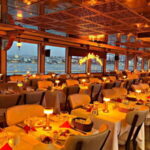
- Lunch in Sultanahmet: Included and Worth Not Skipping
- The Bosphorus Bridge and Camlıca Hill: Asia Side Views in Fast-Forward
- Grand Çamlıca Mosque: Modern Scale with Design Credit
- Beylerbeyi Palace: Elegant Late-Ottoman Grandeur on the Shore
- Timing and Logistics: Where This Tour Shines (and Where It Can Feel Tight)
- Who Should Book This Tour
- Should You Book the Istanbul Imperial & Asia Tour?
- FAQ
- FAQ
- How long is the Istanbul Imperial & Asia tour?
- Is hotel pickup and drop-off included?
- What’s included in the price?
- Is lunch vegetarian-friendly?
- Can I skip the ticket line at the major sights?
- What should I know about Grand Bazaar closures?
- What happens on Friday morning for Hagia Sophia and the Blue Mosque?
- Is Beylerbeyi Palace always open?
- Do I need head coverings for the religious sites?
- Is this tour suitable for wheelchair users or limited mobility?
Key Things I’d Focus On

- Skip-the-line entry at the main monuments so you spend time looking, not waiting
- A guided Grand Bazaar with one hour of free time for shopping that doesn’t drag on
- Çamlıca Hill + Grand Çamlıca Mosque for big panorama photos over the Marmara and Princes’ Islands
- Bosphorus Bridge crossing plus a palace stop on the water at Beylerbeyi
- Four-course included lunch (vegetarian menu available) in the Sultanahmet area
- Small groups (20–25 people) that still move at a steady, efficient pace
What You’re Really Buying for $141
At $141 for an 8-hour day, you’re not just paying for sights—you’re paying for reduction of friction. Entrance fees are included, you get an air-conditioned vehicle, and your guide handles routing between the European-side monuments and the Asian-side highlights. Add in the included lunch and the number of stops packed into one day, and the price starts to make sense for visitors who want Istanbul’s “must-sees” without juggling tickets, timing, and transport.
This tour is also built for structure. The agenda hits the big Imperial landmarks first (Hagia Sophia and the Blue Mosque area), then transitions to commerce (Grand Bazaar), then shifts to views and Ottoman-era grandeur on the Asian side (Çamlıca and Beylerbeyi). If you’re the type who likes to see a lot, but still wants someone else to keep the clock moving, this fits.
If you prefer a flexible day with lots of wandering at your own pace, you might find the schedule tight—especially because religious holidays, Fridays, and Mondays can adjust access to key sites.
You can also read our reviews of more tours and experiences in Istanbul
Sultanahmet Morning: Hagia Sophia’s Mosaics and the Blue Mosque’s Tiles
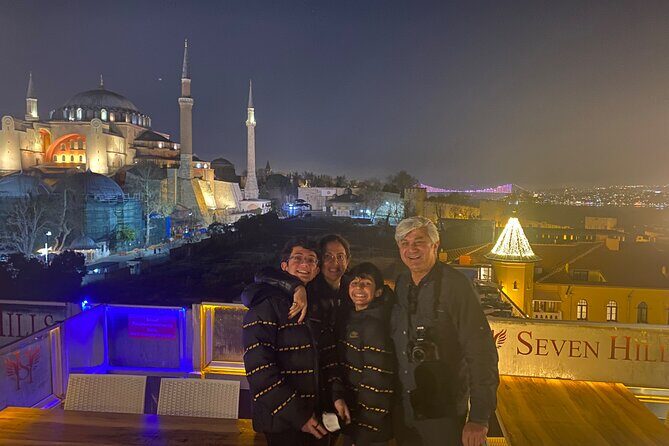
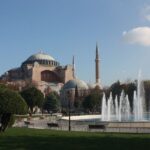
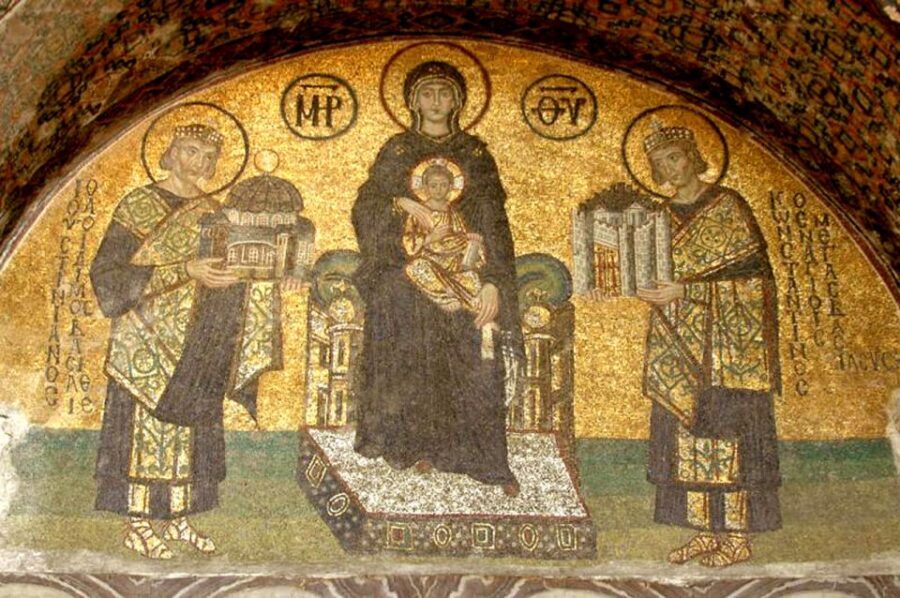
Your day starts in the Sultanahmet district, right where Istanbul’s old, iconic skyline shows up. First stop: Hagia Sophia, built in the early 6th century under Emperor Justinian, designed by Anthemius of Tralles and Isodore of Miletus. This is the kind of building where your brain keeps trying to locate the scale—then gives up and just lets the space take over. The dome dominates the view outside, and inside, the mosaics do the emotional heavy lifting, including glittering portraits and the poignant Virgin and Child.
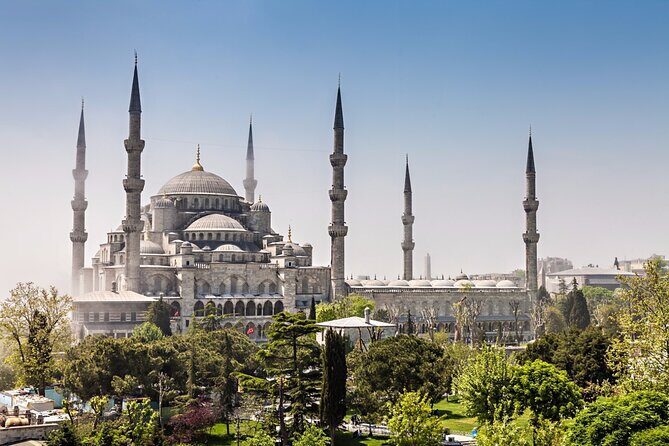
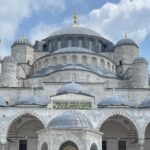
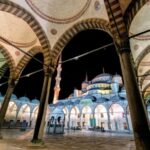
Then you move to the Blue Mosque (Sultan Ahmed Mosque). It’s named for the tilework inside, but it’s not just a pretty interior. You’re also looking at Ottoman design choices like the grandeur of the courtyard and the sheer visual weight of an imperial mosque with six minarets. The mosque dates to the early 17th century, commissioned by Sultan Ahmet I, and designed by a pupil of Sinan.
Practical note that really matters: cover-ups and headscarves are provided at the Blue Mosque. For Hagia Sophia, ladies should have a scarf with them (or you can buy one at the mosque). If you show up unprepared, you’ll lose momentum, because dressing rules slow you down.
Hippodrome: Ancient Byzantium’s Stadium Still Leaves Traces
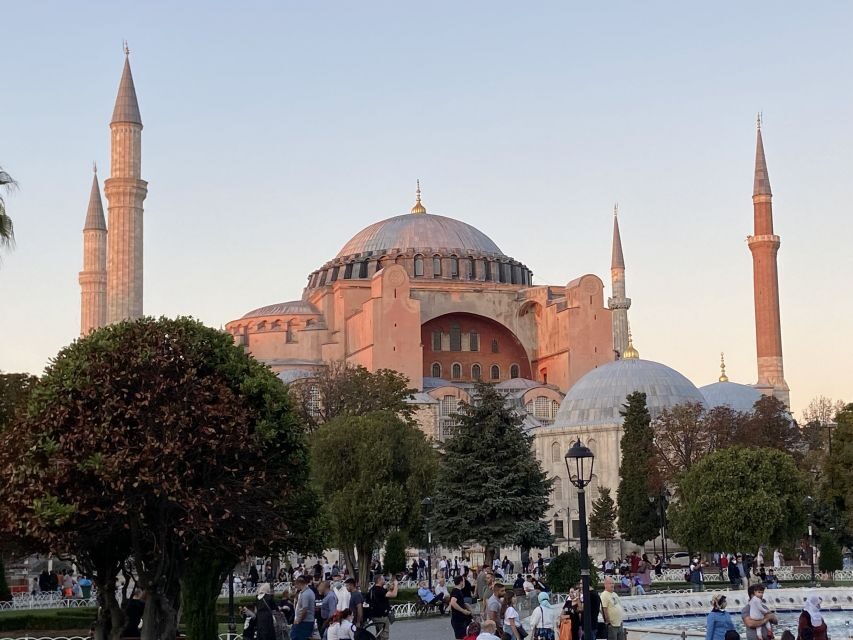
Between the big monuments and the later shopping, the tour pauses at the Hippodrome area—Byzantium’s old stadium, built for spectacle. It’s easy to assume nothing is left, but the real win here is learning what survived and what it used to represent.
You’ll hear about the Hippodrome’s massive scale—an estimated 100,000 spectators—and you’ll see a couple of the surviving pieces: an Egyptian obelisk and a bronze sculpture of three entwined serpents originally linked to Delphi. Even if the original layout is no longer intact the way it once was, these artifacts act like anchors. They connect the modern tourist path to the imperial layer underneath.
This stop also helps pace your day. After two indoor-heavy giants, a quick guided look at the Hippodrome lets you reset—look around, photograph, and then get moving again toward the bazaar zone.
Grand Bazaar Without the Guesswork: One Hour That Actually Works
Grand Bazaar is famous for a reason: it’s a shopping universe. With 4,000 shops, it’s not a place you “do” in one pass without a plan. That’s why I like this tour’s structure: you get free time to explore on your own, but it’s guided to get you oriented first.
You’ll focus on crafts and items that are typical of what the bazaar is known for—carpets and kilims, silks, jewelry, ceramics, icons, and leather goods. You can shop strategically: pick a category you care about, compare prices in your comfort zone, and don’t get pulled into spending just because the hallway is long.
One key logistics warning: Grand Bazaar is closed on Sundays. On those days, the tour visits Nuruosmaniye Street around the bazaar area instead. And during religious holidays, the bazaar can also close, so it’s smart to be mentally flexible if your dates land near a holiday period.
If you dislike aggressive bargaining or you don’t really want to shop, you can still enjoy the bazaar as a visual maze. Just set a time limit for yourself before you go in—because an hour disappears faster than you think.
Lunch in Sultanahmet: Included and Worth Not Skipping
Lunch is scheduled in the Sultanahmet district, after your bazaar time. The big advantage is that you’re not hunting for food while the day is moving. You get a four-course meal, with a vegetarian option available.
A sample menu includes soup and seasonal appetizers and salad, then a main course like meatballs or chicken, and dessert. Drinks are not included, so if you want tea, ayran, or something else, plan on paying separately.
What I like about including lunch here: it keeps you close to the core sights and avoids the common Istanbul problem where you’re forced into a rushed, low-quality meal far from where you need to be next. This meal gives you a proper break so you can handle the Bosphorus crossing and the uphill photo stops later.


The Bosphorus Bridge and Camlıca Hill: Asia Side Views in Fast-Forward
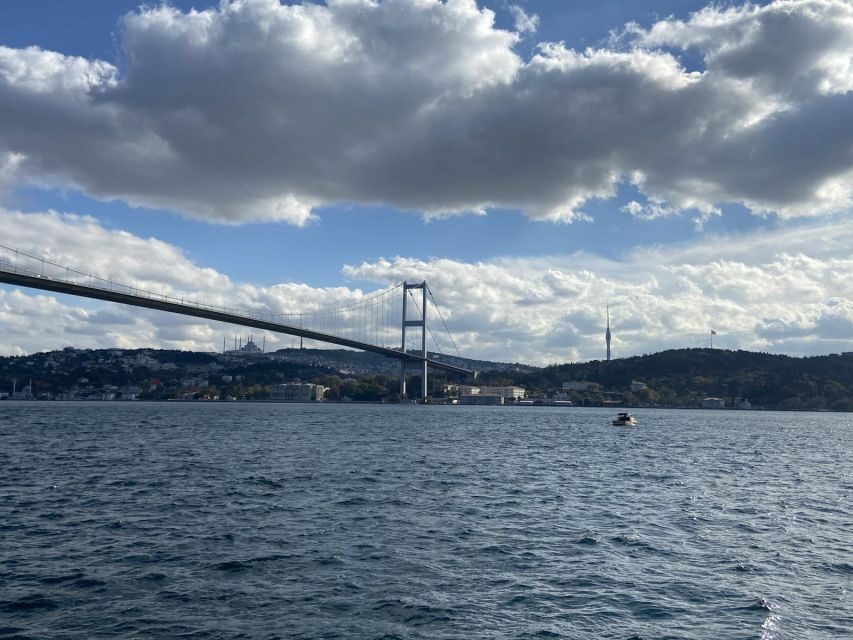
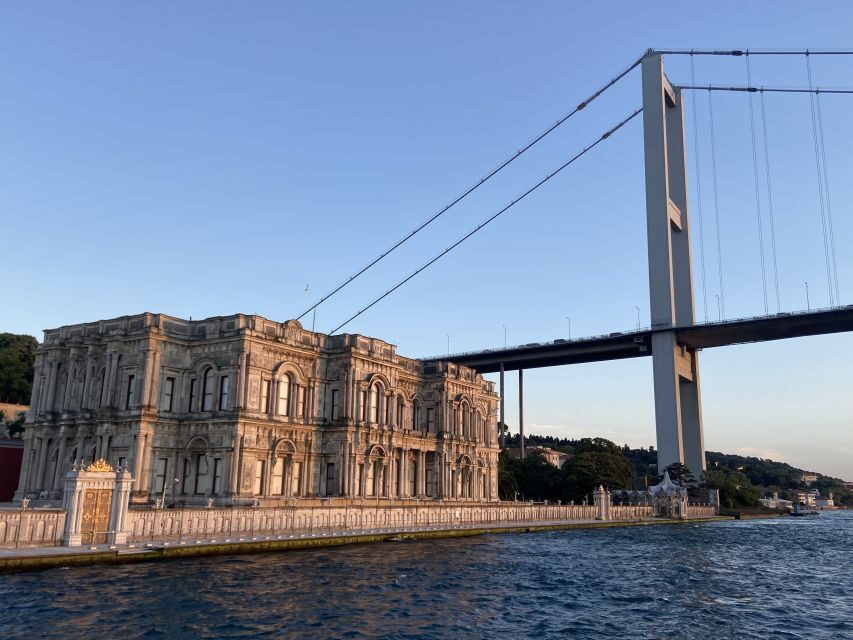
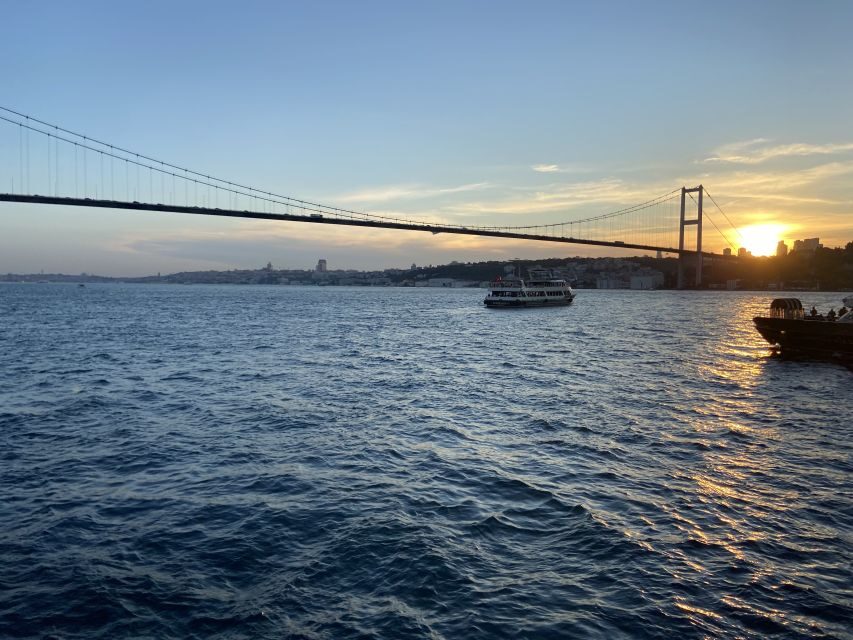
After lunch, you head across the Bosphorus Bridge. The tour frames it with the fact that it was once described as the world’s longest suspension bridge, and the real point for you is the ride itself. Even if you’ve seen photos before, crossing the strait gives your brain a clear map of Istanbul’s geography—European shoreline, waterway, and the Asian side pulling you onward.
Then it’s up to Çamlıca Hill. Your visit includes a photo stop, guided tour, and sightseeing time. This is where you get the wide-angle Istanbul moment: views across the Sea of Marmara and toward the Princes’ Islands. If you like skyline photography, this is one of the easiest places on the day to get clear pictures without needing to hike for miles.
Expect this portion to feel like a transition. You’re shifting from monuments and shopping into panoramas and modern landmark scale. That change of pace is a big reason the tour works for first-timers.
Grand Çamlıca Mosque: Modern Scale with Design Credit
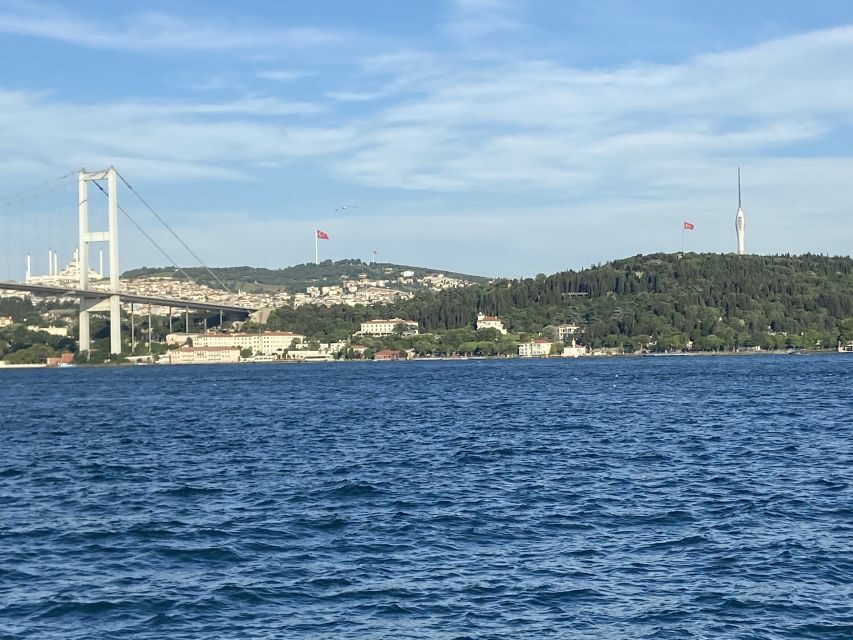
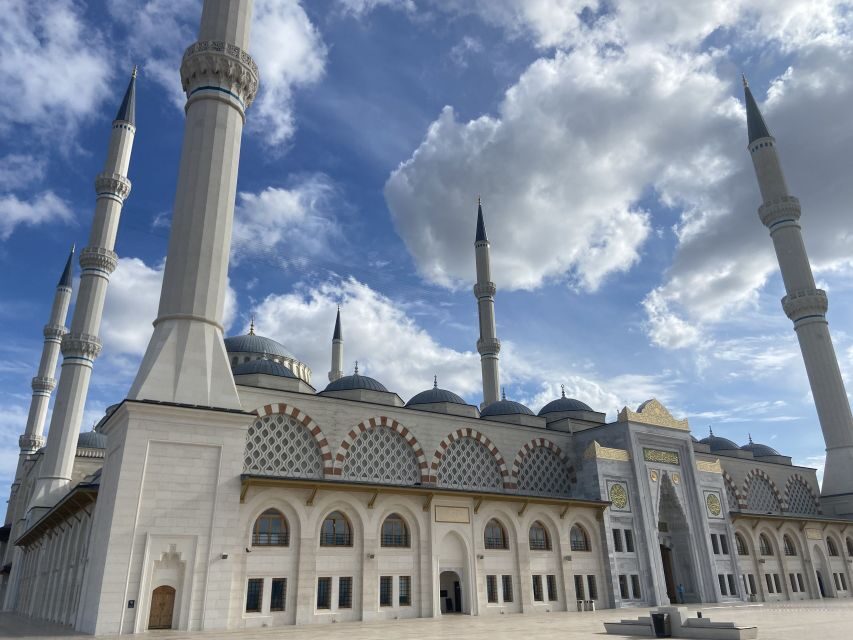
Next up is Grand Çamlıca Mosque, described as the largest mosque in Turkey. It opened in 2019, and the design credits go to two female architects: Bahar Mızrak and Hayriye Gül Totu. That detail is more than trivia—it helps you notice that the building isn’t just a copy of older forms. It’s a contemporary statement, still rooted in Islamic architectural language.
You’ll have photo stop and guided tour time here. The viewpoint element matters: you’re already on Çamlıca Hill, so the setting supports long views and strong photos. If you’re touring during busy seasons, having it placed after the mid-day break can also help you avoid the worst of the morning crowd energy.
If you’re sensitive to religious-site rules, keep your clothing practical. You may be navigating cover-up expectations similar to other major mosques in Istanbul, and it’s easier to follow if you’re prepared from the start.
Beylerbeyi Palace: Elegant Late-Ottoman Grandeur on the Shore
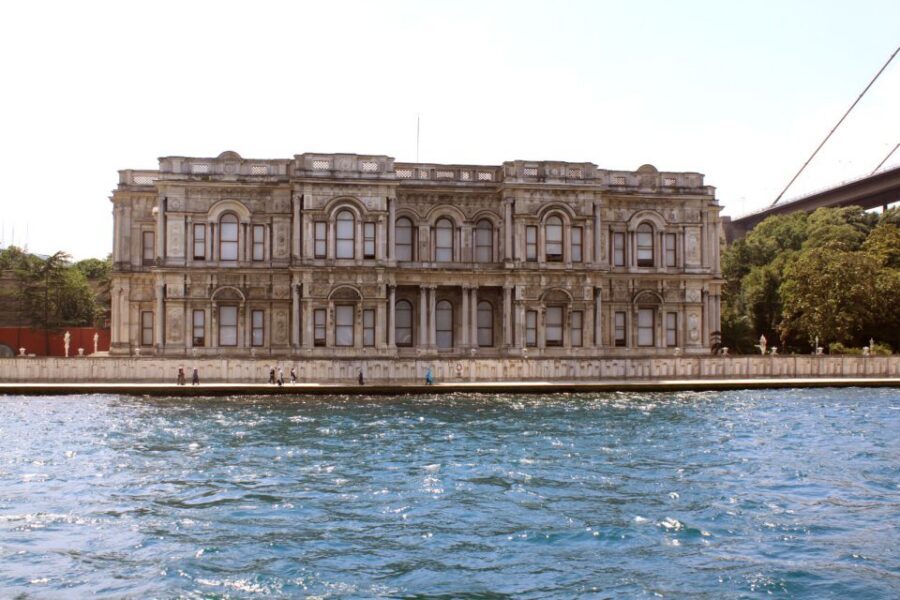
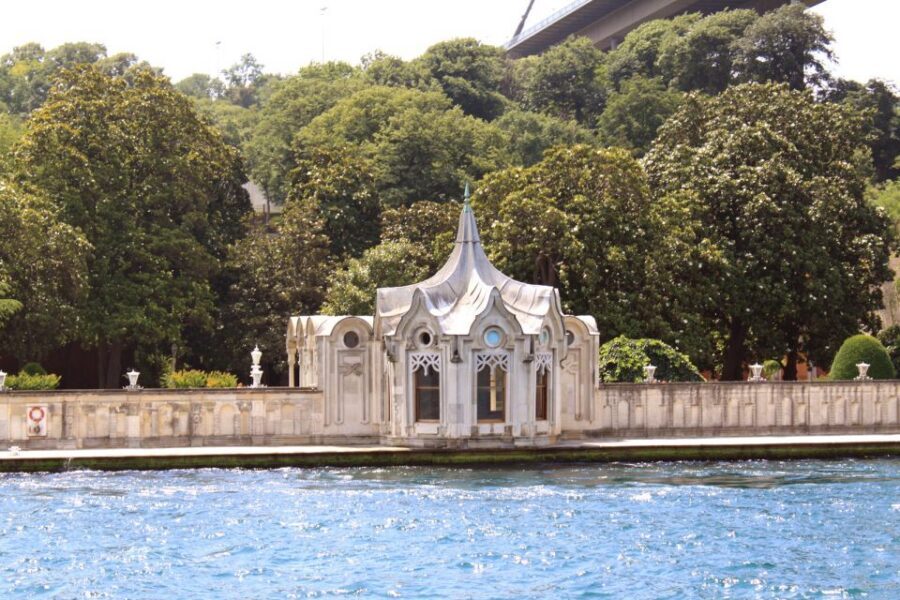
Beylerbeyi Palace is the kind of place where you can feel the Ottoman elite lifestyle without having to read an encyclopedia. It sits on the shore of the Bosphorus, and it’s often described as an especially elegant late Ottoman palace.
The tour focuses on the interior experience: six sumptuously furnished reception halls, Bohemian crystal chandeliers, and decorated rooms with Sèvres and Chinese vases. There’s also a main salon featuring an indoor fountain. You’ll also get historical context—its guests included Empress Eugénie of France, Shah Nasruddin of Persia, and Grand Duke Nicholas of Russia.
A major day-of reality check: Beylerbeyi Palace is open every day except Mondays. If your travel dates include a Monday, plan for the possibility of an adjusted schedule for that afternoon segment.
Timing and Logistics: Where This Tour Shines (and Where It Can Feel Tight)
This is a small group tour with 20 to 25 people, and that helps the pacing feel controlled. You’re not stuck in a huge bus crowd, but you still move efficiently between stops using an air-conditioned vehicle. Pickup and drop-off are designed for convenience—city center hotels on the European side of Istanbul are covered, with many pickup options including places like Taksim Square, Sultanahmet, Beşiktaş, Kadıköy is not listed, and other European neighborhoods. Drop-off covers similar central areas on the European side.
Because the tour is built around multiple key sites in 8 hours, it’s not ideal if you need a lot of downtime. It’s also not recommended for participants with walking difficulties, and wheelchair users are not suitable. If you know you’ll tire quickly, be honest with yourself about your pace before booking.
Religious timing can also change what you can see. On Friday morning, the Blue Mosque and Hagia Sophia may be viewed only from outside due to Friday Prayer. That can be a deal-maker or deal-breaker depending on what you want most from those sites.
And for Sunday plans: you’ll adjust away from Grand Bazaar itself and toward the Nuruosmaniye area around it. That’s not a failure, but it’s a different shopping feel than the classic bazaar lane experience.
Who Should Book This Tour
This one fits best if you:
- Want Hagia Sophia, the Blue Mosque, and Hippodrome with a guide handling the context
- Like a shopping stop that’s structured, not an endless maze with no plan
- Want the Asian side highlights without figuring out transportation
- Appreciate included entrances and a full included four-course lunch
- Are okay with a packed 8-hour schedule and some walking
You might skip or choose something different if:
- You have mobility limitations or you need wheelchair accessibility
- You’re traveling on a Friday morning and those two monuments are your top priority and must be fully viewed inside
- You want a slow, no-rush day focused on one neighborhood rather than many highlights
Should You Book the Istanbul Imperial & Asia Tour?
If your goal is to see Istanbul’s defining sights—then add in the Asian-side views and Beylerbeyi Palace—this tour is a solid value. You’re covering a lot of ground in a single day with entrances, lunch, and an official guide, so you get momentum and structure.
My main advice is to book with eyes open. Plan for the fact that some days adjust access (Friday prayer for inside views, Mondays for Beylerbeyi, Sundays for Grand Bazaar). If you’re comfortable with that and your legs are up for it, you’ll likely feel like you got an efficient, satisfying first-timer overview of Istanbul.
FAQ
FAQ
How long is the Istanbul Imperial & Asia tour?
It runs for 8 hours.
Is hotel pickup and drop-off included?
Yes. Pickup and drop-off are included for city center hotels on the European side of Istanbul.
What’s included in the price?
The tour includes an English-speaking guide, entrance fees as per the itinerary, an air-conditioned vehicle, VAT, and a 4-course lunch. Drinks are not included.
Is lunch vegetarian-friendly?
Yes. A vegetarian menu is available.
Can I skip the ticket line at the major sights?
Yes. Ticket lines are skipped.
What should I know about Grand Bazaar closures?
Grand Bazaar is closed on Sundays. On Sundays, the tour visits Nuruosmaniye Street around the Grand Bazaar area instead. During religious holidays, the Grand Bazaar (and Spice Market) can also be closed.
What happens on Friday morning for Hagia Sophia and the Blue Mosque?
On Friday morning, those sites are viewed only from outside due to Friday Prayer.
Is Beylerbeyi Palace always open?
Beylerbeyi Palace is open every day except Mondays.
Do I need head coverings for the religious sites?
Cover ups and head scarves are provided at the Blue Mosque. For Hagia Sophia, ladies should have a scarf with them (or can buy one at the mosque).
Is this tour suitable for wheelchair users or limited mobility?
No. It’s not recommended for participants with walking difficulties, and it’s not suitable for wheelchair users.