REVIEW · ISTANBUL
6 Days Multi City Turkey Tour
Book on Viator →Operated by Turkey Trips · Bookable on Viator
Turkey history, packed into six days. This multi-city Turkey tour strings together world-class sites like Gallipoli and Troy, then moves into mineral-white Pamukkale and the cave churches of Cappadocia, with a guided pace that keeps you from guessing. It’s especially interesting if you want one trip that explains the big connections across eras and religions, not just one single region.
I love the practical value here: 5 nights in 4-star boutique hotels, lunch most days, entrance fees, and even domestic flights are folded into the package price. I also like that it runs as a small group (max 15), so you spend more time with your guide and less time stuck waiting around.
One thing to consider: the days start early, with pickup around 6:00 to 6:30 am for the first leg, and the schedule is intentionally full. Also, if you want to swim in the Cleopatra Pools at Pamukkale, that part isn’t included, so you’ll pay extra if you do it.
In This Review
- Key highlights that matter (and why you’ll care)
- How this Turkey multi-city plan gives you less “driving pain” and more story
- Day 1 in Gallipoli: memorial points you’ll understand faster than a textbook
- Troy and Pergamon on Day 2: mythology first, then big-city power and medicine
- Pamukkale and Hierapolis: why the white terraces feel unlike any other stop
- Ephesus day: Roman ruins plus a major Christian pilgrimage stop
- The Cappadocia switch: why this part feels like two trips in one
- Göreme panorama and the Open-Air Museum: the quiet reason people keep coming back
- Price and logistics: what $1,736.40 actually buys you here
- Who this tour suits best (and who might want a different style)
- Should you book it?
- FAQ
- What languages is the tour offered in?
- Does the tour include pickup from Istanbul hotels?
- Are domestic flights included?
- What meals are included?
- How big is the group?
- How late can I cancel for a full refund?
Key highlights that matter (and why you’ll care)
- Gallipoli with a trained guide: you’ll cover major memorial points from ANZAC Cove to Lone Pine and Chunuk Bair, with the stories connected to each place.
- Troy + Pergamon in one sweep: you get mythology, then pivot to Greek-influenced Pergamon’s monumental ruins and healing cult history.
- Pamukkale Thermal Pools: the white terraces and warm pools are built for a real, slow soak feel.
- Ephesus plus Mary’s House: Roman theater and Celsus Library energy, paired with a key Christian pilgrimage site.
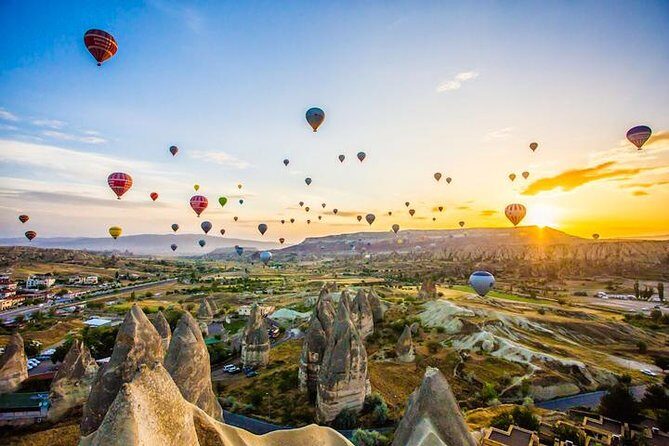
- Cappadocia valleys and cave settlements: rose-red Kızılcukur, Cavuşin’s cave homes, and a real underground city visit.
- Göreme Open-Air Museum: church frescoes and carved architecture with named early church figures connected to the area.
How this Turkey multi-city plan gives you less “driving pain” and more story
One of the hardest parts of planning Turkey is that the country’s best-known sites are spread out like puzzle pieces across different regions. This tour makes that easier by bundling the big jumps into the price, including two domestic flights and all airport transfers. That matters because it keeps the trip focused on sightseeing instead of spending day after day in transit.
Also, the pacing feels designed for learning. You’re not just dropped at ruins with a map and wish you luck. You move from place to place with a guide who can explain what you’re looking at and why it mattered then and there, which helps when ruins overlap many centuries.
And the small group size is a quiet advantage. With a maximum of 15, you’re less likely to feel like a number in a train-car crowd. You also get a better shot at asking practical questions during stops instead of shouting over buses.
You can also read our reviews of more city tours in Istanbul
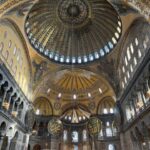
Day 1 in Gallipoli: memorial points you’ll understand faster than a textbook
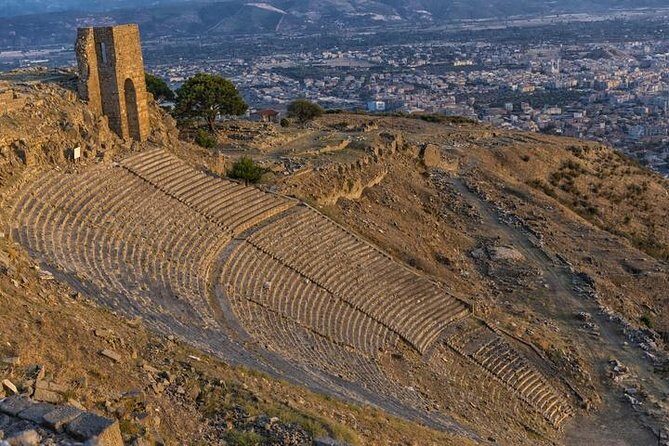
Your trip starts early in Istanbul, with pickup from hotels between about 6:00 and 6:30 am. After that, you drive to the Gallipoli Battlefield area and spend roughly five hours walking the key points with a professional guide.
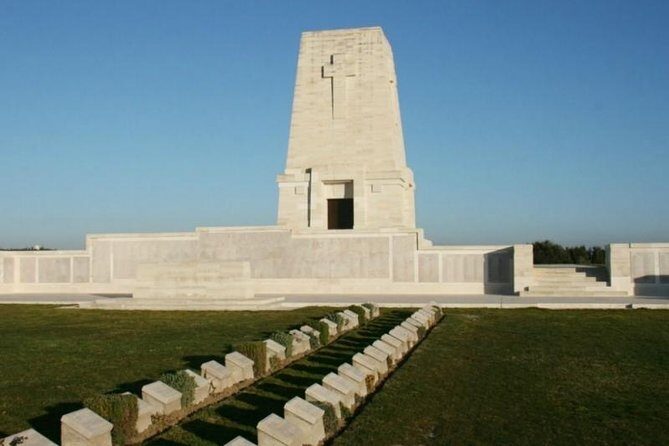
This is not the kind of history where you just look at a pretty view. It’s a sequence of locations tied to events, names, and the geography of the land. The stops include ANZAC Cove, Ari Burnu (the first ANZAC landing place), and the trenches at Johnston’s Jolly, plus cemetery and memorial ground such as Lone Pine Cemetery and Beach Cemetery, which includes John Simpson’s Grave.
You’ll also cover major named sites that help you orient yourself: Ari Burnu, The Nek, Walker’s Ridge, View of Shrapnel Valley, and Chunuk Bair, the main New Zealand memorial. There’s also a Turkish Memorial on the route, which is important because it broadens the perspective beyond just one side of the story.
By the end of the day, you transfer to your hotel in Çanakkale city centre. That’s a smart move. It gives you a place to rest without trying to push farther right after an emotionally heavy day.
Practical tip: wear shoes you can trust on uneven ground. Even when you’re not climbing mountains, you’ll still be walking on rough surfaces and looking down at slopes.
Troy and Pergamon on Day 2: mythology first, then big-city power and medicine
Day 2 starts with Troy (Truva). Before you even reach the archaeological site, you stop in the coastal town of Eceabat for lunch, which helps you avoid the growl-and-rush problem that ruins days. Then you get a walking tour of the site and the layers of Troy’s long life.
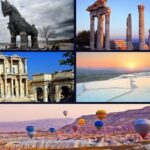
Troy is where Greek mythology meets real archaeology, and you’ll likely recognize the Trojan Horse statue as a visual anchor. But the tour time is also built around how the settlement changed across eras, so it’s not just a story stop. You’ll see elements like the sacrificial altars, the 3700-year-old city walls, and built structures including the Bouleuterium (Senate Building) and the Odeon (Concert Hall). There’s even mention of ongoing excavations, which you can use to picture how historians keep adjusting what they know.
After Troy, the day continues to Pergamon, and this is a different kind of “wow.” Pergamon’s acropolis area is modeled after Athens, so you get that classic Greek look combined with a powerful hilltop setting. The views from up there matter because the city’s layout was built for control, not just for beauty.
You’ll also hear the story around the Athenaeum library (once said to hold 200,000 volumes) and the connection to Mark Antony and Cleopatra’s legend. Then you’ll move through the Temple of Trojan (with partially reconstructed marble pieces) and down to the Sanctuary of Asclepius in the valley.
The Sanctuary of Asclepius is especially memorable if you like how cultures explain healing. You’ll be shown the sacred fountain, and the idea that people with health problems would bathe there and seek visions connected to cures.
By the end, you transfer to your hotel in Kuşadası. That base makes the next day’s route to Pamukkale more manageable.
Pamukkale and Hierapolis: why the white terraces feel unlike any other stop
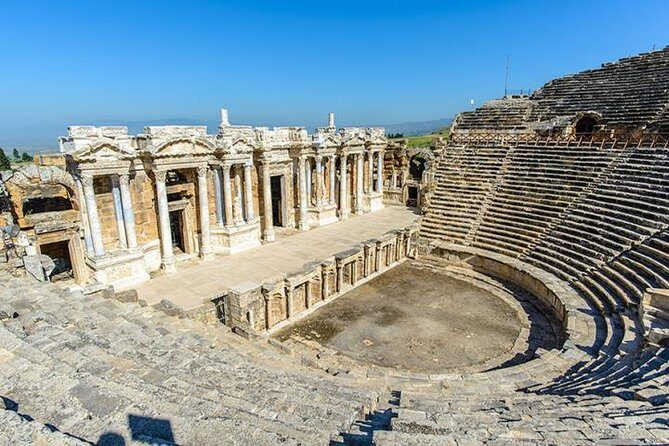
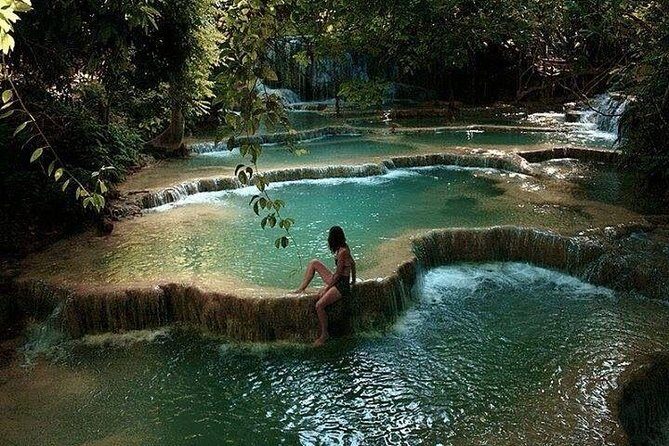
Pamukkale is often called the Cotton Castle (the Turkish translation), and when you arrive, you see why. The hot springs leave minerals behind over a long time, creating those cascading white cliffs and terraces. This day includes about three hours at the Pamukkale Thermal Pools, where the emphasis is on the warmth of the water and the slow visual effect of mineral layers.
Then you shift to Hierapolis and Pamukkale, which adds another layer to the same area. Hierapolis dates back to at least the 2nd century, and it became known as a spa city with multiple cultural influences over time. You’ll see that mix in the guide’s framing—Roman, Jewish, Christian, and pagan presence—so the place feels like a timeline, not a single stop.
There’s also time for the Cleopatra Pools. You get a swimming break option (about an hour), and this is not included in the package entrance fees. If swimming is your priority, plan for extra cost and bring your swim gear. If you just want photos and a stroll, you can skip the water and keep your pace.
Practical tip: the pools and terraces can feel slick or uneven. Use caution on stone edges. Also, bring sun protection, because the outdoor walking time adds up fast.
Ephesus day: Roman ruins plus a major Christian pilgrimage stop
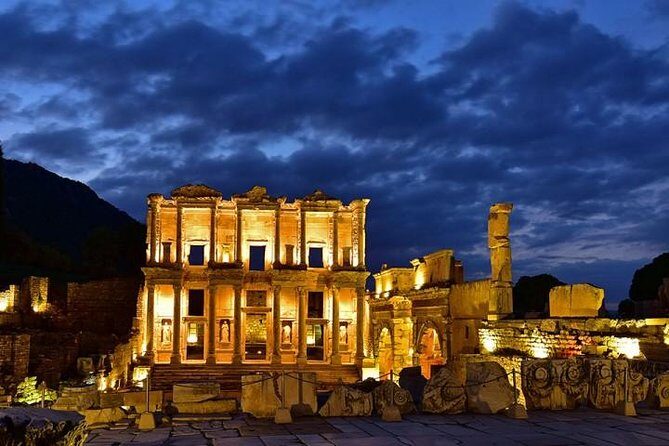
The Ephesus portion is about scale and preservation. Ephesus is described as one of the best-preserved ancient cities, once home to a population that could reach 200,000 people. In a couple hours, you get a strong sense of how a big Roman-era city was organized.
The stop list includes the Ancient City of Ephesus first (about two hours), then Meryemana (the Virgin Mary’s House) on BulBul Mountain overlooking Selçuk. This site is treated as a Christian pilgrimage destination, and the fact that the view is part of the experience helps you understand why it draws visitors.
Next comes the Temple of Artemis, tied to dates going back as far as the 6th century B.C. What you see today is the foundations and some remaining columns, but the point is to connect the site to the ancient Seven Wonders idea.
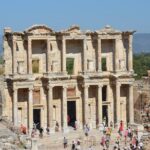
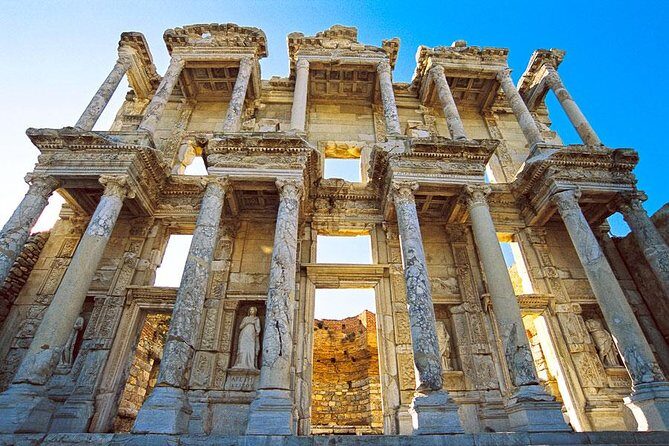
After that, you visit Isa Bey Mosque, built in the 1374–1375 period, and known for Seljuk architecture like its crown-like doors and mosaics. Then you loop back into Ephesus again for more specific highlights: the Grand Theatre, where it’s said St Paul preached, and finally the Library of Celsus, dating to about 117 A.D.
The Celsus Library is a strong closer for the day because it’s not just “ruins.” It’s a preserved two-story façade that makes the Roman world feel architectural, not abstract.
You can also read our reviews of more tours and experiences in Istanbul

The Cappadocia switch: why this part feels like two trips in one
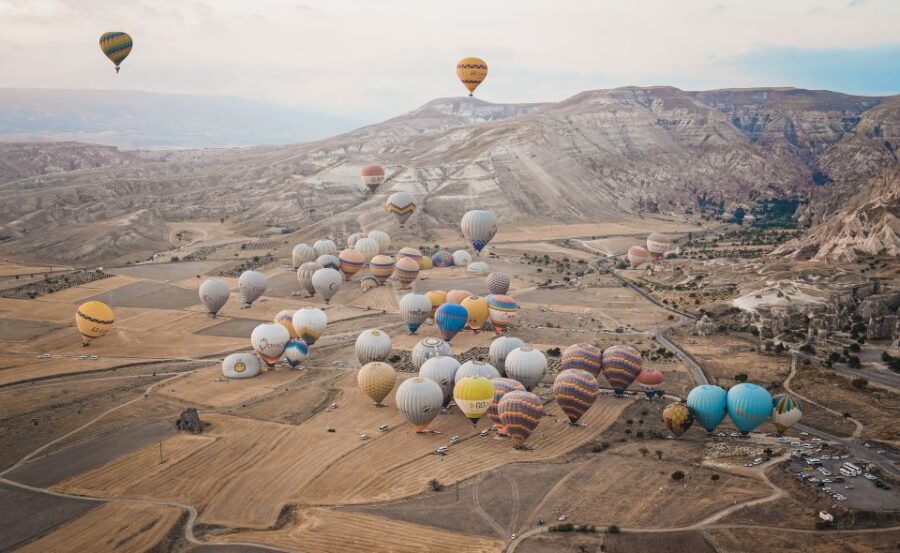
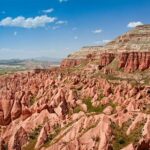
By Day 5, the tour is in Cappadocia territory, and the vibe changes. Instead of major city ruins, you’re dealing with valleys, fairy chimney rock formations, cave homes, and underground survival architecture. It also helps explain why the tour includes flights—Cappadocia doesn’t fit neatly into a drive-from-everywhere schedule if you want to keep the days sane.
You start with Kızılcukur (Rose Valley), a walking area known for red rock colors and changing tones with daylight. It includes cave dwellings and old churches tied to Christian use in the 5th century, and the information suggests it’s one of the best areas for sunset views.
Next is Cavuşin, a village settlement with cave rooms that once functioned like homes and storage spaces. The cave houses collapsed after a landslide in 1960, and what remains gives you a sense of how people lived in the rock. It’s also described as having an early period church history dating back to around the 3rd century.
From there you move to Love Valley, which is sometimes called White Valley, famous for fairy chimneys shaped like natural sculptures. Then you get one of the most practical, physically interesting visits: Kaymaklı Underground City.
Kaymaklı is notable among underground cities in the region. It was first used by the Hittites, then later by Christians as shelter during Roman persecution times. You’ll see rooms, food storages, kitchens, and a church within the underground network, plus chimneys and defense features that are meant to surprise you. This is the kind of stop where you can almost picture daily life under pressure.
Later you add Pigeon Valley for a panoramic viewpoint with pigeon houses used to collect droppings for fertilizing vineyards. Then you end at Uçhisar Castle, the highest point in the area, built on a citadel that provides wide panoramas over the surrounding rock towns.
Göreme panorama and the Open-Air Museum: the quiet reason people keep coming back
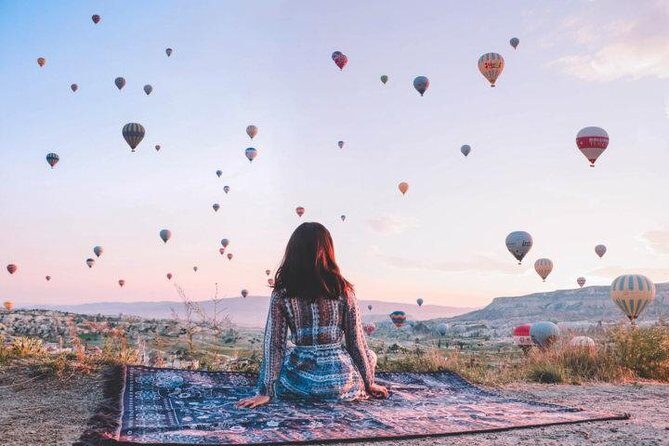
The final day starts with Göreme Panorama, a short stop that frames Göreme town and its cave houses. Even if you’ve seen Cappadocia photos before, this is one of those places where the real scale sinks in when you’re standing there.
Then you visit Göreme National Park / Göreme Open Air Museum, which is described as the first and biggest monastery area where religious education started. You’ll see churches, chapels, and monasteries carved into the fairy chimney rock, with frescoes painted from the 10th to 13th centuries. The tour also connects the church and monastery story to key early figures, including Great St Basil, his brother St Gregory of Nyssa, and St George of Nazianus.
After the museum, you shift to craft and everyday life with Avanos, known for pottery. The red clay is worked by local craftsmen and is linked to residue from the Kızılırmak River, which is described as the longest river of Turkey. This makes the trip feel grounded: Cappadocia isn’t only churches and rocks—it’s also work.
Then comes Devrent Valley, where you’ll take a walk through formations created by erosion, and you’ll find various fairy chimney types like caps, cones, mushroom shapes, pillar forms, and pointed rocks. It’s followed by Pasabag (Monks Valley), where you’ll see fairy chimneys with multiple stems and caps, plus a chapel and hermit’s shelter built into one of the rock formations.
You finish with Urgup, including a viewpoint called Three Beauties, plus time near wine factories and vineyards alongside apricot gardens. That final stop gives you a softer landing after a day of deep rock history.
Price and logistics: what $1,736.40 actually buys you here
At $1,736.40 per person, the price can look steep at first glance. But when you break it down, the package avoids a common cost trap: Turkey multi-city trips often become expensive once you add domestic flights, hotel nights, and entrance fees one by one.
Here’s what you’re getting in plain terms:
- 5 nights in 4-star boutique hotels in good locations
- A small group tour (max 15)
- A guide in English or Spanish
- All transport, including domestic flights and airport transfers
- Entrance fees and lunches included (breakfast too)
- Vegetarian meals are available
This is the kind of deal where you pay more than a DIY day trip, but you save time and mental energy. If your goal is to see a lot of different regions without building a complex schedule yourself, it’s strong value.
One more practical note: the start time is early, and the trip uses pickup service. That reduces friction if you don’t want to figure out how to get to meeting points with luggage and time pressure.
Who this tour suits best (and who might want a different style)
This tour fits you best if you want:
- A guided, structured way to see Gallipoli, Troy, Pergamon, Pamukkale, Ephesus, and Cappadocia in one go
- A plan that handles flights, hotels, and most meals
- A mix of war history, ancient ruins, and faith-focused sites
It might be less ideal if you prefer a slow, unstructured vacation where you can linger for hours without moving on. The schedule is full, and the early starts mean you’ll need stamina and comfortable shoes.
Should you book it?
If you want a single Turkey plan that moves efficiently across the country and keeps the explanations going, I’d say this is a smart booking. The standout strengths are the guided coverage at the places that can feel overwhelming on your own (Gallipoli, Troy, Ephesus) and the way the hotels plus transport are included so you’re not piecing everything together.
One extra nudge from what I’ve seen in feedback patterns: people seem to value how smoothly the services were handled and how nice the hotels felt. If that matters to you, this package is built for that.
Go for it if you’re okay with early mornings and a busy schedule. Pass if you want lots of free time for wandering without a timetable.
FAQ
What languages is the tour offered in?
The experience is offered in English and Spanish.
Does the tour include pickup from Istanbul hotels?
Yes. There is hotel pickup in Istanbul, with pickup happening between about 6:00 and 6:30 am for the first day.
Are domestic flights included?
Yes. The tour includes two domestic flights with all taxes, plus airport transfers.
What meals are included?
Breakfast is included for 5 days, and lunch is included for 6 lunches. Vegetarian meals are available. Dinner and drinks are not included.
How big is the group?
The tour has a maximum group size of 15 travelers.
How late can I cancel for a full refund?
You can cancel up to 6 days in advance of the experience for a full refund. If canceled due to poor weather, you’ll be offered a different date or a full refund.