REVIEW · ISTANBUL
Byzantian and Ottoman City Tour Museum fees Lunch Inc
Book on Viator →Operated by Kuantum Travel - Turkey Tours 2026 · Bookable on Viator
Istanbul feels like it never stops moving, and this tour helps you keep up. You get a guided sweep across the Byzantine and Ottoman eras, hitting big landmarks with the kind of planning that spares you from ticket juggling and wasted time. The pace is built around short, focused stops, then longer anchors at the places that really take time.
Two things I love right away are the included museum entrances and the fact that your lunch is handled for you. You also ride in a vehicle with A/C, which matters in Istanbul when the day heats up. It’s a good setup for a single-day sampler without turning the day into a frantic scavenger hunt.
One possible drawback: you’re looking at quick visits at several points, including multiple 15-minute stops. If you prefer long, slow wandering at every site, this schedule may feel a bit tight.
In This Review
- Key reasons this tour works well
- A Fast-Track Istanbul Day: Byzantine Meets Ottoman
- Getting There Smoothly: Pickup, Mobile Ticket, and A/C Comfort
- Hippodrome Monuments: Four Stops That Explain the Spina of the Circus
- German Fountain: A monument with a modern twist
- Obelisk of Theodosius: From ancient Egypt to Constantinople
- Serpent Column and the Walled Obelisk: Three relics, one setting
- Sultanahmet Highlights: German Fountain to the Blue Mosque
- Hagia Sophia Grand Mosque: One Building, Multiple Eras
- Topkapi Palace and Hagia Irene: Palace Power and Sacred Relics
- Hagia Irene Museum: A quieter sibling near Hagia Sophia
- Grand Bazaar Time: Market Streets and Shop-Specific Zones
- Lunch Included: A Real Break That Helps the Whole Schedule
- Price and Value: Why $300 Can Make Sense Here
- Best Fit: Who Will Enjoy This Day the Most
- Should You Book Kuantum Travel’s Byzantine and Ottoman City Tour?
- FAQ
- How long is the Byzantine and Ottoman City Tour?
- Is pickup included?
- Are entrance fees included?
- Is lunch included?
- What language is the tour guide?
- Is transportation provided during the tour?
- What is the group size limit?
Key reasons this tour works well
- Hagia Sophia + Topkapi + Hagia Irene are ticket-included, so you can spend less time figuring out fees and entrances
- A/C roundtrip pickup and drop-off keeps the day comfortable and efficient
- Hippodrome monuments get their own guided attention, not just a photo stop
- Grand Bazaar time is planned, with room to see the market’s main shop areas
- Small group size (max 30) helps the tour feel organized and easier to follow
A Fast-Track Istanbul Day: Byzantine Meets Ottoman
This is the kind of Istanbul day that makes sense when you want maximum payoff per hour. You’re covering two overlapping storylines—Constantinople’s Byzantine era and the Ottoman transformation—without needing separate bookings or multiple tour days.
The design of the route is smart. It starts with the old public-life core around the Hippodrome, then moves through the major Sultanahmet icons, and finishes with the palace world of the Ottomans and a dose of market life at the Grand Bazaar.
You can also read our reviews of more city tours in Istanbul

Getting There Smoothly: Pickup, Mobile Ticket, and A/C Comfort
Your day starts with roundtrip pickup and drop-off transfers, and you’re asked to be ready in your hotel lobby. You’ll also get a mobile ticket, which is handy when you’re moving between several entrances.
The tour runs in a newer model vehicle with A/C. That sounds basic until you’re doing a long day of palace courtyards, mosque interiors, and outdoor monument stops.
Group size is capped at 30 travelers. Smaller groups tend to move more smoothly, especially when you’re coordinating timing around major sites like Hagia Sophia.
Hippodrome Monuments: Four Stops That Explain the Spina of the Circus
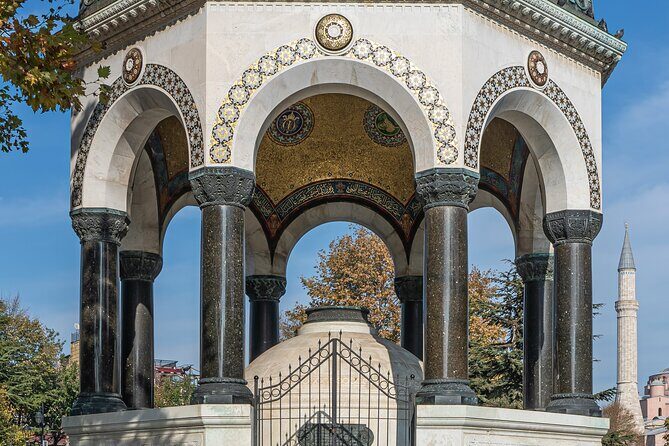
The day’s first cluster focuses on the Hippodrome, described as the center of sport activities in Constantinople. This is where you start to see Istanbul’s layers in a very tangible way, because several of the monuments are still visible and identifiable.
You’ll spend about 15 minutes at each monument stop, which keeps the momentum going while still giving time to look and learn. If you like history that you can point to on-site, this is a strong way to start.
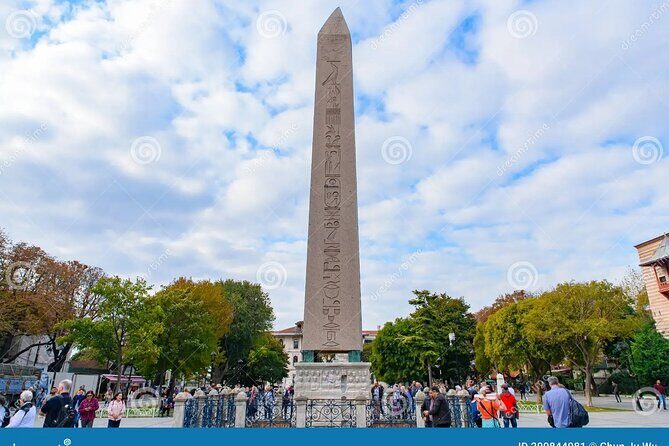
At the Hippodrome you’ll see the German Fountain, the Obelisk of Theodosius, the Serpent Column, and the Walled Obelisk. Even better, the tour explains how these items relate to the spina—the central decorated spine of the old circus—so the monuments don’t feel like random “cool rocks.”
German Fountain: A monument with a modern twist
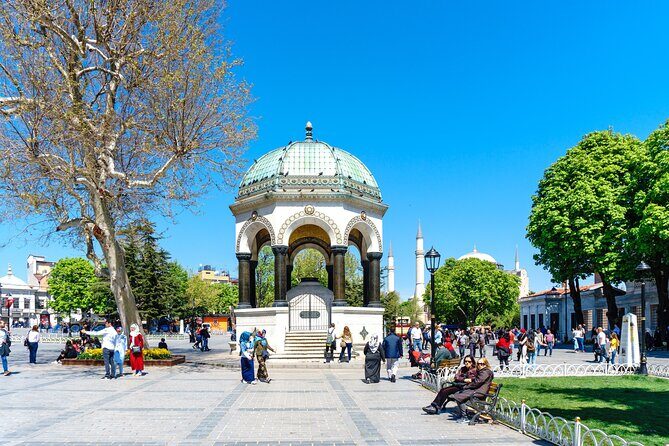
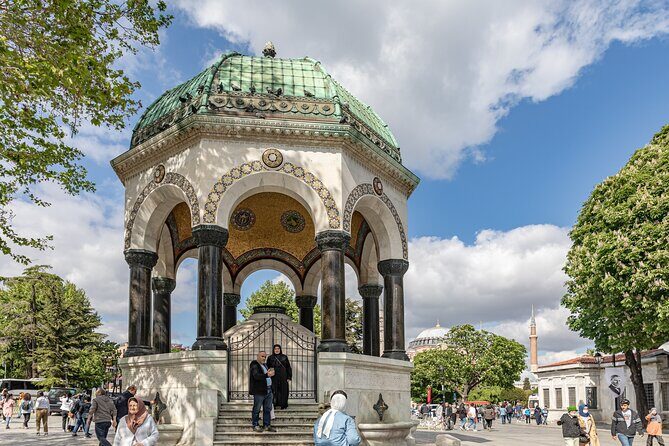
The German Fountain is tied to a specific moment: it was a present from German Kaiser Wilhelm II to the sultan and the city. It was erected in Istanbul in 1901, made in Germany in a neo-Byzantine style, and ornamented inside with gold mosaic.
This stop is short, but it’s a great reminder that Istanbul’s Byzantine and Ottoman stories don’t end in the distant past. They keep getting referenced and reinterpreted across later eras too.
Obelisk of Theodosius: From ancient Egypt to Constantinople
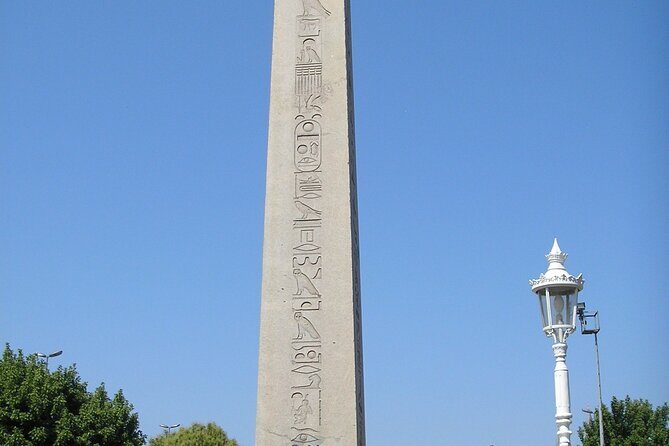
The Obelisk of Theodosius was commissioned by Egyptian Pharaoh Tuthmosis III, according to the tour description. It was erected in the Hippodrome during the reign of Theodosius I and tied to events like the defeat of the usurper Maximus and his son Victor in 388.
I like this kind of explanation because it gives you a timeline to hold onto. It turns an obelisk into a story about power, rivalry, and how symbols travel.
You can also read our reviews of more museum experiences in Istanbul



Serpent Column and the Walled Obelisk: Three relics, one setting
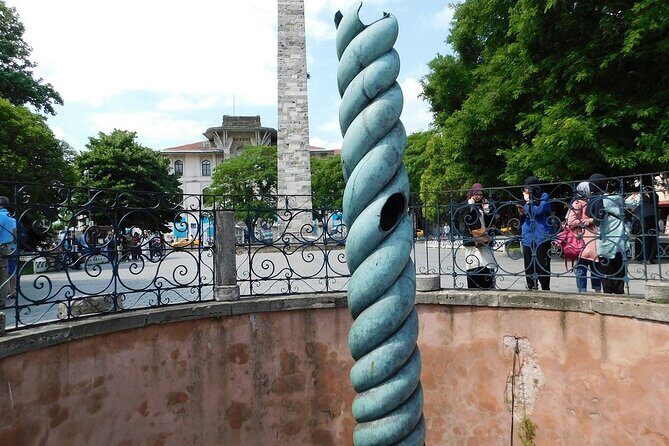
The Serpent Column is described as one of three remaining monuments of the Hippodrome of Constantinople. It now stands between the Obelisk of Theodosius and the Masonry Obelisk, helping reveal the location of the spina.
The Walled Obelisk is noted as being about 32 meters high and likely Theodosian in construction, meant to mirror the Obelisk of Theodosius. Seeing these in sequence makes it easier to understand why the spina mattered and how the circus was staged.
Sultanahmet Highlights: German Fountain to the Blue Mosque
After the Hippodrome set, the next stretch stays in the same big historic zone. You’re in Sultanahmet square for the German Fountain, described as across from the tomb of Sultan Ahmet I.
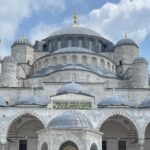
From there, you’ll reach the Blue Mosque, one of Istanbul’s best-known monuments. The tour highlights that it’s called Blue Mosque because of beautiful blue Iznik tiles, which are a strong reason to slow down and look up.
You’ll have about 30 minutes here. That’s usually enough time to see what you came for, while still keeping the day moving toward Hagia Sophia.
Hagia Sophia Grand Mosque: One Building, Multiple Eras
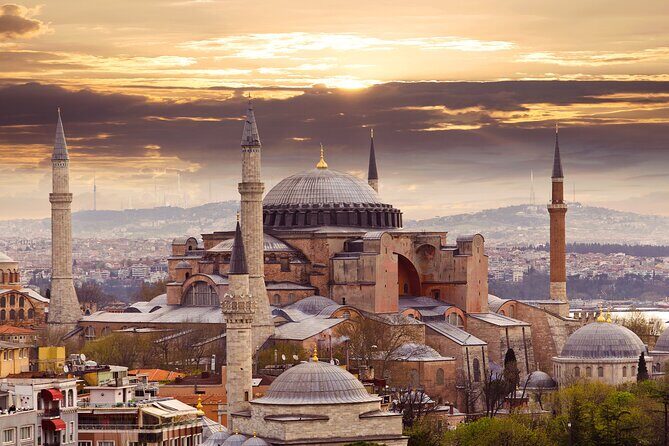
Hagia Sophia is the tour’s major anchor stop, with about 1 hour on-site. Admission is included, and the guide focuses on what makes the building so central to Istanbul’s identity.
The tour description lays out the key timeline. It was built as a Christian church in the 6th century under Emperor Justinian I, then became a mosque, was used as a museum, and became a mosque again. That’s the kind of historical switching that makes Hagia Sophia feel like an archive you can walk through.
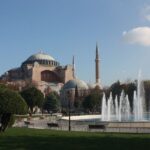
The building’s mixed visual language is also central to the explanation you’ll hear. You’ll see minarets and inscriptions of Islam alongside lavish mosaics of Christianity.
I love how the tour frames this as cultural change rather than just an aesthetic experience. You don’t just see a landmark—you understand how the region’s religious life shifted over centuries and how the building absorbed those shifts.
Topkapi Palace and Hagia Irene: Palace Power and Sacred Relics
Topkapi Palace comes next, with about 1 hour and admission included. The description is clear about what you’ll be looking at: the great palace of the Ottoman sultans from the 15th to the 19th centuries.
You’ll also get a sense of Ottoman court life through the collections listed for this visit. The palace houses precious gems and jewelry, thrones, and costumes worn by sultans and their families, plus miniatures and major religious artifacts.
Two named highlights matter here: the Holy Mantle and the Chamber of Sacred Relics. Those details are useful because they give you specific targets once you’re inside, which helps when you’re in a museum-like environment where you can otherwise feel like you’re wandering.
Hagia Irene Museum: A quieter sibling near Hagia Sophia
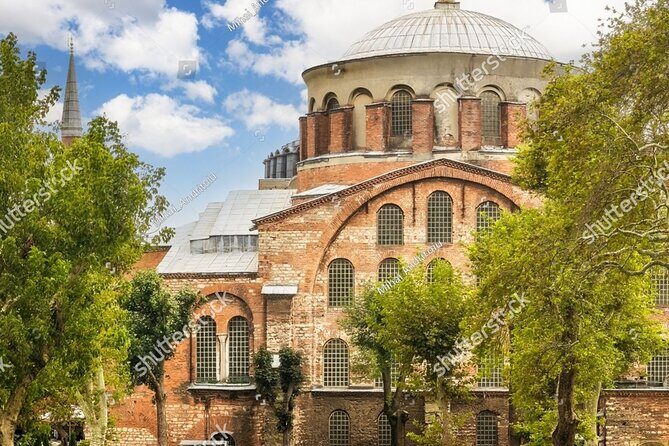
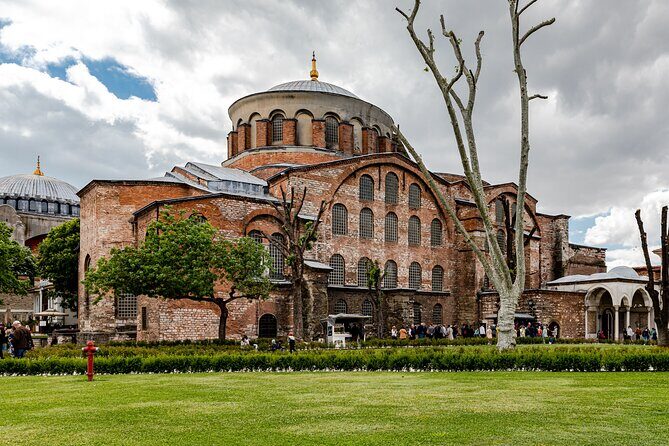
After Topkapi, the tour adds Hagia Irene Museum for about 45 minutes, also with admission included. The tour description notes it was built during the same period as Hagia Sophia in the 4th century, and that its Greek name refers to Godly or Holy Wisdom.
This stop adds contrast. After the conquest of Istanbul, Hagia Irene was incorporated into the Topkapi Palace grounds and converted into a mosque, with no major structural changes made to the building.
If Hagia Sophia is the dramatic headline, Hagia Irene is the more focused follow-up. You may find it easier to absorb and connect dots because the tour has already set up the broader story of religious transformation.
Grand Bazaar Time: Market Streets and Shop-Specific Zones
The Grand Bazaar stop is about 1 hour, and admission is free. This is the tour’s shift from monuments and museums into everyday commerce.
The market is described as a labyrinth of streets and passages with more than 4,000 shops. The tour also names shop clusters, like goldsmiths’ street, carpet sellers, and Turkish arts and crafts, including handpainted ceramic plates and hand-honed copperware.
I like that the tour gives you a map of what you’re likely to see. Without that, a bazaar hour can turn into random browsing where you’re never sure if you’ve already walked past the most interesting areas.
This is also a good moment to ask questions. If you want practical buying guidance, you can use the guided time to understand what kinds of crafts are common, what the shop areas are called, and where you might want to spend your energy.
Lunch Included: A Real Break That Helps the Whole Schedule
Lunch is included in the price, and it’s positioned as a necessary pause during a long day. The tour doesn’t frame lunch as a rushed side event; it’s a planned comfort break that keeps the afternoon from feeling like a sprint.
The lunch is described as authentic in the overall feedback pattern, with people calling it delicious and well prepared. You’re also reminded that drinks aren’t included, so plan to budget for water or other beverages if you want them during the meal.
If you’re the type who gets grumpy when you skip food, this matters. One reason tours like this work is that your energy stays steady enough to enjoy the later palace and museum stops.
Price and Value: Why $300 Can Make Sense Here
At $300 per person, this isn’t a budget “walk-by” tour. But you’re paying for structure: roundtrip pickup, A/C transport, a licensed guide in English, all entrance fees, and lunch.
The big value signal is that ticket costs are built in for the major paid sites. Hagia Sophia is an included admission stop, and so are Topkapi Palace and Hagia Irene Museum. That saves you time and keeps the experience from stalling when you’re standing in line or figuring out ticket options.
You’re also paying for time management. With an 8 to 9 hour duration, you’re seeing a cluster of top sites plus the Hippodrome monuments plus the Grand Bazaar in one day. For many first-time visitors, saving an extra half-day or adding a separate booking can be the difference between a trip that feels organized and one that feels chaotic.
One more value point: the tour is set for a maximum of 30 travelers. That’s a meaningful detail if you’ve ever been stuck behind a large crowd where every stop becomes stop-and-go.
Best Fit: Who Will Enjoy This Day the Most
This tour is a strong choice if you want an Istanbul overview that connects themes. You’ll appreciate the emphasis on Byzantine and Ottoman eras, especially when the guide ties the monuments back to the story of the city.
It also suits people who like a guided framework more than self-guided wandering. You’ll get licensed English guidance, and the stops are timed so you don’t lose the day to indecision.
You might also like this format if your time is limited. With so many iconic sites packed into a single schedule, this is built for travelers who want a full day without stacking additional tours.
Should You Book Kuantum Travel’s Byzantine and Ottoman City Tour?
If you want a guided, ticket-included Istanbul day that covers major Byzantine and Ottoman landmarks with lunch and A/C transport, I’d say this is worth serious consideration. The itinerary is paced for efficiency, and the included admissions at the biggest sites reduce friction.
I’d skip it if you know you like to linger for long stretches at every stop. Several segments are around 15 minutes, and the schedule assumes you’re okay with a faster look rather than slow study.
If you’re balancing a tight schedule and you want the day to feel organized, book it. Then show up with comfortable shoes, a plan to hydrate, and the mindset of seeing the big picture first—because this tour is built to give you that fast.
FAQ
How long is the Byzantine and Ottoman City Tour?
The tour duration is approximately 8 to 9 hours.
Is pickup included?
Yes. The tour includes roundtrip pickup and drop-off transfers, and you’re asked to be ready in your hotel lobby.
Are entrance fees included?
Yes. All entrance fees are included, including Hagia Sophia, Topkapi Palace, and Hagia Irene Museum.
Is lunch included?
Yes. Lunch is included in the price. Drinks are not included.
What language is the tour guide?
The tour is offered in English, with professional licensed tour guiding.
Is transportation provided during the tour?
Yes. You’ll travel in new model vehicles with A/C.
What is the group size limit?
The maximum group size is 30 travelers.