REVIEW · ISTANBUL
Full Day Historical Walking Tour of Istanbul Old City from Hagia Sophia
Book on Viator →Operated by Istanbul on Tour City Tours · Bookable on Viator
Old Istanbul hits hard in one long day.
This walking tour strings together the big names of Sultanahmet—Hagia Sophia, the Blue Mosque, and the Hippodrome area—then keeps going to Ottoman power at Topkapi and down into an ancient underground cistern. Add a behind-the-scenes look at leather production, and you get more than postcard photos; you get a real sense of how this city worked. With a maximum group size of 9, you’re not stuck shoulder-to-shoulder with strangers.
What I like most is the pacing for a limited trip: a 6 to 8 hour day that still leaves room to understand what you’re seeing. I also like that it runs with an English-speaking guide and uses a mobile ticket, so you can focus on the sights instead of logistics. If your Istanbul plans are tight, this is the kind of day that helps you get your bearings fast.
One drawback to factor in: you’re on your feet for a long stretch, and the big museums have separate entrance fees (Topkapi Palace and the Basilica Cistern), so plan extra cash and time to handle tickets at the gate. Also, on Tuesdays, the tour swaps Topkapi for the cistern approach because Topkapi is closed on that day.
In This Review
- Key highlights worth caring about
- A smart plan for Sultanahmet: when 1 day beats 3
- Price and entrance fees: what $43.54 really buys you
- The meeting point and route rhythm (and why it matters)
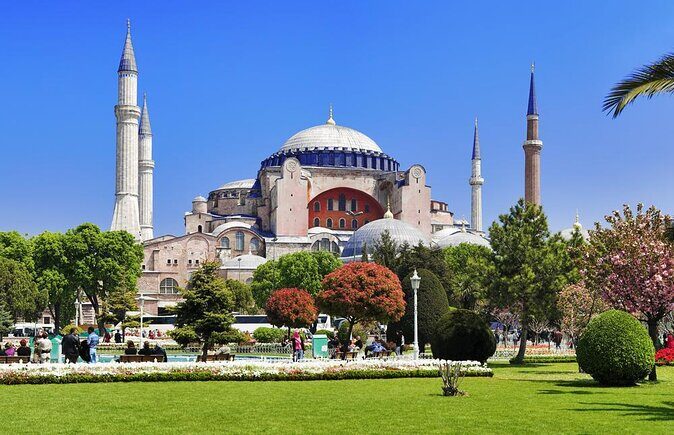
- Stop 1: Hagia Sophia Grand Mosque—more than a landmark
- Stop 2: Blue Mosque—tiles, light, and Ottoman ambition
- Stop 3: Hippodrome—when history becomes a square
- Stop 4: Topkapi Palace—where Ottoman rule lived
- Stop 5 and 6: Basilica Cistern and Hagia Irene Museum
- The Tuesday swap
- Hagia Irene Museum connection
- Leather production and the “non-monument” value
- What makes the guiding matter in Istanbul
- How to survive a 6–8 hour Old City walking day
- Who should book this tour
- Should you book this Old City historical walk?
- FAQ
- What time does the tour start?
- How long is the tour?
- How much does the tour cost?
- What’s included in the price?
- Are entrance fees included?
- What happens on Tuesdays?
- How big is the group?
Key highlights worth caring about
- Max 9 people means questions don’t get lost and you can move at a human pace
- Hagia Sophia + Blue Mosque on the same walk helps you compare Byzantine and Ottoman storytelling
- Small-site context at the Hippodrome area gives meaning to what’s just a square today
- Topkapi Palace or the Tuesday cistern swap keeps the day full even when museums close
- Leather production insight adds a practical, behind-the-scenes stop beyond the monuments
A smart plan for Sultanahmet: when 1 day beats 3
Istanbul’s historic core can feel like a maze. Streets twist, crowds gather, and the “I’ll just wander” plan turns into backtracking and missed moments. This tour is designed to solve that problem by building a tight route around the most important sites in the Old City, starting at 10:00 am and returning to the same meeting point.
The biggest value is not that it hits famous buildings. It’s that it connects them in a way that makes the city’s timeline easier to grasp. Hagia Sophia anchors the Byzantine story (then later becomes an Ottoman mosque, then reopens again as a mosque after the museum phase). The Blue Mosque sits next door and shows the Ottoman take on power and artistry. Then you roll forward to Ottoman administration at Topkapi and end with a cool-down underground at the cistern.
That combination is great for first-time visitors who want a focused day. It’s also a reasonable option for families who can handle walking (the tour is built for a wide range of people, and it’s structured to keep stops timed rather than letting you drift into chaos). Just know it’s still a walking tour, not a “sit on a bus and snack” day.
You can also read our reviews of more walking tours in Istanbul



Price and entrance fees: what $43.54 really buys you
The listed price is $43.54 per person, and what you’re paying for is the English-speaking guiding through the Old City route. Lunch isn’t included. And two major sites have extra entrances that aren’t part of the base price.
Here’s the practical part:
- Topkapi Palace entrance is listed as 750 Turkish Liras and is not included
- Basilica Cistern entrance is listed as 450 Turkish Lira and is not included
- Hagia Irene Museum is also listed as not included
So yes, you will likely add to your total on the day. But this tour can still be good value if you’re using it to reduce mental load. A good guide helps you move efficiently between stops, explains what you’re looking at, and keeps the pacing from turning into a long day where you only half-understand things.
One thing to watch: entrance fees can change, and some experiences note differences between what’s expected and what’s collected at the gate. I’d treat the stated fees as a helpful starting point, then bring a little cushion so you’re not stressed when you’re standing in line.
The meeting point and route rhythm (and why it matters)
You meet near Ayasofya Muvakkithanesi Cankurtaran, At Meydanı Cd No:1, Fatih. The start time is 10:00 am, and the tour ends back at the meeting point. That “back to start” structure is underrated. It means you don’t have to figure out a second transfer zone after a long walking day.
The route is also described as near public transportation, which matters because you might want to get there early, grab water, or adjust if your morning starts messy. A mobile ticket is included, which cuts down on last-minute searching and helps you line up quickly.
Group size is limited to 9 travelers. In a place like Sultanahmet, that’s a real advantage. Big tour groups can feel like a moving wall. Small groups are easier to steer around crowds, and they’re more flexible if someone needs a quick break.
Duration is roughly 6 to 8 hours, so plan your day accordingly. If you schedule dinner across town immediately after, you’ll likely feel rushed. Build in a quiet evening after.
Stop 1: Hagia Sophia Grand Mosque—more than a landmark
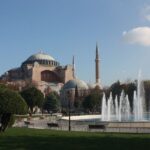
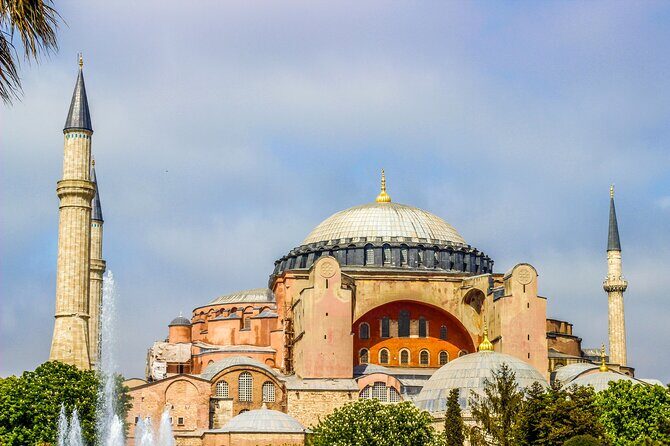
You start at Hagia Sophia Grand Mosque, a building that’s almost impossible to explain with one simple category. It was built in 537 as a major cathedral of the Byzantine Empire’s imperial capital. Later it became the city’s Ottoman mosque after the 1453 fall of Constantinople, then was set up as a museum, and in 2020 reopened again as a mosque.
That layered timeline is why this stop is so powerful. You’re not just looking at old stone. You’re looking at how each era left its stamp—religious purpose, architecture, and cultural meaning—without wiping the previous chapters completely.
The tour gives you about 1 hour, and it’s enough time to see the big interior impression, then hear the structural and historical context that makes the space make sense. Admission here is listed as free, which helps keep the day’s cost under control.
What to consider: this is also one of the world’s most visited sites. If you’re easily overwhelmed by crowds, keep your expectations realistic. The guide’s job is partly to help you find your way and understand what you’re seeing even when it’s crowded.
Stop 2: Blue Mosque—tiles, light, and Ottoman ambition
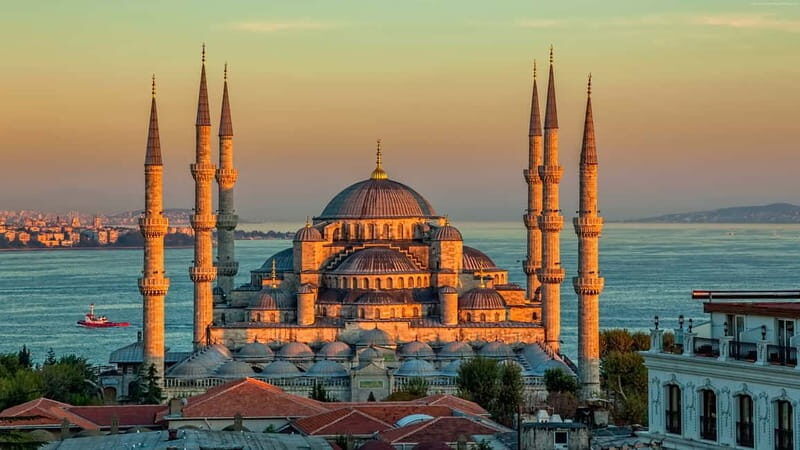
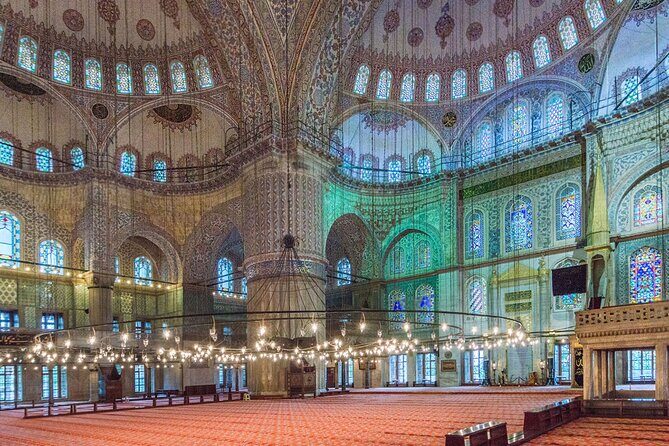
Next is the Blue Mosque (Sultan Ahmed Mosque), an Ottoman-era mosque built between 1609 and 1616 under Sultan Ahmed I. It sits right beside Hagia Sophia, which makes this comparison-stop especially useful.
The highlight here is the interior decoration—hand-painted blue tiles—and the mosque’s role as an active place of worship. Even if you’re only there during daytime, the story of the design is tied to how the building looks and feels at different times of day, including at night with lighting framing its domes.
You get about 45 minutes. That’s a good length because it gives you time to slow down and look carefully. A lot of first-time visits rush through with the camera first. With a guide, you can spend more time understanding why certain choices were made and what the building is trying to communicate.
Admission is listed as free. That’s another small win for value. The main drawback is timing: renovations can change what’s visible at any given moment, and the Blue Mosque is known to undergo periods of maintenance. Before you go, check current status so you’re not disappointed if portions are covered.
You can also read our reviews of more city tours in Istanbul





Stop 3: Hippodrome—when history becomes a square
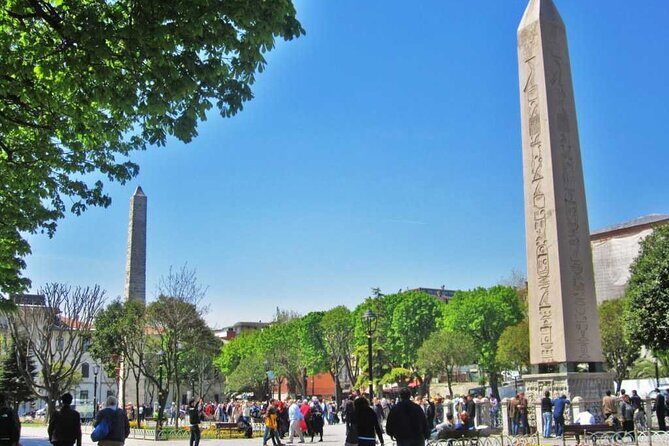
From there you move to the Hippodrome of Constantinople, which is now mainly known as Sultanahmet Meydanı (Sultan Ahmet Square). This spot is easy to overlook because today it’s just a city square. But the Hippodrome wasn’t small. It was the major sporting and social center of Constantinople in the Byzantine era.
In the ancient world, hippodromes weren’t just about racing. They were public stages where power, community, and entertainment met. Chariot racing and horse racing were popular pastimes, and the Hippodrome was built for that kind of mass energy.
You’ll spend about 45 minutes here. That time matters. Without context, you might read the site as empty space. With context, you start seeing how Constantinople used public events to shape culture and politics.
Admission is listed as free, so the Hippodrome is a cost-saver in the middle of the day—another small value boost.
Stop 4: Topkapi Palace—where Ottoman rule lived
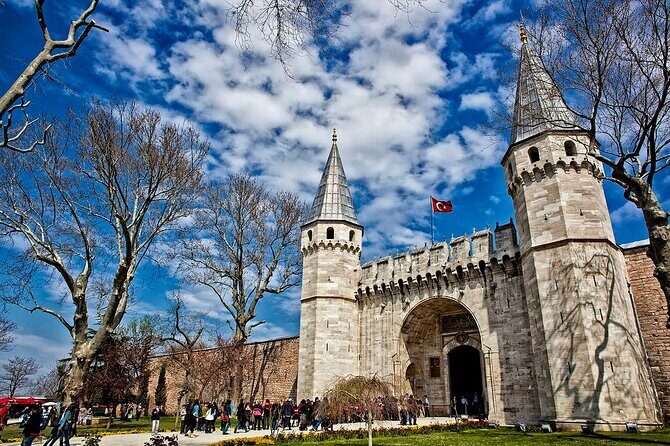
The tour continues to Topkapi Palace, the Ottoman sultan’s main residence and administrative headquarters in the 15th and 16th centuries. Topkapi is a museum complex, and it’s not designed to be skimmed in a hurry. The tour schedules about 1 hour for it, which is more of an orientation visit than a full deep-museum marathon.
Still, that hour can be very effective if you go with the right mindset: aim to understand what rooms and collections are tied to how the sultans governed and how the palace functioned day to day. The palace is big enough that you could spend weeks here, but a guided route helps you hit the key elements and grasp the overall story quickly.
Entrance is not included, and the listed fee is 750 Turkish Liras. Also note the museum schedule: Topkapi Palace is closed on Tuesdays, and the tour changes what you do that day.
Stop 5 and 6: Basilica Cistern and Hagia Irene Museum
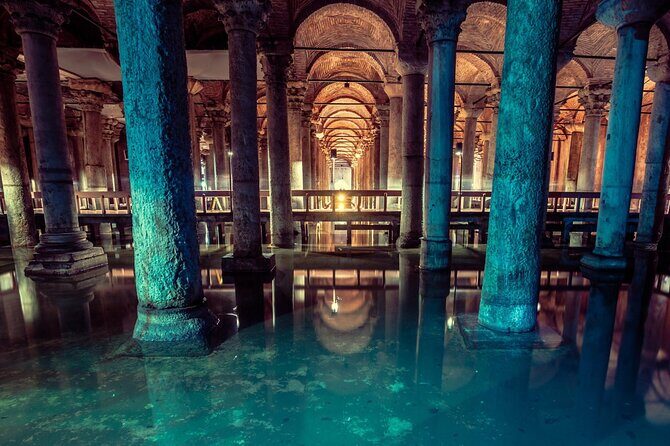
The day’s underground stop is the Basilica Cistern, described as the largest of the ancient cisterns under Istanbul. It’s a perfect counterpoint to the palace and mosques above ground—water storage turned into an atmospheric underground space.
You get about 45 minutes at the cistern, which is enough time to see the scale and soak in the eerie calm. It’s also a real physical relief in a long walking day. Even if you’re not a cistern nerd, it breaks up the “stand, look, walk, repeat” rhythm.
Entrance is not included, with a listed price of 450 Turkish Lira.
The Tuesday swap
Because Topkapi is closed on Tuesdays, the tour plan adjusts so you still have a major indoor/heritage experience by visiting the underground cistern approach instead of Topkapi that day. That helps you avoid a painful day where you’re stuck waiting outside museum walls.
Hagia Irene Museum connection
The tour also includes a short stop at Hagia Irene Museum, described as one of the oldest structures inside the Topkapi Palace complex and dating back to the Byzantine era.
You’ll get about 20 minutes here. That shorter time is intentional. It’s meant as a quick, meaningful bridge between the Byzantine and Ottoman layers of this whole area.
Admission isn’t included for this museum stop, so expect additional on-the-day costs if it’s part of your route on the day you book.
Leather production and the “non-monument” value
One of the best-sounding parts of this tour is the behind-the-scenes look at leather production. That kind of stop is rare on monument-only itineraries, and it gives you something practical: how crafts and industries connect to the city you’re touring.
When a guide builds in a craft-focused stop, you get more than “what happened here.” You get a hint of what still gets made and how skills pass through generations. It can also be a nice change of pace from the repeated museum-domes-and-tiles cycle.
There’s one smart way to approach this: treat the leather stop as a learning moment first. If you want to buy, great. If you don’t, still pay attention to the process being explained. You’ll get more out of it than if you go into sales-mode.
Also be aware that some historic-area tours sometimes include extra retail stops. If you’re not into shopping detours, keep your priorities clear with your guide during the day so the tour stays aligned with what you came for.
What makes the guiding matter in Istanbul
In Istanbul, the guide is the difference between collecting photos and building understanding. This tour’s small-group nature supports that. With fewer people, a good guide can slow down when someone wants a question answered, and can keep you from missing key details when crowds surge.
Guides named Ahsen, Ünal, Ensar, and Omer Karaman are specifically mentioned in the tour’s feedback for being friendly and patient, and for adding context that makes mosques, history, and palace life easier to understand. You’ll also see comments about accents being sometimes harder to catch. That’s normal with any international guiding—so if you’re sensitive to audio clarity, sit where you can hear well, and don’t hesitate to ask for repeat explanations.
Timing can also affect the experience. One note to keep in mind: meeting at large, iconic sites can be tricky. A strong guide will stay in contact and help you find them quickly if you get turned around.
How to survive a 6–8 hour Old City walking day
This tour is rated as a full-day outing. Even with smart scheduling, you should expect lots of walking over uneven terrain and stone streets. In other words: you need shoes that are truly comfortable, not just stylish.
I’d also plan around the fact that the busiest sites are also the ones you’ll want to linger at. Since the tour has set stop times (often 20 to 60 minutes each), you can’t stretch everything. If you’re the kind of visitor who wants to stare silently at one corner for 45 minutes, you may feel slightly rushed.
A practical approach: pick one or two interior spaces to focus on deeply, and treat the others as “context stops.” For example, Hagia Sophia and the Blue Mosque are your big “look closely” candidates. The Hippodrome and cistern are your “bigger meaning” candidates.
Food is another consideration. Lunch isn’t included. If you get hungry, you’ll want to handle it calmly rather than waiting for a tour-provided break.
Finally, bring patience. Istanbul can be loud, crowded, and a little chaotic. A small group helps, but it doesn’t erase the city.
Who should book this tour
This is a strong fit if you want:
- A first-time introduction to Hagia Sophia, Blue Mosque, and the Sultanahmet area
- A full Old City day that still includes Byzantine-to-Ottoman context, not just sightseeing
- A maximum 9-person group so the day doesn’t feel like a factory line
- An English guide to help you connect symbols, architecture, and timeline
It may be less ideal if:
- You hate long walking days
- You budget tightly and don’t want to add entrance fees on the spot
- You want total freedom to linger or skip stops without schedule pressure
If you’re traveling with kids, this can work because the day is structured and designed for a broad range of visitors. Just keep expectations realistic: it’s still a lot of moving.
Should you book this Old City historical walk?
My take: book it if you want one focused, guided day that stitches together Istanbul’s Ottoman and Byzantine story in a route that makes sense. The small group size, the major landmarks, and the added leather production stop are what push it above a basic checklist tour.
Before you go, do two things to protect your experience.
First, budget for entrance fees at Topkapi and the Basilica Cistern, plus whatever applies for Hagia Irene during your day. Second, plan for a long time on your feet and bring the right attitude: this is a day for learning and walking, not for wandering slowly.
If that sounds like your kind of Istanbul day, this tour is an efficient way to get oriented fast and leave with a clearer sense of how the city became what it is today.
FAQ
What time does the tour start?
The tour starts at 10:00 am.
How long is the tour?
It lasts about 6 to 8 hours.
How much does the tour cost?
The price is $43.54 per person.
What’s included in the price?
An English-speaking guide is included, and you’ll use a mobile ticket.
Are entrance fees included?
Admission tickets for Hagia Sophia, the Blue Mosque, and the Hippodrome are listed as free. Topkapi Palace and the Basilica Cistern have separate entrance fees not included (with Hagia Irene Museum also not included).
What happens on Tuesdays?
Topkapi Palace is closed on Tuesdays, so the tour swaps the Topkapi Palace stop for a visit related to the underground cistern.
How big is the group?
The group is limited to a maximum of 9 travelers.