REVIEW · ISTANBUL
Istanbul City Walk: Colors, Culture & History Fener Balat Tour
Book on Viator →Operated by Tourmania · Bookable on Viator
Most people miss the point of Fener and Balat.
This walk turns those color-soaked streets into a clear story of Byzantine, Ottoman, and modern Istanbul, with stops that connect architecture to real faith communities. I love how the route mixes photo spots with meaningful places like the Ecumenical Patriarchate and classic Orthodox churches. One thing to keep in mind: it’s a stair-and-walk style tour, so you’ll want moderate fitness and good shoes.
Two hours goes fast, in a good way.
You’ll get a guided pace across key corners of the Jewish quarter of Balat and the Greek Orthodox center of Fener, plus a small-group feel (up to 15). The main drawback isn’t the content—it’s that short-notice city closures can sometimes disrupt plans, so keep your schedule a bit flexible.
In This Review
- Key highlights you should care about
- Why Fener and Balat works better than a quick photos-only loop
- Getting started at Balat Merkez Şekercisi (and what the timing really means)
- Balat’s Jewish quarter: colorful houses with context, not just aesthetics
- The colorful stairs (including the Art Nouveau steps) are more than a photo stop
- Fener’s Greek Orthodox core: churches and institutions that still function
- The Ahrida Synagogue and why pauses matter in this neighborhood
- Phanar and the Ecumenical Patriarchate: the big-ticket included entry
- Price and value: why $30.17 can make sense for a short trip
- Guides and group vibe: small group, real questions, steady pacing
- What to bring and how to make the most of your day
- The one caution I’d actually plan around: late changes and closures
- Should you book this Fener and Balat city walk?
- FAQ
- How long is the Istanbul City Walk: Colors, Culture & History Fener Balat Tour?
- What is the price per person?
- Is the tour offered in English?
- How many people are in the group?
- Where does the tour start and end?
- Is transportation included?
- Does the tour include entrance fees?
- Do I need to arrive early?
- Is good weather required?
- What is the cancellation policy?
Key highlights you should care about
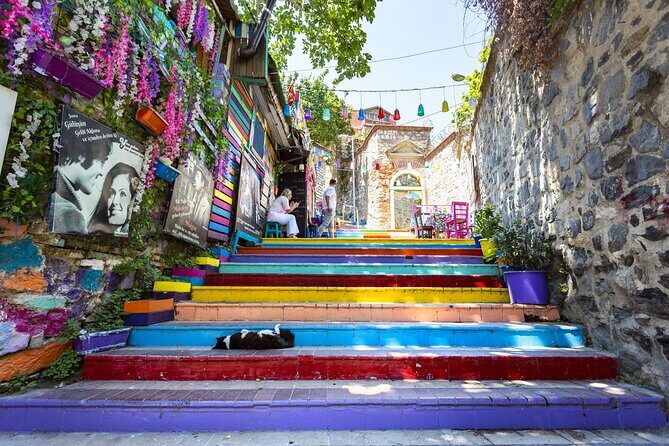
- Colorful stairs with real architectural variety, including 19th-century Art Nouveau steps that people go out of their way to photograph
- Orthodox landmarks tied to living communities, like the Great School of the Nation and the Bulgarian St. Stephen Church
- A Patriarchate visit with admission included, giving context to Phanar and Orthodox hierarchy
- Balat’s Jewish heritage stops, including a pause at Ahrida Synagogue
- Small-group pacing, which helps you actually hear the guide instead of just hurrying past doors
- Photo-friendly route, especially around the stairways and colorful lanes
Why Fener and Balat works better than a quick photos-only loop
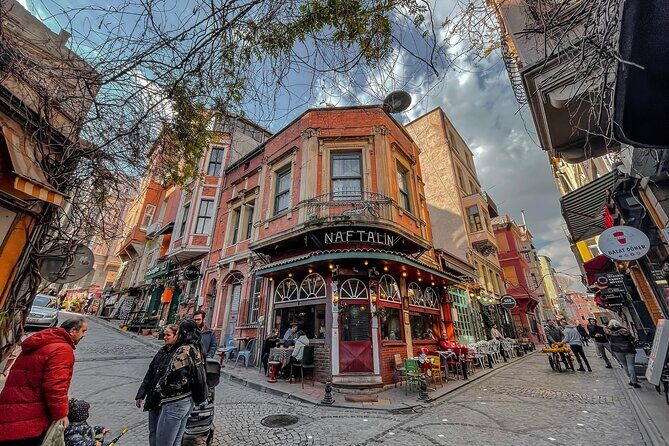
Fener and Balat are the kind of neighborhoods where “pretty” is only the start. The real magic is how close you can get to layers of Istanbul without hopping across town. In a compact walk, you see how different communities have coexisted here—often in the same small blocks—leaving behind churches, schools, synagogues, and a street layout that still tells the story.
I also like the balance of this tour: you’re not just collecting pictures. You’re learning what to look for. The guide’s job is to connect the visual details—stonework, entrances, building styles, and the role of institutions—to the bigger historical picture.
And yes, the streets are colorful. But the tour makes that color feel purposeful, like a signpost pointing to who lived here and why it mattered.
You can also read our reviews of more walking tours in Istanbul



Getting started at Balat Merkez Şekercisi (and what the timing really means)
You meet at Balat Merkez Şekercisi, Ayvansaray (address: Leblebiciler Sk. No:33, 34087 Fatih/İstanbul). The tour ends back at the meeting point, so you don’t end the day stranded across town.
This is roughly a 2-hour walking experience with multiple short stops (most around ten minutes). That format is great if you want to see highlights without spending half a day crossing Istanbul’s hills. It’s also why footwear matters: you’ll be moving, and you’ll be on and around stairs and uneven walking areas as you go between viewpoints and landmark entrances.
Plan to arrive on time. The guide won’t be able to wait more than 5 minutes once the tour starts, and the guide won’t stop to handle phone calls mid-walk. If you want to chat or ask questions, do it early in the route, not during the crunch.
Group size is capped at 15, and the tour is in English, which usually helps keep the pacing from turning into a shuffle.
Balat’s Jewish quarter: colorful houses with context, not just aesthetics
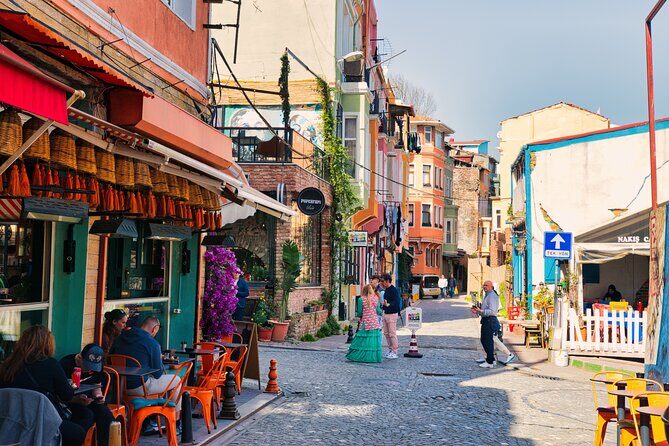
Your first real hit of Balat comes at the neighborhood Muhtarligi area. This is where the tour anchors you in the historic Jewish quarter—with colorful houses forming the visual hook, but with enough explanation that you understand why those streets are historically important, not just pretty.
You then move toward the first cluster of colorful streets and stairs in the Fener–Balat belt. This is where the tour’s framing clicks: the area reads like a miniature timeline. You’ll hear how the streets have held multiple layers of empire and community life—what people built, what they worshipped, and what they needed to keep their culture going.
If you like walking tours where you learn what to notice, this is a strong start. The tour doesn’t force long museum-style listening; instead it gives you quick, clear context while you’re standing in place.
The colorful stairs (including the Art Nouveau steps) are more than a photo stop

You’ll hit two stair clusters during the walk, and both matter.
First, you’ll pause around Colorful Stairs—part of the Fener and Balat lane network, where the point is to connect the look of the neighborhood to the communities that shaped it over time. This is the kind of stop where you can frame your photos without losing the storyline.
Later, the second Colorful Stairs stop focuses on the 19th-century Art Nouveau character of the steps. This is the part people tend to love for pictures, because the geometry and decorative feel photograph well. The guide’s explanation helps you avoid a common trap: seeing it as only “cool stairs,” instead of recognizing it as a specific period of design.
Practical tip: bring your camera mindset, but also keep your eyes up. The best pictures often come from a few steps away, not standing directly at the stair base.
Fener’s Greek Orthodox core: churches and institutions that still function
Fener is where the tour shifts from “street story” into “living religious and educational life.”
You’ll spend time in the Fener area as the historic center of the Greek Orthodox community. Then the walk continues toward civic-and-religious education landmarks, including a stop near the Dimitrie Cantemir Museum Cafe (Dimitrie Cantemir House / museum area). Even if you don’t linger for a long break, it’s a useful pause that gives the neighborhood a more human pace—something between sightseeing and taking a breath.
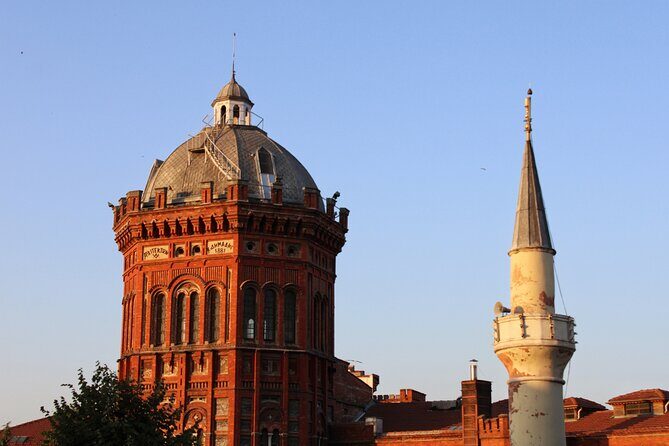
The standout institution stop is the Private Fener Greek High School, known as the Great School of the Nation. This is where the guide adds urgency: after about 560 years of operation, it’s at risk. That detail changes how you see the building. You’re not just looking at an old school—you’re looking at a cultural continuation that may not stay open without support.
Near here, you’ll also see the architectural theme: the school building still standing is a good example of neoclassical architecture. That’s valuable because it gives you a lens for what you’re walking past—how style choices reflect identity and institutional pride.
And then comes a church stop with character: Saint Stephen’s Bulgarian Orthodox Church, also known as the Bulgarian Iron Church. Since it’s still used, it’s not a dead monument. You get a sense of how these Orthodox communities remain part of Istanbul’s present, not just its past.
You can also read our reviews of more city tours in Istanbul





The Ahrida Synagogue and why pauses matter in this neighborhood
You’ll also have a stop at Ahrida Synagogue. The tour doesn’t treat it like a quick drive-by. The point is that this synagogue is significant both historically and culturally, and the neighborhood is only fully understood when you include multiple faith lines.
This is one of those moments where you’ll feel the benefit of a guided walk. A location like a synagogue can be easy to gloss over if you’re only thinking about photos. With a guide on hand, you’re more likely to look at the site as a reference point for community life and identity.
Phanar and the Ecumenical Patriarchate: the big-ticket included entry
The tour’s major admission moment is the Ecumenical Patriarchate of Constantinople area in Phanar (Fener). The guide connects it to Orthodox hierarchy: the Patriarchate is headed by the Ecumenical Patriarch of Constantinople and has been located here since the late 16th century.
This visit is included, and it’s the part that gives your walk weight. You’re no longer only collecting neighborhood flavor—you’re seeing a central institution that has shaped religious leadership for centuries.
After that, the walk continues around the Fener Rum Patrikhanesi area, keeping you in the same geographic and thematic zone so it doesn’t feel like you jump topics. The pacing also helps: you’re not rushing into a major site after sprinting all morning. You’ll have walked up to it through the neighborhood’s context first.
If you care about how Istanbul’s religious communities relate to history and geography, this is the stop that justifies the tour value most clearly.
Price and value: why $30.17 can make sense for a short trip
At $30.17 per person for about 2 hours, this isn’t priced like a ticketed museum day. The money is mostly paying for:
- a guide to connect streets and buildings into a story
- included entrance fees (notably the Patriarchate visit)
- a small-group format that helps the experience stay focused
Many stops along the route are listed with free admission tickets, but the value isn’t in paying for a long list of paid sights. It’s in getting interpretive context in places where you’d otherwise see only facades and stairs.
I’d call this a strong option when you:
- want a quick hit of neighborhoods beyond the main tourist lanes
- like cultural walks that explain institutions and architecture
- are short on time but still want something more substantial than a self-guided photo route
If your idea of a walking tour is pure spontaneity with no structure, you might find the stop lengths a little controlled. But if you enjoy clear guidance and quick stops that build into understanding, it fits well.
Guides and group vibe: small group, real questions, steady pacing
This tour caps at 15 people, which matters. Smaller groups keep conversations possible, and it usually means the guide can manage questions without breaking the flow.
I noticed strong praise for guides who explain religion and history clearly and who move at a steady pace. One review highlighted a guide named Furkan (spelled also as Furkаm in another note) as enthusiastic, attentive, and willing to help with picture-taking and even a request related to Turkish coffee. That kind of small personal touch is exactly what makes a walking tour feel human instead of robotic.
Just remember: once you’re on the move, the guide needs to focus on leading the group. If you want help, ask early.
What to bring and how to make the most of your day
This is a walking tour with stairs, so think comfort first:
- Comfortable shoes with grip
- A small water bottle (especially if you’re visiting in warm months)
- Your camera, but also time for looking up and around
- A backup plan for weather, since the tour requires good conditions
You’ll also get more out of it if you come with at least a light interest in religious history and neighborhood architecture. Even if you’re not an expert, the guide’s job is to translate the buildings into understandable stories.
The one caution I’d actually plan around: late changes and closures
One downside did show up: there was a case of a last-minute cancellation due to closures, with late communication. I can’t tell you how often that happens, but it’s enough that I’d treat this as a plan for a day where you have some flexibility.
If you’re stacking multiple bookings tightly back-to-back, give yourself a buffer. That simple move can save you stress if the city suddenly changes access.
Should you book this Fener and Balat city walk?
Book it if you want a guided, high-value introduction to Istanbul neighborhoods that many people skip. This tour is especially good for first-timers who want more than skyline views. You’ll leave with a clearer sense of how communities lived here, why institutions matter, and what architectural details are telling you.
Skip it (or consider a different format) if you hate stairs, want long free time at each site, or your schedule is rigid with no room for last-minute changes.
My take: if you like walking tours where each stop earns its place, this one is a solid choice.
FAQ
How long is the Istanbul City Walk: Colors, Culture & History Fener Balat Tour?
It runs for about 2 hours.
What is the price per person?
The price is $30.17 per person.
Is the tour offered in English?
Yes, the tour is offered in English.
How many people are in the group?
The tour has a maximum of 15 travelers.
Where does the tour start and end?
It starts at Balat Merkez Şekercisi in Ayvansaray (Leblebiciler Sk. No:33, 34087 Fatih/İstanbul) and ends back at the same meeting point.
Is transportation included?
No transfer is included.
Does the tour include entrance fees?
Yes. Entrance fees are included, and the Patriarchate visit has admission included.
Do I need to arrive early?
Please arrive on time. If you are more than 5 minutes late, the guide will not be able to wait.
Is good weather required?
Yes, the experience requires good weather. If it’s canceled due to poor weather, you’ll be offered a different date or a full refund.
What is the cancellation policy?
Free cancellation is available. You can cancel up to 24 hours in advance for a full refund.